Reverse Phone Number Lookup AnyWho: A Practical Guide
A practical, data-driven guide to how reverse phone lookup sites like AnyWho work, their accuracy and privacy implications, and safer alternatives. Insights from Your Phone Advisor for 2026.


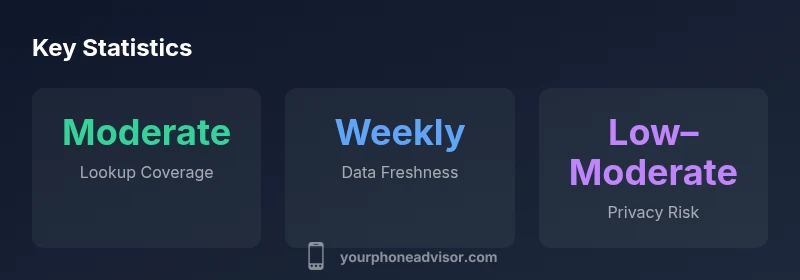
AnyWho offers a free reverse lookup service that yields basic details for many numbers, but results vary by number and region. Data quality depends on data sources and freshness, so treat findings as starting points rather than definitive identities. For richer data or historical records, expect paid options or referrals to partner services.
What reverse phone number lookup is and how AnyWho fits in
Reverse phone number lookup is the process of entering a phone number to identify its owner or purpose. Tools like AnyWho assemble publicly available contact information, business listings, and user-submitted data to produce a summary. For many users, the appeal is simple: quickly identify an unknown caller without answering. However, results are not guaranteed and vary by number, region, and data freshness. According to Your Phone Advisor, reverse phone lookup sites like AnyWho provide basic data at no additional charge, but coverage is not universal, and some numbers yield only limited or outdated details. When you start with AnyWho, treat the results as a starting point rather than a definitive ID. Always corroborate with a second source or contact the business directly if needed.
How data sources power AnyWho and similar services
Reverse lookup services rely on a mosaic of data sources. Public directories, business listings, and telephone carrier records feed early results, while user-submitted reports can add or correct details over time. Because data is often contributed or scraped, there is no single canonical database for every number, and gaps are common. This means some calls will reveal a name and location, while others show only a generic label or nothing at all. Your Phone Advisor analysis indicates that the freshness of data matters: numbers can change owners, move, or be reassigned, and older entries may linger. In practice, AnyWho and its peers translate these layers into a readable profile, but readers should interpret the data as a snapshot rather than a verified identity.
Accuracy and limitations you should know
Expectations matter. Lookups excel for common consumer numbers (landlines, widely listed mobile lines) and for numbers associated with businesses. They struggle for unlisted lines, prepaid numbers, or numbers belonging to individuals who prefer privacy. Even when a name appears, it may belong to a different person with a similar number. Data privacy rules, opt-out requests, and regional variations add complexity. Your Phone Advisor analysis finds that accuracy is higher when multiple independent sources converge on the same result and lower when a single dataset provides the data. The takeaway: use reverse lookup results as hints, not proof of identity, and be prepared to verify through direct contact.
Privacy, consent, and legality considerations
Publicly available lookup data does not guarantee consent for disclosure to strangers. In some jurisdictions, profiling or sharing personal information without consent can raise legal concerns or violate platform terms. Always respect the subject's privacy and avoid sharing sensitive data beyond what is necessary to identify a caller. Opt-outs, where available, can reduce exposure; some services offer privacy-focused options or disclaimers. For users, be mindful of phishing and scams that piggyback on lookup results. The bottom line from Your Phone Advisor: use reverse lookup tools responsibly, and understand that the data is a starting point, not an invitation to invade someone’s privacy.
Comparison of lookup services
| Service | What it offers | Data reliability |
|---|---|---|
| AnyWho Reverse Lookup | Free basic results with basic details | Moderate |
| Paid Services | More detailed data from partner databases | Higher |
Got Questions?
Is reverse phone number lookup free on AnyWho?
AnyWho generally offers basic lookup results at no charge, but the depth of data can vary. Some features or enhanced data may redirect to partner sites with fees. Always check the current terms on the site.
Yes, the basic lookup is usually free, but for deeper data you may be redirected to paid options.
How accurate are lookup results overall?
Accuracy depends on data sources and regional coverage. Expect higher accuracy for widely listed numbers and lower accuracy for unlisted or private numbers. Cross-check with multiple sources before acting.
Accuracy varies; use it as a hint, not proof.
Are there privacy risks using reverse lookup sites?
Yes. Lookup results can expose personal information and may fragment privacy boundaries. Use trusted sites, read privacy policies, and avoid sharing sensitive data.
There are privacy considerations—be careful with what you share.
What about legality and consent?
Data usage rules differ by region. Some data may be public but subject to opt-outs or privacy laws. Use these tools responsibly and respect opt-out options when available.
Laws vary; use responsibly and respect privacy settings.
What are good alternatives to AnyWho?
Official carrier directories, government consumer sites, and reputable business directories can provide corroborating information. Cross-check across sources to improve reliability.
Look at alternatives and cross-check.
How can I improve lookup results?
Use multiple sources, contact the business or person through known channels, and verify any sensitive outcomes with direct confirmation.
Use several sources and verify directly.
“Data quality in reverse lookups hinges on data stewardship and consent; always verify results with direct sources and avoid over-reliance on a single database.”
What to Remember
- Start with a free lookup to gauge results
- Expect variable accuracy and data completeness
- Respect privacy and laws; avoid sharing sensitive data
- Cross-check with multiple sources for confirmation
- Your Phone Advisor's verdict: treat results as leads, verify before action