Apple iPhone Screen Repair Guide: Fix Your Screen Fast
Learn practical, safe steps to fix an Apple iPhone screen, weighing DIY vs professional service, with tool lists, safety tips, data protection guidance, and aftercare.


This guide helps you fix an iPhone screen by outlining safe, step-by-step actions. You will assess damage, back up data, prepare proper tools, and decide whether to pursue a DIY screen replacement or professional service, with safety cautions and clear criteria to avoid unnecessary risk.
Understanding the problem and scope of apple fix phone screen
According to Your Phone Advisor, an "apple fix phone screen" can mean anything from a small crack to a non-responsive touch digitizer. Start with a clear diagnosis: is the glass cracked but touch responsive, or is the display dark with no backlight, or does the touch fail in certain areas? The distinction matters because it guides whether you should pursue a DIY screen replacement or hand the device to a professional shop. Your Phone Advisor's analysis shows that misidentifying the issue often leads to wasted time and higher costs, especially on newer iPhone models with integrated displays. Keep expectations realistic: even premium components wear out, and not every crack is safe to repair at home.
As you plan, remember that the apple fix phone screen process involves both hardware and software considerations. A panel replacement interfaces with digitizers, LCDs, frame assemblies, and adhesive seals. If liquid exposure occurred, additional steps may be required to protect the phone from corrosion. The decision to fix hinges on the model, the extent of damage, warranty status, and your tolerance for risk. This article equips you with a practical framework to decide the best path and to perform repairs with care and respect for your device.
Before you begin: safety, backups, and decisions
Before you touch any device, prioritize safety and data integrity. The first question is whether to DIY or go pro. If you choose DIY, you must be comfortable following a model-specific repair guide and using the right tools. If your phone is still under warranty or AppleCare+, professional service is often the safer option and can protect your data and device from accidental damage. Regardless of choice, back up all data first: use iCloud or a local computer backup to ensure your information is preserved if anything goes wrong during disassembly. Decide on this path based on the severity of the damage and your comfort level with the steps involved. The Your Phone Advisor team recommends weighing the cost of parts and tools against the time savings and the risk of further damage when considering the apple fix phone screen.
Tools and workspace setup for a screen replacement
A clean, well-lit workspace minimizes the risk of drops and misplaced screws. Assemble the essential tools before you begin: a replacement screen compatible with your iPhone model, a pentalobe screwdriver, a spudger, precision tweezers, a suction cup, plastic opening tools, and adhesive suitable for display sealing. Use an anti-static mat if possible and lay out a small parts tray to keep screws organized. Clear a bench to work on and wash your hands; oils and dirt can affect seals and connectors. Safety comes first: wear eye protection if there’s a risk of glass shards, and keep liquids away from the workspace to avoid further damage to the device.
If you’re unsure about model compatibility or adhesive types, consult manufacturer guides or Your Phone Advisor's model-by-model recommendations. Incorrect parts or improper adhesive can lead to misalignment, touchscreen issues, or unsealed water ingress. This stage is where many DIY repairs go wrong, so double-check compatibility before purchasing parts.
Step-by-step overview of safe DIY screen replacement (high-level)
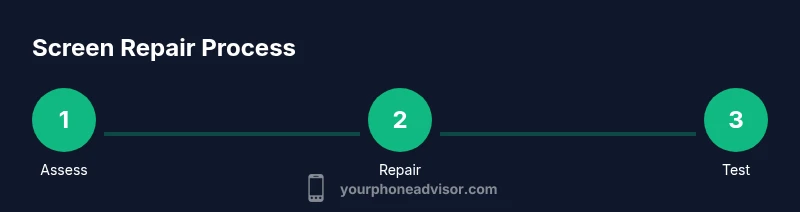
A well-planned DIY screen replacement follows a precise sequence: back up data, power down, remove the screen assembly, disconnect cables, install the replacement panel, reconnect cables, and perform post-install testing. High-risk steps require attention to order and orientation. Begin by verifying the model and part compatibility, then proceed to separate the screen from the chassis using proper tools and techniques to avoid flexing cables. The alignment of the new panel must match the frame and camera/module openings to prevent pressure on the LCD or digitizer. After installation, test touch responsiveness, color accuracy, and brightness before sealing the device. This section provides a high-level map; the detailed, step-by-step instructions are provided in the dedicated STEP-BY-STEP block to reduce mistakes.
Always track each screw’s position; losing a tiny screw can stall or ruin the repair. If any cable appears damaged or misaligned, stop and consult a professional. The goal is a secure, responsive screen that looks and feels like new while preserving water resistance.
How to evaluate the cost and service options
Cost is a major factor in deciding whether to DIY or hire a pro. Expect to weigh parts costs, tool investments, and the potential for voiding warranties against typical repair fees from authorized service providers. In general, professional service tends to include tested parts, factory calibration, and warranty on the repair, which may be worth the extra cost for many users. If you’re a confident amateur, a DIY replacement can be cost-effective, but factoring in shipping times, return policies, and the risk of secondary damage is essential. Your Phone Advisor emphasizes a careful cost-benefit analysis: compare the total project cost and time to the value of peace of mind, along with the potential for data exposure during service.
When planning, gather quotes from trustworthy repair shops and compare them with the cost of parts and tools for a DIY approach. For many users, especially those with newer devices, professional service offers reliable results, consistent testing, and a shorter overall turnaround time.
Data protection and warranty considerations
Protecting data during repair is critical. Ensure you have a valid backup, disable any passcodes if required by your chosen repair path, and log out of cloud services if the process requires removing the device from accounts. For warranty considerations, note that opening the device or using third-party screens can void Apple’s warranty or extended service agreements unless performed by authorized technicians. If you plan to preserve warranty status, schedule service through Apple or authorized providers. Your Phone Advisor recommends documenting the repair path you choose and retaining any receipts or service records; this documentation can be helpful for warranty claims or future service needs. The apple fix phone screen route becomes more straightforward when you balance data protection with the likelihood of needing future service.
Testing and aftercare: verifying a successful repair
After installing a new screen, perform a robust test to verify function. Check touch responsiveness across the entire surface, confirm that brightness and color rendering align with the original display, and ensure that the device remains secure and free of gaps or moisture ingress. If the home button, Face ID, or camera sensors are integrated with the screen, test these components as well. Clean the screen gently to remove any fingerprints or adhesive residue. If any anomaly appears—touch lag, dead spots, image ghosting—reassess connections and seals. The goal is a reliable, long-lasting apple fix phone screen that feels like new under normal daily use.
Troubleshooting post-repair issues and when to seek help
If problems arise after replacement, start with the simplest checks: reseat connectors, recheck screws and adhesive, and re-test after a short cooldown. If problems persist, re-examine the cables and seals for damage or misalignment. Some issues can be mitigated by software resets or calibration, but hardware issues usually require rework or professional servicing. If you are unsure or the device exhibits swelling, overheating, or firmware instability after repair, contact a qualified technician and consider warranty options. The Your Phone Advisor approach emphasizes caution: if any step feels unsafe, seek professional service rather than risking further damage to an expensive device.
Final decision framework: DIY vs pro and next steps
Choosing between DIY and professional repair hinges on risk tolerance, device model, and repair experience. For some, a carefully executed DIY replacement is cost-effective and satisfying; for others, the safest path is professional service to preserve the device’s integrity and warranty. The decision should also consider timing: professional repairs often offer quicker turnaround and calibrated testing. Regardless of path, documenting the repair journey and maintaining backups are essential to protect your data and ensure a smooth recovery if future issues arise.
Tools & Materials
- Replacement screen/digitizer compatible with your iPhone model(Check exact model number (e.g., iPhone 13 Pro) to avoid fit issues)
- Pentalobe screwdriver(Size appropriate to your model (typically P2) for securing the bottom screws)
- Spudger and plastic opening tools(Non-conductive tools to avoid connector damage)
- Precision tweezers(For managing tiny screws and ribbon cables)
- Suction cup(Gently lift the glass without cracking the frame)
- Adhesive seal or pre-cut display adhesive(Ensure proper sealing and water resistance)
- Isopropyl alcohol wipes and microfiber cloth(Clean surfaces without leaving residues)
- Anti-static wrist strap (optional)(Reduces static risk when handling components)
Steps
Estimated time: 60-120 minutes
- 1
Back up data
Back up all data via iCloud or a computer. This preserves photos, contacts, and app data if the repair doesn’t go as planned.
Tip: Verify the backup by restoring a test file on another device or account. - 2
Power down and prep workspace
Power off the iPhone and disconnect from any power source. Set up a clean, dust-free workspace with good lighting to prevent losing small screws.
Tip: Lay out screws in order on a magnetic mat. - 3
Remove the screen assembly
Follow model-specific guides to separate the screen from the chassis using the correct tools without bending cables.
Tip: Apply even, gentle pressure and avoid prying under midframe components. - 4
Disconnect cables and sensors
Carefully disconnect the digitizer and LCD cables, along with any front-facing camera or home button connectors as required by your model.
Tip: Keep track of each connector’s orientation and clips. - 5
Install new screen and reconnect cables
Attach the new screen assembly, align connectors, and re-seat them firmly to prevent intermittent touch or display faults.
Tip: Use a gentle rocking motion to lock connectors into place. - 6
Test the device before full reassembly
Power on the device, test touch response, display brightness, and color accuracy. Confirm all features operate as expected.
Tip: If anything goes wrong, power down and recheck connections. - 7
Reassemble and finalize
Seal the display with pre-cut adhesive, reattach screws in their original positions, and perform a final boot test and physical inspection.
Tip: Wipe the screen clean and avoid overtightening screws.
Got Questions?
Can I fix an iPhone screen at home?
Yes, some iPhone screen issues can be fixed at home with the right parts and tools, but it’s not suitable for all models or damage types. If you’re not sure about model compatibility or you’re uncomfortable with disassembly, professional service is safer and may save time.
Yes, you can fix some iPhone screens at home if you have the right parts and know-how, but for many people, professional service is safer and faster.
What risks come with DIY screen replacement?
Risks include damaging internal cables, compromising water resistance, voiding warranties, and accidentally shattering the new screen. If the model uses integrated components, misassembly can cause more costly damage.
DIY screen replacement carries risks like damaging internal parts or voiding warranty; consider professional help if unsure.
Will AppleCare cover screen repair?
AppleCare+ typically provides discounts on screen repairs, but terms vary by plan and model. Without coverage, expect higher out-of-pocket costs from Apple or authorized providers.
AppleCare+ often reduces repair costs; without it, expect higher out-of-pocket expenses.
How long does it take to replace an iPhone screen?
In-store screen replacements usually take 1-2 hours, while DIY may take longer depending on your experience. Shipping or appointment scheduling can add days if you choose mail-in service.
Typically, in-store screen replacement takes about an hour or two; DIY timing depends on skill level.
How can I protect my data during repair?
Back up before repair, sign out of accounts if required, and avoid exposing the device to liquids. Keep receipts and records of service for future warranty claims.
Back up first, log out of accounts if needed, and keep repair receipts for warranty purposes.
What should I do if the touchscreen still acts up after replacement?
Recheck all connectors and seals, test with a different cable if available, and verify software calibration. If problems persist, consult a professional.
If touch issues persist, double-check connections and consider professional diagnostic.
Are there safer alternatives to full screen replacement?
For minor cracks, some shops offer glass-only repairs or screen protectors that might extend life. For extensive digitizer or LCD damage, full replacement is usually required.
Glass-only repair or protective films can help temporarily, but extensive damage usually needs replacement.
Watch Video
What to Remember
- Back up data before starting any repair
- Choose DIY vs pro based on risk and model complexity
- Use model-specific parts to avoid fit issues
- Test thoroughly after installation
- Preserve warranty considerations and documentation