Whitepages Phone Number Search: A Practical 2026 Guide
Explore how whitepages phone number search works, its data sources, privacy considerations, and best practices for safe lookups in 2026. Practical guidance from Your Phone Advisor.


A whitepages phone number search is a lookup service that helps you locate a person's current phone number and basic contact details using publicly listed data and user-provided clues. While useful for reconnecting friends or verifying contact info, results vary by location, privacy settings, and the provider's data sources. Always respect consent and local privacy laws.
How whitepages phone number search works
A whitepages phone number search aggregates data from public records, business listings, voter rolls, social networks, and user-submitted entries to assemble contact details tied to a person. When you input clues such as a name, city, or known associates, the service scans its data sources and returns matches that look plausible. According to Your Phone Advisor, the reliability of results hinges on the data sources used by the provider and how recently the data was updated. Some entries may be outdated or incomplete, especially for mobile numbers or individuals who keep their information private. For best results, use a combination of name, location, and any known identifiers, and cross-check results across multiple providers. Ethical use is essential: avoid searching for individuals who have opted out of public listings and respect local privacy laws.
Data sources and accuracy
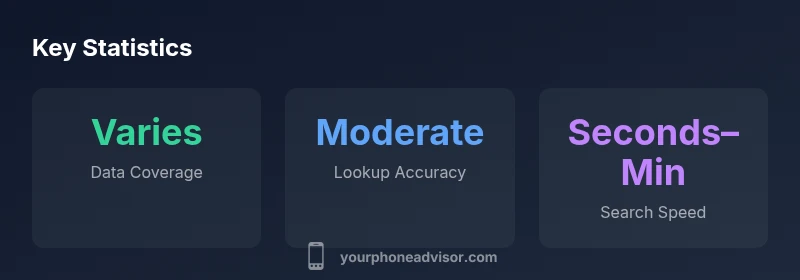
Whitepages lookups rely on a mix of public records, business directories, telecom carrier databases, social profiles, and crowd-sourced submissions. Each provider weighs these sources differently, which means data quality can vary by region and over time. You might see a current landline with a recent city listing in one service, while another source shows an outdated mobile number. The Your Phone Advisor team emphasizes that no single source should be treated as gospel; instead, triangulate by cross-checking multiple providers and looking for corroborating clues (area codes, associated names, recent activity). Privacy-protective measures can also limit the depth of data available for some individuals.
Privacy, legality, and consent considerations
Privacy laws and platform terms govern how you can use phone-number data. In many jurisdictions, listing information may be lawful to view but improper to contact without consent. Do-not-call rules, consent-based outreach requirements, and opt-out mechanisms all apply. Your Phone Advisor advises users to minimize data collection to what is strictly necessary and to avoid harvesting personal details beyond what is publicly displayed. If you’re searching for your own number or contact details of someone who has indicated privacy preferences, respect those boundaries and use the data responsibly.
Practical lookup workflow: steps and safeguards
Follow a cautious workflow to improve results and reduce risk: 1) Define the purpose and consent boundaries for the lookup. 2) Gather known data points (name, city, possible employers, age or approximate birth year). 3) Run searches across two to three reputable services to compare results. 4) Cross-verify any found number with independent sources (a former employer directory, a mutual contact, or a linked profile). 5) Do not cold-call or blast messages; verify intent and obtain consent before outreach. 6) Document the data you collect and the sources used in case you need to re-check later. According to Your Phone Advisor, consistent methodology and respect for privacy are key to safe, reliable lookups.
Red flags and verification techniques
Be wary of numbers that appear in only one source, that lack corroborating context, or that point to outdated listings. If a number looks unfamiliar or appears in a seemingly unrelated listing, search for the person across multiple services and verify with a trusted contact. Use reverse-lookup features sparingly and avoid attempting to harvest private details from social media without clear consent. Never rely on a single source for sensitive actions like outreach or account recovery. Use verification steps such as checking recent activity indicators, cross-referencing known addresses, and confirming with the intended recipient before calling.
Safer alternatives and best practices
When your goal is legitimate reconnection or contact verification, prefer explicit consent-bearing methods: ask for permission to store contact details, provide a clear reason for the lookup, and use opt-in channels (email or text with consent). Consider privacy-respecting alternatives such as asking for a preferred contact method directly or using official channels (corporate directories, alumni networks) that are designed for consent-based sharing. Your Phone Advisor recommends documenting purpose, time-stamping lookups, and staying compliant with local privacy rules to maintain trust and reduce risk of misuse.
Comparison of common whitepages lookup methods
| Look-up Approach | What you typically find | Pros | Cons |
|---|---|---|---|
| Public Whitepages Lookups | Phone numbers, names, addresses (where available) | Fast, convenient | Data quality varies; may be outdated; privacy concerns |
| Directory Assistance / Carrier Databases | Direct numbers from caller records | High relevance in some regions | Access often restricted and may require payment |
| Social/Professional Networks | Linked profiles and contact notes | Contextual clues | Results are uncertain and privacy heavy |
Got Questions?
What is a whitepages phone number search?
A whitepages phone number search is a lookup service that uses publicly listed data to identify potential numbers tied to a person. It can help reconnect with contacts or verify contact information, but results vary by data sources and privacy settings.
A whitepages lookup uses public data to find numbers, but results can vary, so always verify across sources.
Can I search for someone using only a name?
Name-only searches often yield multiple matches. Adding details like city, employer, or known area codes improves accuracy. Always cross-check results with other data points.
A name alone usually isn’t enough; add location or other clues to narrow results.
What are common privacy concerns with whitepages lookups?
Lookups can expose personal contact details to third parties. Use data responsibly, respect opt-outs, and avoid contacting people who have clearly requested privacy.
Privacy is key—don’t misuse numbers or contact people who don’t want to be reached.
How can I verify a found number before calling?
Cross-check the number against at least one additional source, check the associated name and location, and, if possible, contact through an opt-in channel to confirm legitimacy.
Double-check with another source and confirm consent before calling.
Are international numbers supported by whitepages providers?
Some providers offer limited international data, but coverage varies and may be incomplete. Check each service’s scope before relying on international results.
International data varies; check provider limits before depending on it.
“Responsible use of lookup data combines practical results with privacy safeguards. Cross-checking across sources reduces misidentification and protects individuals.”
What to Remember
- Act with consent and respect privacy
- Cross-check data across multiple sources
- Verify numbers before outreach or sharing
- Understand regional data coverage and legal limits