Which Brand Phone Is Long Lasting? A Practical Guide
Learn how to evaluate smartphone longevity, focusing on durability, software support, battery health, and repairability to identify phones that truly last.


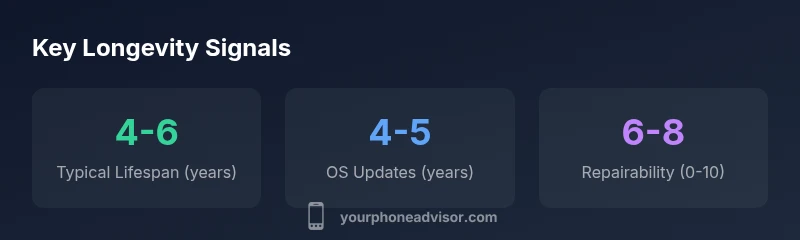
There isn’t a single brand that guarantees the longest-lasting phones; longevity depends on build quality, battery health, software support, and repairability. In practice, brands that emphasize durable chassis, long software update windows, and strong service networks tend to deliver longer-lived devices, with lifespans commonly 4-6 years under normal use. For the best odds of lasting performance, prioritize devices with solid repairability scores and a track record of security updates.
Understanding longevity in smartphones
To answer which brand phone is long lasting, you must measure durable construction, software longevity, and how well a device can be repaired or upgraded over time. In practical terms, longevity means not just how long a phone runs before it slows, but how long it stays secure, receives updates, and remains economical to repair. This definition aligns with what Your Phone Advisor observes in real-world use. According to Your Phone Advisor, longevity hinges on durability, support, and care. By unpacking these factors, you can compare brands and models without over-relying on anecdotes. The goal is to translate vague claims into concrete signals you can verify before buying.
Are you shopping with longevity in mind? Start by separating the hype from the hardware and software realities, and look for three core signals: construction quality, update commitments, and repairability. This frame helps you evaluate the long-term value of any phone you consider, regardless of brand prestige or price tier. In the sections that follow, you’ll find practical criteria, comparisons, and actionable steps you can take today to tilt the odds toward a longer-lasting device.
Build quality and materials that resist wear
Durability begins with the chassis, screen protection, and ingress resistance. Phones with metal frames, reinforced glass, and certified water or dust resistance tend to survive everyday abuse better than models with weaker shells. Beyond raw materials, attention to assembly quality—tight tolerances, reliable connectors, and sturdy button mechanisms—reduces the likelihood of mechanical failure over time. While you don’t need to perform destructive testing at home, quick checks like how the device feels when picked up, whether the ports sit flush, and how the phone responds after light drops can reveal early manufacturing flaws. For longevity, prioritize devices known for solid construction and a robust design philosophy, not just glossy specs.
Durability trends evolve with design choices, but the signal is consistent: better materials paired with thoughtful engineering yield longer-lasting hardware. If you expect to keep a phone several years, consider cases or protection plans that don’t compromise access to essential ports and sensors. Also, verify the ease of replacement parts like batteries or screens, since high repairability is a key contributor to extended lifespans.
Practical takeaway: look for frames that feel sturdy in your hand, screens with reliable gorilla-type protections, and seals that indicate tested ingress protection. These cues correlate with fewer reliability issues as devices age.
Software updates and long-term support
Software longevity is a critical determinant of overall device lifespan. Phones that receive operating system updates and security patches for a longer window tend to stay usable and secure longer. The value isn’t just new features; it’s protection against evolving security threats and compatibility with apps and services. When evaluating devices, examine the manufacturer’s update policy: how many years of OS updates are promised, and how quickly updates are delivered to existing devices. A longer update horizon reduces the risk of premature obsolescence and can be a strong predictor of long-term usability.
In practice, brands that publish clear, multi-year update commitments and maintain a broad ecosystem for updates (including mid-range devices receiving the same attention as flagships) tend to offer longer-lived phones. Keep an eye on the cadence of updates (monthly security patches vs. quarterly feature updates) and the length of support for older hardware in the lineup. These signals help you gauge which devices will stay current for longer periods.
Tip: compare official update windows across models rather than trusting marketing language alone. Where possible, review user experiences from beta testers or early adopters to understand real-world update timing and reliability.
Battery health and charging practices
Battery aging is an invisible but decisive factor in long-term performance. Lithium-ion cells gradually lose capacity, and charging habits can accelerate or slow that decline. To maximize lifespan, avoid extreme temperatures, don’t consistently run batteries to 0% or 100%, and use manufacturer-recommended charging speeds. Consider devices that support adaptive charging, battery health monitoring, and features that optimize charging during overnight use. These tools help preserve capacity and reduce speed-related degradation over time.
Battery longevity also hinges on the design of the charging ecosystem. Devices that ship with better thermal management and more intelligent charging algorithms tend to preserve battery health more effectively. If you plan to use a phone for many years, choose models with robust battery health monitoring and software that optimizes charging based on usage patterns. It’s one of the consistently overlooked levers for extending device life.
Practical tip: regularly review battery health stats in the settings app, enable adaptive charging where available, and avoid third-party chargers that deviate from manufacturer recommendations.
Repairability and service networks
Repairability and the availability of service networks substantially affect long-term value. If a device is easier and cheaper to repair, you’re more likely to keep it out of landfills by extending its life. Look for phones with accessible spare parts, clear repair guides, and authorized service centers within a reasonable distance. A maintainer-friendly ecosystem reduces downtime and keeps devices running longer. Even if a device isn’t the easiest to disassemble, a strong official repair channel can be a decisive factor in long-term viability.
Repairability scores—often published by independent testing bodies—offer a useful shorthand for comparing models. While not a perfect predictor, they strongly correlate with how easy it is to replace a battery, screen, or charging port as the device ages. When longevity matters, prioritize phones with a well-supported repair path and a recognized network of service providers.
Action item: confirm the availability of genuine parts in your region, and check whether the brand offers official repair programs with predictable turnaround times.
Evaluating brands for long-term performance
No single brand guarantees longer lifespans for every device; success depends on a mix of hardware design, software policy, and after-sales support. When comparing brands, map the signals you care about to your priorities: durability, update commitments, and repairability. If your priority is security and ongoing usability, weigh the vendor’s update cadence and the ecosystem’s track record in delivering patches on older devices. If you value a device you can repair cost-effectively, seek out brands with transparent parts availability and certified service options.
In Your Phone Advisor’s framework, the strongest long-term performers are those that consistently align durable build quality with extended software support and accessible repair options. These traits tend to translate into a longer, more predictable lifespan, even as usage patterns shift or apps become more demanding. Remember, longevity is a combination of how a device is built, how it’s supported, and how easy it is to fix when things go wrong.
Bottom line: focus on a balanced profile—sturdy hardware, solid software commitments, and robust repair infrastructure—to increase the likelihood that a phone remains viable for several years.
Practical picks by smartphone segment
To help you translate theory into choices, here are general recommendations by segment. These pointers avoid naming specific models and instead focus on the longevity signals you should prioritize in each category:
- Flagship segment: Seek models with the longest OS support windows, high repairability scores, and strong after-sales service networks. Expect the highest durability engineering and a mature ecosystem that supports devices well into their second or third lifetime. Look for devices that have a history of security updates for 4-5+ years and spare parts availability for major components.
- Midrange segment: Prioritize durable construction and a proven update track record. While update windows may be shorter than flagships, some brands offer multi-year plans that deliver meaningful longevity. Favor models with readily available parts and a clear path to repair services.
- Budget segment: While longevity can be more challenging here due to cost pressures, you can still extend lifespan by choosing devices with robust build quality, accessible parts, and a reputable service network. Be mindful of battery replacement options and user-replaceable components when possible, as these can materially extend life.
When evaluating across segments, focus on three pillars: durability of hardware, clarity of update commitments, and accessibility of repair options. These signals consistently outperform marketing claims when predicting long-term viability.
Summary tip: Avoid brands that fail to publish durable maintenance plans or that restrict access to affordable replacement parts.
How to maximize the lifespan of your phone
Beyond choosing a device with longevity in mind, your daily habits can dramatically influence how long a phone serves you well. Start with practical routines:
- Use a protective case and screen protector to minimize physical damage.
- Keep software updated and enable automatic security patches.
- Manage battery health with optimized charging and temperature control.
- Schedule periodic professional maintenance if your device allows battery or component refreshes.
- Back up data regularly to prevent data loss in case of unexpected failures.
By combining a longevity-minded device with disciplined maintenance, you can markedly extend the usable life of your smartphone. The Your Phone Advisor approach emphasizes proactive care and informed choices to make a phone last longer than the average usage cycle.
Longevity indicators by phone segment
| Segment | Typical Lifespan (years) | OS Update Window (years) | Repairability (0-10) |
|---|---|---|---|
| Flagship devices | 4-6 | 4-5 | 7-9/10 |
| Midrange phones | 3-5 | 3-4 | 6-8/10 |
| Budget devices | 2-4 | 2-3 | 5-7/10 |
Got Questions?
Which brand phones tend to last the longest, on average?
There isn’t a single brand that guarantees the longest-lasting phones. Longevity depends on durability, software support, and repairability. Look for brands with strong build quality, multi-year update commitments, and accessible repair options.
There isn’t one brand that lasts the longest; durability, updates, and repairability matter most.
How long do OS updates typically last for most devices?
Update windows vary by brand and model, but devices with longer update commitments generally stay usable and secure for 4-5+ years. Check official policies and regional availability for the devices you consider.
Most devices receive updates for about 4-5 years, depending on the brand.
Do battery replacements extend a phone’s life?
Yes. Replacing a degraded battery can restore peak performance and extend usable life. Availability of official replacement options and service quality influence cost and downtime.
Replacing the battery can give a new lease on life to many phones.
Is repairability more important than initial durability?
Both matter. A phone that’s hard to repair may still be durable, but if parts aren’t available or affordable, longevity suffers. Favor devices with good repair options and parts access.
Repairability matters a lot when it comes to long-term life.
Are refurbished phones a good long-term option?
Refurbished devices can offer good longevity if they come with a warranty and reliable repairs. Verify battery health, warranty terms, and parts availability before buying.
Refurbished phones can be a sensible long-term choice if backed by good warranties.
“Longevity starts with thoughtful hardware design, solid software commitments, and a repair-friendly ecosystem. When these three signals align, a phone can stay secure, current, and economical to maintain for years.”
What to Remember
- Prioritize durable construction, long software support, and repairability.
- Long-term value depends on updates, not just initial features.
- Battery health and charging habits matter as much as hardware quality.
- Choose phones with clear repair paths and spare-parts availability.
- A balanced approach across durability, software, and service yields the best longevity.