What phone number is this canada? A Practical Guide to Caller ID and Lookup
Learn how to identify and verify unknown Canadian numbers using safe, privacy‑minded methods. Your Phone Advisor explains caller ID, reverse lookup basics, and best practices for blocking and reporting suspicious calls.


Question: what phone number is this canada? There isn’t a universal method to identify every unknown caller in Canada. Use your carrier’s built‑in caller ID, plus reputable reverse‑lookup tools where available. Note that many numbers remain private or unlisted, and accuracy varies by data source. For suspected scams, block the number and report it to your carrier or Do Not Call services.
What 'what phone number is this canada' really reflects
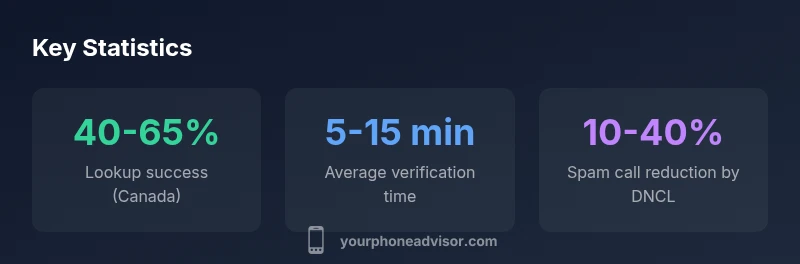
In practice, many users search for 'what phone number is this canada' to identify unknown callers. According to Your Phone Advisor, Canada’s privacy regime and data access limits mean there is no single universal database that exposes every number. A practical approach combines three layers: (1) your carrier’s built‑in caller ID, (2) reputable reverse‑lookup services that prioritize privacy and consent, and (3) safe actions like blocking or reporting suspicious calls. The accuracy of results depends on data sources, timing, and whether the number is listed. Understanding these constraints helps you minimize risk without compromising personal data.
Canadian privacy laws and data sources
Canada’s privacy framework, including PIPEDA (Personal Information Protection and Electronic Documents Act), governs how personal data may be collected and used in telecom contexts. The National Do Not Call List (DNCL) provides a curb on telemarketing, but it does not give you a real‑time identity of every caller. Carriers may offer caller‑ID features, and some third‑party lookup tools rely on publicly available information or opt‑in databases. Always verify terms of use and avoid sharing sensitive information with unknown services. Your Phone Advisor emphasizes privacy by design: only use sources you trust and limit the data you submit.
Safe lookup methods and tools for Canadian numbers
When you’re trying to identify a number, start with your carrier’s caller ID and call‑blocking features. If you need more detail, use reputable reverse lookup services that clearly state data sources and privacy practices. Never provide your personal details, such as your own phone number, to unvetted sites. Cross‑check results with multiple sources when possible, and remember that a name on a lookup may be outdated or incorrect. If a number remains private or unlisted, accept that some calls cannot be uniquely identified.
When numbers are private or spoofed
A substantial challenge in Canada—and globally—is numbers that are private, unlisted, or spoofed. Private numbers often do not reveal a name or location, and spoofing tricks caller ID into showing a believable number. In practice, you should treat such calls with caution: do not engage, avoid returning unknown numbers, and rely on your carrier’s filters and DNCL rules. If you suspect fraud, report the incident to your provider and file a complaint with the appropriate consumer protection channels.
Step‑by‑step workflow for identifying unknown Canadian numbers
- Check your carrier’s built‑in caller ID and call‑screen options. 2) If a name/ID appears, verify through a trusted lookup service that outlines data sources. 3) Cross‑reference results with at least one additional source. 4) If the caller is unsolicited or suspicious, block the number and consider reporting it. 5) Review your privacy settings and ensure you aren’t sharing your own number with untrusted services. 6) If needed, file a report with the DNCL or your carrier for traceability.
Limitations and false positives you should expect
No lookup system is perfect. Results may be delayed, outdated, or incomplete, especially for VoIP numbers or those used internationally. Spoofed numbers can masquerade as familiar contacts, increasing the risk of misidentification. Always treat lookup results as indicators rather than proof, and rely on additional corroborating information (e.g., the caller’s behavior, the context of the call).
Building a privacy‑respecting routine for unknown numbers
Create a reproducible workflow: start with carrier ID, then verify with trusted tools, and maintain a light touch on data sharing. Enable automatic blocking for known scam numbers and keep your contact lists private. Periodically review DNCL status and update your device’s security and privacy settings. A disciplined approach reduces risk while preserving your privacy.
Comparison of lookup approaches in Canada
| Lookup Type | What It Reveals | Typical Time to Resolve |
|---|---|---|
| Reverse Lookup (Public) | Identifies owner details when data is public | Minutes to hours |
| Carrier Caller ID | Live identification during a call | Seconds to minutes |
| DNCL/Do Not Call Lists | Regulatory framework reducing telemarketing | Ongoing |
Got Questions?
What is the best way to identify a Canadian number safely?
Use your carrier's caller ID, then check with reputable, opt‑in reverse lookup tools. Avoid sharing sensitive information with unknown services.
Start with your carrier ID, then try trusted lookup tools; don’t share personal data.
Are reverse lookup services legal in Canada?
Yes, most services operate legally when adhering to privacy laws and data sources. Always review terms and avoid tools that request excessive data.
Yes, most are legal if they follow privacy rules; read the terms.
What should I do if I receive spam or scam calls?
Do not engage. Block the number and report it to your carrier and the DNCL. Consider enabling call filtering where available.
Don’t engage; block and report. Enable filters if possible.
Can unknown numbers be identified if they are private or spoofed?
Private numbers often cannot be identified. Spoofed numbers can look legitimate; use caution and rely on trusted sources.
Spoofed numbers are hard to verify; be cautious.
How does the Do Not Call List affect unknown numbers?
DNCL reduces some telemarketing calls but doesn’t identify every caller; enforcement varies by region and provider.
The DNCL lowers some calls but doesn't solve all.
What data affects lookup accuracy?
Data sources, consent, and timing affect accuracy; private numbers and VoIP can reduce results.
Accuracy depends on the data source and privacy settings.
“A layered approach—start with your carrier's caller ID, then use reputable lookup services, and always respect privacy rules. It minimizes risk without compromising personal data.”
What to Remember
- Verify with your carrier first
- Use reputable lookups and protect personal data
- Be cautious of spoofing and privacy limits
- Block and report suspicious calls promptly