How to Phonetically Spell: A Practical Guide
Learn how to phonetically spell any word using practical methods, IPA basics, and simple templates. Improve accuracy in speech, writing, and teaching.


You’ll learn a reliable method to phonetically spell any word by choosing a system (IPA or plain spelling), breaking the word into sounds, mapping sounds to letters or symbols, and validating with examples. This approach helps with pronunciation clarity in conversation, writing, and language learning. Whether you’re learning a new language, spelling names, or preparing for speaking exams, this method stays practical and adaptable.
What is phonetic spelling and why it matters
Phonetic spelling represents how a word sounds, not how it’s written in standard orthography. For language learners, customer service reps, and professionals who work across accents, it reduces miscommunication and builds confidence in spoken and written communication. According to Your Phone Advisor, the goal is a stable, repeatable representation of pronunciation, whether you use a formal system like IPA or a simple, intuitive letter sequence. If you’ve ever wondered how to phonetically spell a name or term, you’re in good company—clear phonetics smooths conversations, improves transcripts, and supports teaching.
Phonetic systems you can use
There isn’t one universal method; most people choose a system based on context. The two most common options are the International Phonetic Alphabet (IPA) for precision and a practical spelling approach that maps sounds to familiar letters. The NATO phonetic alphabet is helpful in real-time speech to avoid mishearing individual letters, especially over the phone. For everyday use, a simple, readable representation like “fuh-ther” might be sufficient, but IPA provides exact symbols like /ˈfɑːðər/. The key is to be consistent and document your assumptions so others can reproduce your spelling.
When to spell phonetically
Use phonetic spelling whenever accuracy matters more than speed: signing a document, teaching pronunciation, or assisting someone with a foreign accent. It’s especially useful for names, technical terms, place names, and brand terms that do not reliably align with their spelling. In classrooms, physiotherapists’ notes, or customer-support chats, a phonetic cue reduces the risk of mispronunciation and helps you quickly confirm understanding.
A practical approach: plan before you spell
Before you commit symbols to a word, decide which system you will use (IPA or plain spelling) and what your goal is (clarity, transcription, or teaching). Consider your audience’s familiarity with phonetics and your context (spoken conversation vs. written note). A short plan saves time and ensures your phonetic spelling achieves the intended effect, whether for a student’s pronunciation drill or a client call.
Step-by-step approach: mapping sounds to symbols
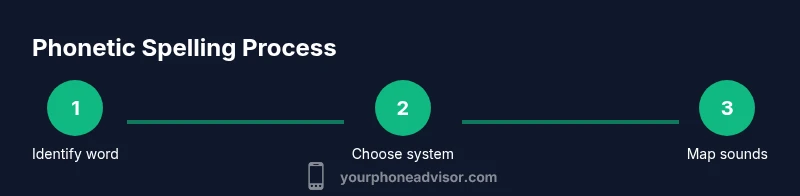
Let’s break the process into clear actions. Start by identifying each distinct sound in the word, then choose a symbol or letter sequence that represents that sound consistently. Keep a short cheat sheet so you can reuse symbols across words. This consistency makes your phonetic spelling reliable even for newcomers who are learning from your notes.
Common pitfalls and how to avoid them
Overcomplicating with rare symbols or inconsistent mappings leads to confusion. Dialect differences can also skew results if you don’t specify the target accent. Always test your phonetic spelling by saying it aloud and cross-checking against a trusted reference or native speaker. When in doubt, simplify the representation rather than overfit a single pronunciation.
Real-world examples: names, places, and terms
Names carry unique pronunciation quirks. Consider “Saoirse” or “Siobán”—these illustrate why you may prefer IPA or a careful plain spelling over guesswork. Place names combine regional sounds, while technical terms like “photosynthesis” require careful syllable-by-syllable representation. Practice with familiar names first, then expand to unfamiliar words to build accuracy and confidence.
Tools and resources that help
Use a reputable dictionary with pronunciation guides, an IPA chart, and audio examples to validate your spelling. Free online resources, language apps, and pronunciation guides can reinforce your practice. Keep a dedicated notebook or digital document where you record phoneme mappings and verified spellings for quick reference.
Practice plan: building a solid habit
Set a weekly practice goal: spell 10–20 words phonetically, review your mappings, and compare with native speakers or reliable references. Record yourself reading a short paragraph to hear whether your phonetic spellings align with actual pronunciation. Regular reflection and adjustment will improve accuracy and speed over time.
Tools & Materials
- Dictionary (monolingual or bilingual)(Include pronunciation guides where available)
- IPA chart (printable or digital)(Keep it accessible for quick reference)
- Pronunciation guide or teacher feedback(Optional but helpful for difficult sounds)
- Notebook or digital note app(To record phoneme mappings and examples)
- Audio device for listening practice(Headphones recommended for clear hearing)
Steps
Estimated time: 25-40 minutes
- 1
Define the target word and context
Identify the word you want to spell phonetically and the setting where it will be used (spoken, text, teaching). Consider dialect influences that may shift pronunciation.
Tip: Write the intended use to guide your choice of system. - 2
Choose a phonetic system
Decide between IPA for precision or a plain spelling approach that uses familiar letters. The choice should match your audience and purpose.
Tip: If you speak with a non-specialist audience, start with plain spelling. - 3
Break the word into sounds
Listen carefully or use a dictionary’s pronunciation to separate the word into distinct phonemes.
Tip: Mark syllable boundaries to prevent blending sounds. - 4
Map sounds to symbols
Assign a stable symbol or letter sequence to each sound. Keep the mapping consistent across words.
Tip: Prefer longer-established symbols for clarity. - 5
Check for alternative spellings
Review possible variants that could convey the same sounds and choose the most readable option for your audience.
Tip: Prioritize readability over overly literal transcriptions. - 6
Validate by listening
Speak the phonetic spelling aloud and compare it to the actual pronunciation. Adjust as needed.
Tip: If you hear mismatch, revisit your symbols. - 7
Write the canonical form
Record the final phonetic spelling in your notes with a short note on the chosen system and target audience.
Tip: Include the accent or dialect you targeted. - 8
Test with others
Have a friend or colleague try to pronounce using your phonetic spelling to verify clarity.
Tip: Ask for feedback and refine accordingly.
Got Questions?
What does it mean to phonetically spell a word?
Phonetic spelling expresses how a word sounds, using symbols or letter sequences that map to sounds. It helps people pronounce words more accurately, regardless of irregular spelling.
Phonetic spelling shows how a word sounds using symbols that stand for sounds.
IPA vs plain spelling: which should I use?
IPA offers precise sound symbols but can be hard to read for beginners. Plain spellings are easier to use in everyday writing but less exact.
IPA is precise; plain spelling is easier for daily use.
Can I phonetically spell names?
Yes. Start with the local pronunciation and note any common mispronunciations. Use a readable form or IPA if precision matters.
You can spell names phonetically; start with pronunciation and choose a clear representation.
How do I handle dialect differences?
Specify the target dialect and adjust symbols accordingly. When in doubt, choose a neutral form and offer an alternative in brackets.
Identify target dialect and adapt the spelling or provide alternatives.
Is phonetic spelling the same as transcription?
Phonetic spelling is a practical representation for everyday use; transcription is a broader, more formal process often used in linguistics.
Phonetic spelling is a practical form; transcription is more formal.
Where can I learn more about phonetics?
Consult language textbooks, pronunciation guides, and reputable online resources. Practice with audio examples to reinforce learning.
Look at textbooks and pronunciation guides, and listen to audio examples.
Watch Video
What to Remember
- Choose a system based on audience and purpose.
- Break sounds and map them consistently.
- Validate with listening and references.
- Use simple spellings first for readability.
- Practice with diverse words to build fluency.