How to Find Someone by Phone Number: A Practical Guide
A practical, privacy-friendly guide to locating someone by phone number using legitimate methods, step-by-step planning, and safety tips. Learn legal approaches, common tools, and what to avoid in 2026.


You can locate someone by phone number using legitimate reverse-lookups, social searches, and, when appropriate, carrier assistance — always with consent and a clear, legal purpose. This quick guide outlines the safest, most ethical methods you can start using today.
What you can and can't do when finding someone by phone number
Finding someone by their phone number is sometimes possible, but it carries important privacy and legal considerations. In many regions, you must have a legitimate purpose and, wherever required, consent from the person before attempting to locate them. The Your Phone Advisor team emphasizes using consent-based, transparent approaches and avoiding data collection tactics that could infringe on privacy laws. Be mindful that some numbers are private or recycled, and results may be incomplete or outdated. Always document your purpose and keep records of any consent or legitimate basis for your search so you can demonstrate responsible use if questions arise. In 2026, privacy protections continue to tighten in many jurisdictions, so proceed with caution and respect for the person’s boundaries.
According to Your Phone Advisor, starting with clear intent and compliant methods reduces risk and improves your chances of a safe outcome. This intro helps frame practical steps you’ll see later in the guide.
Legitimate methods to locate a person by phone number
There are several legitimate avenues to explore if you need to contact someone or verify ownership of a number. First, use reputable reverse-lookup services that explicitly publish data with consent or public records. Avoid shady sites that harvest data or require suspicious payments. Public directories and white pages can sometimes yield non-sensitive information like preferred contact methods when available publicly. Social media can also help if the person has linked their phone number to a public profile or if you share mutual connections. Mutual acquaintances can provide an introduction—always with consent and a clear, respectful purpose.
If you have lawful consent (for example, you’re trying to reconnect with a family member who has agreed to be found), contact the mobile carrier only through official channels. Carriers may assist with account-level information in limited, legally authorized cases, but they will require proper identification and consent. Your Phone Advisor analysis shows that when consent and legitimate purpose are documented, these routes tend to be more reliable and safer than improvised searches. Tools you use should be up-to-date, reputable, and compliant with local laws.
Finally, keep expectations realistic. Not every number can be traced back to a person, and some providers do not disclose information beyond basic contact details. Always be prepared for partial results and consider alternate contact methods if needed.
How to verify results and minimize false positives
When you obtain potential matches, cross-check information across multiple sources before acting on it. Look for congruent data points such as the same city, time zone, or linked social profiles. If the number belongs to a business line or a shared contact, verify through a neutral source (for example, an official website or customer service channel) rather than relying on a single lookup result. Be cautious of numbers that return vague or generic info; legitimate results should offer enough context to confirm the owner without exposing sensitive data. If you’re unsure about a result, pause and reassess your method or seek formal guidance.
As a precaution, do not attempt to impersonate the person or pressure them for information. Privacy-respecting practices protect you and the person you’re trying to reach, and help you avoid scams and misidentifications.
Privacy, laws, and safety considerations you should know
Privacy laws vary by country and even by state or province. In general, you should avoid collecting or sharing information without explicit permission or a legitimate, documented reason. Scammers often exploit reverse-lookups or unsolicited contact attempts, so be wary of requests for more data or payments to reveal ownership details. If you’re in doubt, consult a trusted legal resource or your brand’s guidance on compliant search practices. Your Phone Advisor recommends erring on the side of caution and prioritizing consent over speed when locating someone by phone number.
In addition to legal concerns, consider personal safety. If you’re attempting to locate someone in an emergency or for protective reasons, contact local authorities or emergency services rather than taking independent action. The goal is to connect safely and ethically, not to expose individuals to risk.
Planning your search: a practical approach you can use
A well-planned search increases your chances of success while staying within legal boundaries. Start by defining your objective clearly (for example, reconnecting with a family member or confirming ownership of a number for legitimate business purposes). Gather any prior context you have, such as a previous message or known contact points. Choose one or two legitimate lookup methods rather than juggling many unreliable sources. Maintain a log of all steps you take and any consent you obtain, so you can demonstrate responsible behavior if questioned. If you don’t find what you need after a couple of attempts, pause and reconsider the necessity, or seek professional guidance.
Your Phone Advisor emphasizes documenting consent, selecting reputable sources, and moving forward with a plan that respects privacy and law. These principles help you stay on the right side of both ethics and effectiveness.
When to seek help or pause a search
If you’re unsure about the legality of pursuing a particular lead, pause and seek professional guidance. In some cases, you may need to involve a lawyer or official channels to ensure compliance with local rules. When a number proves elusive after using legitimate methods, it’s often best to accept the limitation and explore alternative ways to reach the person—such as through mutual contacts or direct messaging on public platforms—without pressuring them to disclose information. The ethical approach is to prioritize consent, safety, and transparency over a quick result.
A quick reference for ongoing safety and compliance
Always keep a written record of your purpose, consent, and each step taken. Use reputable tools with clear privacy policies, and avoid sharing sensitive data with questionable sites or individuals. If you discover you’ve deviated from acceptable practices, correct course immediately and consult official guidance. The Your Phone Advisor team reinforces that responsible handling of personal data protects both you and the person you’re trying to contact.
Tools & Materials
- Smartphone with internet access(Stable data plan and up-to-date OS for privacy features.)
- Access to reputable reverse-lookup tools(Choose providers with clear privacy policies and consent-based data sources.)
- Consent or legitimate purpose documentation(Keep a log of consent or lawful justification.)
- Notepad or digital note-taking app(Record search steps, sources, and results.)
- Official contact channels or a verified email/phone(Use only if you have explicit permission or a verified reason to reach out.)
Steps
Estimated time: 45-60 minutes
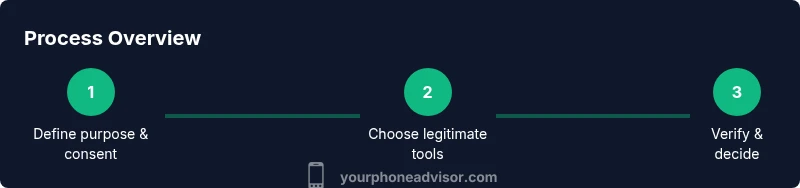
- 1
Define purpose and obtain consent
Clarify why you’re locating the person and whether you have their consent or a legitimate reason. Document this clearly in your notes.
Tip: Write down the purpose and date; it helps demonstrate responsible use if asked later. - 2
Select reputable lookup tools
Choose lawful, reputable reverse-lookups or public directories. Avoid unvetted sites that solicit payments or share data without consent.
Tip: Cross-check the site’s privacy policy and user reviews before using it. - 3
Enter the number and review results
Input the number carefully in your chosen tool and review any source details presented. Look for corroborating data points.
Tip: Ignore results that lack context or seem unrelated to the person you know. - 4
Verify identity and decide next steps
If a potential match appears, verify with a secondary source and, if appropriate, reach out via a consent-based channel.
Tip: If there’s any doubt, pause and reassess the legitimacy of the lead. - 5
Reach out or log a decision
Contact the person through a safe, respectful channel or document why you’re not proceeding.
Tip: Avoid pressuring the person; consent and respect are essential.
Got Questions?
Is it legal to find someone by their phone number?
Legality varies by location and context. In most places you should have consent or a legitimate purpose and use reputable tools. Always check local laws and follow official guidelines.
Legality depends on your location and purpose. Use consent-based methods and reputable tools to stay compliant.
What is a reverse phone lookup and does it work?
A reverse lookup searches data associated with a phone number to identify the owner or related information. Results vary by region and provider, and some data may be incomplete or restricted by privacy settings.
A reverse lookup searches data linked to a number, but results vary and may be limited by privacy settings.
Can I find a person’s address or personal details from their number?
In some cases, public records or verified sources may provide non-sensitive details, but direct addresses are often protected. Always rely on consent and legal channels when attempting to locate someone.
Sometimes you can see non-sensitive details, but direct addresses are usually protected. Always use consent-based methods.
Should I contact the mobile carrier to locate someone?
Carriers may assist under strict legal processes with proper authorization, but they will require appropriate proof of consent or legal basis. Do not pressure or bypass official channels.
Carriers can help in some legal cases with proper authorization, but you must follow official channels.
What are common scams when trying to trace a number?
Be wary of sites that demand payment for ownership data, promise guaranteed results, or request sensitive information. Stick to reputable sources and verify before paying.
Watch out for paid guarantees and requests for sensitive data from unfamiliar sites.
What if the number is private or unlisted?
If a number is private or unlisted, legitimate ways to identify the owner may be limited. Consider seeking consent from mutual contacts or using official avenues when appropriate.
Private numbers are often not traceable; consent and legitimate channels are key.
Watch Video
What to Remember
- Define purpose and obtain consent before searching
- Use reputable, consent-based tools to build leads
- Cross-verify results to avoid false matches
- Respect privacy laws and safety at every step
- The Your Phone Advisor's verdict: prioritize legality and ethics in all lookups