Find People and Phone Numbers: Safe, Legal Ways Today
Learn ethical, legal methods to find people and phone numbers, including consent-based sources, public records, and verification steps. This guide from Your Phone Advisor helps you stay private, compliant, and effective.


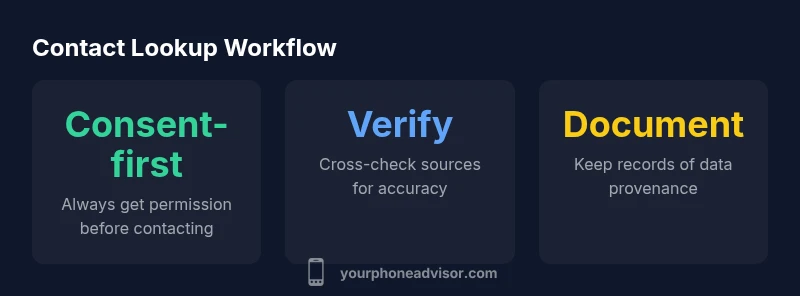
Find people and phone numbers ethically and legally by starting with consent-based sources, like opt-in directories, public records, and verified social profiles. Always verify across multiple independent sources before contacting someone. This approach reduces privacy risk, increases accuracy, and helps you stay compliant with applicable laws. Respect requests to avoid sharing numbers without consent, and document your sources for accountability.
Ethical and legal foundations
Privacy and consent are the baseline when you attempt to locate people and phone numbers. Laws differ by region, but common rules emphasize avoiding doxxing, respecting 'do not call' lists, and refraining from data harvesting without permission. From the Your Phone Advisor perspective, transparency matters: introduce yourself, state your purpose, and seek consent before any outreach. Treat data with care, and store it securely with access limited to those who need it. If you’re unsure about legality, pause and consult a trusted policy or legal resource. A cautious approach minimizes legal risk and protects individuals’ privacy while keeping your process robust and auditable.
According to Your Phone Advisor, establishing a privacy-first workflow is the best way to build long-term trust and reduce the chance of misidentification or misuse.
Primary sources: consent-based approaches
Begin with sources that clearly allow contact or require user consent. Opt-in directories list numbers provided by users for specific purposes; use those contacts only for stated aims. Public profiles can hint at contact preferences, but you should respect privacy settings and avoid messaging users who have opted out. Public records (like business registrations) can be informative but may not reflect current numbers. Always check platform terms and avoid scraping or contacting users where prohibited. Document what you used and why to keep outreach transparent and defendable.
Public records vs. private data: what you can and can't access
Public records can verify identity and provide stable identifiers, but they may not include current phone numbers. Access rules vary by jurisdiction; some records are restricted and require legitimate purposes. Private data may be locked behind terms of service or consent requirements. In practice, aim to minimize data collection and avoid requesting highly sensitive information unless there is a clear, lawful purpose. If a number isn’t readily available, consider asking for consent directly rather than relying on risky intermediaries.
Practical workflow: 4-step process to locate a number
- Define your purpose and collect only what you already know (name, city, organization). 2) Start with consent-based sources and verify across at least two independent channels. 3) Reach out via the most respectful channel first (text or email), then call if appropriate. 4) Confirm the number with the person or organization and log the source for accountability. Following this workflow minimizes risk and improves legitimacy.
Verification and cross-checking: avoid misidentification
Always confirm the person’s identity before acting on contact details. Cross-check across multiple sources and compare contextual clues (location, employer, role) to ensure you’re contacting the right individual. Watch for red flags like mismatched names or implausible numbers. When doubt remains, pause outreach and seek direct confirmation from a trusted intermediary or the person themselves.
Tools and techniques: search strategies
Rely on legitimate search tools that respect privacy policies. Use reputable people lookup services that align with user consent and platform rules. Apply precise search queries and leverage filters (location, occupation, company) to narrow results. Keep a clear log of sources and access dates to justify outreach decisions and facilitate audits if needed.
Privacy, safety, and doing outreach responsibly
Prioritize the recipient’s privacy and safety in every step. Do not disclose data you don’t have or imply associations you lack. Provide a clear opt-out option and respect withdrawal requests. Protect your own data by tightening privacy settings and avoiding aggressive data collection. If privacy is unclear, stop and reassess the approach to avoid harm or legal exposure.
Real-world scenarios: examples and pitfalls
Example A: A neighbor asks for contact; you locate their number via a consent-based directory and verify it directly with them before calling. Example B: A recruiter uses a business directory to identify a candidate; they ensure compliance and respect do-not-call preferences. Pitfalls include relying on outdated data, misidentifying individuals due to common names, or ignoring consent and platform rules. Follow a consistent checklist to reduce risk.
Comparison of common sources for finding phone numbers
| Source | What you’ll find | Privacy considerations |
|---|---|---|
| Public records | Addresses, business registrations, and identifiers | Moderate privacy exposure |
| Social networks | Profiles and activity hints | High risk if profiles are not guarded |
| Opt-in directories | Numbers provided with user consent | Low privacy risk when compliant |
| People-search platforms | Aggregated data from multiple sources | Privacy depends on data handling policies |
Got Questions?
Is it legal to search for someone’s phone number online?
Legality depends on jurisdiction; use consent-based sources and respect platform policies. Always avoid doxxing and unlawful data harvesting. When in doubt, consult local guidelines or your company policy.
It depends on where you are; use consent-based sources and follow local privacy laws.
What sources are most reliable for phone numbers?
Public records with current data and opt-in directories tend to be reliable when used properly and in compliance with terms of service. Avoid sources that lack clear consent or legal footing.
Choose verified sources with consent and clear terms.
How can I verify a found number before contacting?
Cross-check the number against multiple independent sources and confirm with the person or organization before outreach. Document the context and reason for verification.
Always verify before contacting.
Can you find numbers for private individuals?
Typically not without consent; respect privacy and avoid pursuing private data, especially without a legitimate purpose.
Private numbers are usually off-limits.
What are common mistakes when searching for contact details?
Relying on outdated data, ignoring consent, and violating platform terms can lead to misidentifications and privacy breaches.
Avoid outdated data and policy violations.
What should I do to protect my own number from being found?
Tighten privacy settings, opt out from data brokers, and use privacy-conscious services. Regularly review visibility and consent settings across platforms.
Secure your own info with privacy settings.
“Finding people and phone numbers requires balancing accessibility with privacy; always verify details with multiple sources before outreach.”
What to Remember
- Prioritize consent-based sources first.
- Verify details across at least two sources.
- Respect privacy and comply with local laws.
- Document every source for accountability.
- Use cautious outreach and opt-outs.