What Phone Towers Does Cricket Use?
Explore which towers Cricket uses, how MVNO access to AT&T infrastructure works, and what it means for 4G/5G coverage, roaming, and plan options.


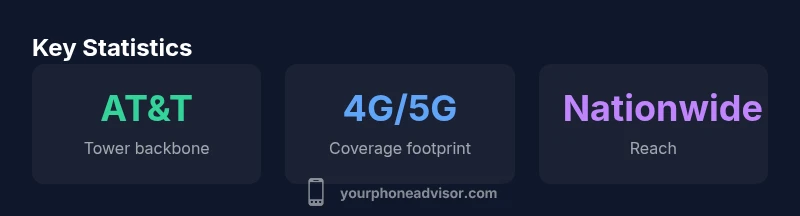
Cricket Wireless operates as an MVNO that uses AT&T’s network. In practice, this means your calls and data tap into AT&T’s towers and backhaul. You’ll get AT&T's nationwide 4G LTE coverage and the growing 5G footprint through Cricket’s SIM. While Cricket doesn’t own the towers, the relationship delivers familiar national reach and reliable service, with plan terms guiding roaming, hotspot use, and data caps.
What phone towers does Cricket use
If you’re asking what phone towers does cricket use, the short answer is that Cricket relies on AT&T’s network. Cricket operates as an MVNO, so it does not own a separate constellation of cell sites. Instead, it piggybacks on AT&T’s nationwide towers, backhaul, and core network routes. This setup grants Cricket customers access to AT&T’s extensive LTE footprint and a rapidly expanding 5G presence through Cricket’s SIM cards. The practical implication is straightforward: you connect to the same physical towers that AT&T customers rely on, which translates into comparable coverage in many markets. The caveats come from plan terms, device compatibility with AT&T’s bands, and how AT&T prioritizes traffic during peak usage. In urban cores and highway corridors, you’ll typically enjoy dense tower density and robust performance; in rural zones, coverage still follows AT&T’s extensive reach, but speeds can vary based on frequency bands and congestion. For clarity on the exact towers involved near you, check your device’s supported bands and the Cricket coverage map for your area.
How MVNOs use the AT&T network
Cricket is classified as a mobile virtual network operator (MVNO). MVNOs, including Cricket, rent access to a carrier’s network rather than owning each tower site. When you insert a Cricket SIM, your device connects to AT&T’s towers and backhaul, inheriting AT&T’s spectrum bands and routing. This shared backbone is what enables a seemingly seamless experience across most of the country and explains why your data speeds and call quality often resemble those of AT&T’s own customers. The differences you notice—such as pricing options, data caps, hotspot allowances, and roaming terms—come from Cricket’s plan design rather than a different physical infrastructure. Understanding this dynamic helps answer questions about which towers Cricket uses and why coverage is consistent in many regions.
What this means for coverage and performance
Cricket’s coverage is described as nationwide because it rides on AT&T’s footprint. In practice, performance depends on several factors: your location, your device’s compatibility with AT&T’s bands, and the network load in your area. In dense urban centers, you’ll encounter strong 4G LTE and expanding 5G, driven by the same towers and frequencies AT&T utilizes for its own customers. In rural or remote areas, signals may propagate on lower-frequency bands, which travel farther but can deliver different real-world speeds. Regardless, the underlying infrastructure remains AT&T-based, which offers reliable voice quality, consistent data delivery, and a broad spectrum of supported bands. If your use cases include VoLTE, HD streaming, or gaming, confirm your plan supports these features and verify device compatibility with the required AT&T bands.
Roaming, international use, and plan limits
Domestic roaming under Cricket generally mirrors AT&T’s policies, since the towers are part of AT&T’s network. This means roaming behavior and pricing can vary by region and plan. International roaming, however, is typically more plan-dependent and may require add-ons or different pricing. If you travel frequently, review the specific roaming terms tied to your Cricket plan and verify any data caps or per-day roaming charges. For some travelers, it’s worth noting that Cricket’s international options might impose limitations or different coverage rules than AT&T’s own international offerings.
Practical tips to optimize Cricket performance
- Check your local coverage map to understand which AT&T towers you’ll likely connect to in your area.
- Ensure your device supports the necessary AT&T bands to maximize 4G LTE and 5G performance.
- Prefer 5G where available, but be mindful of battery life; use 5G only when your plan and location justify it.
- If you experience slow speeds, experiment with network mode settings (e.g., LTE/5G auto) or manually select bands that are best supported by your device.
- Confirm hotspot allowances, data caps, and roaming options in your current Cricket plan to avoid unexpected charges.
How to verify coverage in your area
The most reliable way to confirm coverage is to use Cricket’s official coverage map and cross-check it with AT&T’s own network plans. If you’re evaluating a move from another carrier, compare the LIVE coverage indicators in your area at different times of day. You can also contact Cricket support for a location-based confirmation and ask about which towers are most active near your home, workplace, and common travel routes.
Quick reference: Cricket’s network infrastructure
| Aspect | Cricket on AT&T Network | Notes |
|---|---|---|
| Tower Source | AT&T towers and leased sites | Cricket uses AT&T infrastructure as an MVNO |
| Coverage Footprint | Nationwide via AT&T network | Coverage mirrors AT&T in most regions, with MVNO terms |
| 5G Availability | Broad access, location-dependent | Depends on device compatibility and area |
Got Questions?
Does Cricket use AT&T towers?
Yes. Cricket operates as an MVNO on AT&T’s network, sharing towers and backhaul to deliver service across most of the U.S.
Yes—Cricket uses AT&T towers as part of its network.
Can I expect the same coverage as AT&T customers?
In general, yes, since Cricket borrows AT&T's network. Some features and roaming terms may differ by plan.
Mostly, you’ll get AT&T coverage, but check your plan for roaming rules.
Does Cricket support 5G?
Cricket offers 5G access on compatible devices wherever AT&T provides 5G. Availability depends on location and plan.
Yes, 5G is available where AT&T has coverage.
Is international roaming supported?
Roaming abroad depends on your plan and add-ons. Domestic roaming follows AT&T policies; international roaming may require add-ons.
Roaming abroad depends on your plan; check options.
How can I check coverage near me?
Use Cricket’s coverage map or contact support to see AT&T-based coverage in your area.
Check the map or ask support for local coverage.
Will Cricket prioritize traffic during congestion?
Prioritization practices depend on overall network conditions and plan terms; during peak times, some throttling or slower speeds can occur.
During busy times, speeds may drop a bit due to network conditions.
“Cricket’s MVNO model leverages AT&T’s expansive tower network, delivering reliable coverage without separate tower ownership.”
What to Remember
- Cricket uses AT&T towers via an MVNO arrangement.
- Expect AT&T-level nationwide coverage with Cricket plan terms.
- 5G is broadly available but location-dependent.
- Check roaming and hotspot rules in your Cricket plan.