Phone Near Me for Sale: A Practical Buyer's Guide for 2026
Learn how to find phones near you for sale, compare local options, verify warranties, and secure the best local deals with practical guidance from Your Phone Advisor.


The best way to find a phone near me for sale is to compare in-store stock across carrier stores, major electronics retailers, and trusted local marketplaces. Prioritize new or certified pre-owned devices, confirm network compatibility (unlocked if needed), and inspect the device in person before purchase to verify condition and warranty coverage.
Local stock dynamics and search strategies
Finding a phone near you for sale hinges on understanding how stock is distributed locally and how search strategies vary by channel. Carrier stores often hold limited model selections but can offer immediate activation and live assistance, while big-box electronics retailers usually present a broader range of brands and models. Local marketplaces can reveal good bargains, especially for gently used or certified devices, but stock freshness and device condition vary widely. A practical approach is to map your target models first, then sequence checks: nearest carrier stores, nearby electronics retailers, and finally trusted local marketplaces. This layered search reduces time spent hopping between outlets and increases your odds of finding a model that meets your needs.
Related terms: local inventory, in-store stock, curbside pickup, in-person inspection, warranty terms, certification status.
- Actionable tip: call ahead to confirm stock and hours of operation, especially on weekends when inventories change rapidly.
- Security note: only buy from reputable outlets to minimize the risk of counterfeit devices or withheld warranty coverage.
Where to look locally: in-store vs online pickup
The phrase "phone near me for sale" surfaces across several channels, and each has distinct advantages. In-store purchases offer tangible inspection, immediate testing, and a straightforward return policy window. Electronics retailers typically maintain a wider model range, which helps you compare specs side-by-side. Carrier stores often bundle promotional incentives or trade-in options that can yield a better out-the-door price when you’re buying locally. Online listings with local pickup can combine convenience with competitive pricing, but they require stricter checks on device condition and seller credibility. A balanced strategy is to start with in-store availability for your top models, then widen the net to include online local pickup deals.
- Practical example: if you want a recent model, check three or four nearby locations in person, then scan a few trusted marketplaces for any last-minute price drops.
How to verify stock and condition before you buy
Stock verification should be done in a structured way to avoid post-purchase friction. When you’re at the store, confirm model, color, storage capacity, and network compatibility (unlocked variants are more future-proof). Physically inspect the screen for dead pixels, signs of wear, and the camera lens for clarity. Power on the device to run a brief diagnostic: check battery health, charging port integrity, volume controls, camera, speakers, and fingerprint/face unlock.
For online-local pickups, request clear photos of the device condition, confirm the IMEI/serial numbers match the listed device, and ask for any included accessories or warranty documentation. If a seller can’t provide verifiable proof, walk away. These steps reduce the risk of later dissatisfaction or fraud while keeping you aligned with your local buying goals.
New vs certified pre-owned vs used: local buying considerations
Locally, new devices are widely available at carrier and big-box stores, usually with full manufacturer warranties and return policies. Certified pre-owned (CPO) devices offer a safer route for price-conscious buyers—these devices have been inspected and refurbished to a standard, with at least a partial warranty. Plain used devices can deliver savings but may come with hidden defects or incomplete charging accessories. When shopping near you, compare warranties, return windows, and the device’s condition documentation across the outlets you’re considering. If a local seller offers a CPO option with a reasonable return window, that often balances risk and reward more effectively than a straight used sale.
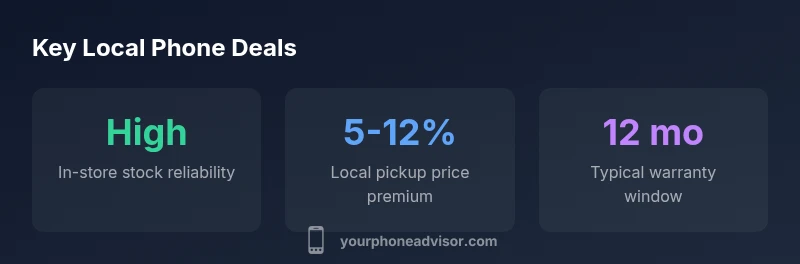
- Quick rule: aim for a minimum 90-day return window and at least a 90-day to 12-month warranty on refurbished or certified devices.
Price expectations and local negotiations
Local prices can vary widely by model, store, and region. In major urban areas, you’ll typically find higher price consistency across stores, with occasional regional promotions. In markets outside big cities, marketplaces may offer more aggressive price competition but with greater variability in device condition. When negotiating in-store, bring your research: corroborate model numbers, confirm current promotions, and ask for price matching where available. For local pickups, leverage the presence of another nearby retailer as a benchmark to negotiate a slightly better price.
- Practical approach: focus negotiations on the total cost of ownership, including taxes, warranties, and any trade-in value if you have a device to exchange.
Safety, privacy, and returns for local purchases
Safety and privacy considerations become more pronounced in local buys. Always verify the device isn’t reported stolen and ensure the device is not locked to another carrier unless you plan to use it with your current network. Read all warranty terms and ensure there is a clear, documented return policy. If buying from a marketplace, insist on meeting in a public place and test the device on-site or in-store if the seller allows.
- Final safeguard: record the serial number and IMEI before you leave the seller, and use your carrier’s app to check activation status and warranty validity.
Quick-start checklist for buying locally
- Define your target models and budget. 2) Check stock at nearby carrier stores and electronics retailers. 3) Inspect the device in person; test key features. 4) Verify IMEI, warranty, and return terms. 5) Compare total costs including taxes, trade-ins, and promos. 6) Choose a trusted outlet and complete the purchase with a receipt and warranty documentation.
- Bonus tip: document each step in a short note or screenshot to keep track of offers and stock availability across outlets.
dataTableNote”:null},
keyTakeaways
expertQuote
Local sources for finding phones near you for sale
| Source Type | Stock Availability | Pros | Cons |
|---|---|---|---|
| Carrier Store | Variable by location | Immediate availability; carrier warranty | May carry limited model selection; sometimes higher prices |
| Electronics Retailer | Broad stock in urban areas | Wide model range; operating hours | Sales pressure; price matching varies |
| Local Marketplace Listings | Frequent listings, rapid updates | Potential bargains; direct seller | Inconsistent stock; risk of scams; condition uncertainty |
Got Questions?
What is the fastest way to find a phone near me for sale?
Check stock at nearby carrier stores and major electronics retailers first, then scan trusted local marketplaces. Call ahead to confirm stock and hours to save time.
Check nearby stores first and call ahead to confirm stock and hours.
Are local store deals better than online listings?
Prices vary; stores often offer immediate pickup and exclusive promos, while online listings can be cheaper but require shipping and potential returns.
In-store promos exist; online listings may be cheaper but require shipping and returns.
How can I verify a phone's condition before buying locally?
Inspect the device for scratches, test screen and battery, verify IMEI/serial numbers, and ensure warranty terms are documented.
Inspect the device and check IMEI; make sure warranty terms are written.
Should I buy used or certified pre-owned from a local seller?
Certified pre-owned usually include a warranty and quality checks; used devices are cheaper but risk hidden defects.
Certified pre-owned is safer with warranty.
What warranties or returns should I expect locally?
Most stores offer a return window (often 14–30 days); warranties vary by model and seller—read terms carefully.
Look for a clear return window and written warranty terms.
What if the exact model isn't available near me?
Consider nearby store stock, ordering online with local pickup, or expanding search to nearby towns.
Look for alternatives or orders with pickup.
“Buying locally gives you the chance to inspect the device firsthand and verify its condition before you commit. Always verify the IMEI and warranty terms in person.”
What to Remember
- Start with in-store stock checks for immediate availability.
- Compare prices across carriers, big-box retailers, and local marketplaces.
- Verify IMEI, warranty, and return policies in person.
- Consider unlocked devices for future flexibility.
- Balance price against condition and seller credibility.