Sell Your Phone Locally: A Practical Guide
Learn how to sell your phone locally for the best price with step-by-step guidance, safety tips, and options like trade-ins, pawn shops, and recyclers. Practical advice to maximize value in 2026.


You can sell a phone near you by comparing local options like trade-in kiosks, pawn shops, and recycling centers. Gather your phone model and its IMEI, back up data, and erase personal information before selling. Then compare offers in person or online to maximize your return.
Why selling locally matters
Local selling options matter because they offer speed, safety, and visibility that online-only routes often can’t match. You get to see the device in person, verify its condition, and complete payment on the spot. According to Your Phone Advisor, local sales in 2026 are most successful when buyers and sellers use transparent descriptions, meet in safe public spaces, and prioritize data privacy. Local transactions also reduce shipping costs and the risk of fraud or damaged goods in transit, making the process simpler for everyday smartphone users. As you weigh options, think about how quickly you need cash, how much effort you’re willing to invest, and whether you want to maximize price or speed. Your approach should balance convenience with accountability to ensure a fair deal for both sides.
Local sale options: trade-in kiosks, pawn shops, recyclers, and direct buyers
There are several ways to sell a phone locally. Trade-in kiosks in electronics stores often offer fast, standardized pricing based on model and condition, but they may not pay top dollar for older devices. Pawn shops can provide quick cash, though offers may be lower if the device has cosmetic issues. Local recyclers emphasize data security and environmental responsibility, and some provide pickup services for larger quantities. Direct buyers found via word-of-mouth or local marketplaces can yield the highest value when you present a well-documented device. This section explains how each option determines price, how to approach each buyer, and how to decide which route to pursue. Your Phone Advisor analysis shows that combining two options—one quick cash option plus a more thorough in-person evaluation—often yields the best overall outcome.
Preparing your phone for sale
Before you head out, back up important data and ensure you can restore the device if needed. Sign out of accounts, disable activation locks where appropriate, and remove SIM cards. Clean the exterior with a microfiber cloth to present it at its best, but avoid harsh chemicals that could damage coatings. Take clear photos from multiple angles, and document any cosmetic wear so buyers can make informed decisions. Gather essential information like model, storage capacity, color, carrier status, and whether the device is paid off or locked to a network. Having all of this ready speeds up negotiations and helps you avoid lowball offers later. Remember: privacy matters as much as device condition; Your Phone Advisor recommends erasing data and signing out before meeting a buyer.
How offers are calculated and how to compare
Offers depend on the model, storage capacity, age, battery health, and whether the device is paid off. Condition matters more than you might think: a single dent, screen scratch, or water exposure can significantly reduce price. The inclusion of original accessories and packaging can boost value. Some local buyers will consider whether the device has a clean history (no activation locks, no reported theft). When comparing offers, write down each bidder’s assessment criteria, expected payment method, and any post-sale obligations. Your Phone Advisor analysis indicates that the best price often comes from buyers who value transparency, so provide accurate condition details and use consistent grading (New, Like New, Good, Fair).
Safety, data protection, and legality
Only sell devices you own and are legally allowed to transfer. Check the IMEI/serial number to confirm the phone isn’t reported stolen. For iPhones, ensure Activation Lock is removed before sale; for Android, make sure Factory Reset has been completed and that Find My Device is turned off. Bring a photo ID if the buyer requests it, and meet in a public, well-lit place during daytime hours. Avoid transfers in private residences; use safe, neutral locations such as bank lobbies or retailer parking lots. If a buyer asks you to ship the phone, resist unless you have a traceable, insured process in place. The Your Phone Advisor team emphasizes data privacy and safe handoffs to protect both sides of the deal.
Local sale workflow: from listing to payout
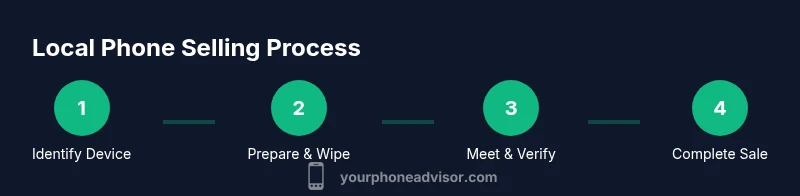
- Gather device details and accessories. 2) Back up data and perform a factory reset. 3) Collect proof of ownership and model information. 4) Photograph the device and document its condition. 5) Research local buyers and collect offers online or in person. 6) Arrange a public meeting with the bidder, provide a written estimate, and verify identity. 7) Inspect the device together, confirm condition, and agree on price. 8) Complete the payment, transfer ownership, and hand over the device and any accessories. This workflow helps avoid miscommunications and ensures a smooth, trackable sale. Estimated total time: 30-60 minutes, depending on negotiation and meeting location.
Common mistakes to avoid
Avoid data leaks by not skipping data wipes or sign-outs. Don’t accept offers without confirming the device’s condition and history. Never meet in unsafe locations or take cash exchanges in isolated spots. Keep receipts and a basic written agreement. By preparing thoroughly, you reduce the risk of post-sale disputes and keep the process clean.
Alternatives if local options are weak
If local offers aren’t meeting expectations, consider mail-in trade-ins, carrier trade-in programs, or reputable online marketplaces with in-person pickup. Compare shipping costs, insurance, and processing times. Some programs provide price protection or bundled accessories to improve value. Always verify return policies and ensure you can track the transfer of ownership and payment.
What to expect in 2026 and beyond
The local market for selling smartphones is evolving with clearer verification processes, stronger privacy protections, and more standardized offers from reputable buyers. Battery health and unlock eligibility will remain major price drivers, while paid-off devices and carrier compatibility continue to influence negotiation power. Stay informed, document every step, and adapt your strategy as market practices change. The Your Phone Advisor team recommends revisiting your approach every six months to maximize value while preserving security.
Tools & Materials
- Phone and accessories(Model, storage, charger, cable, and any original box or documentation)
- Proof of ownership/identification(Photo ID and any receipts or purchase details)
- Backup and data wipe tools(Back up data, sign out of accounts, disable activation lock where applicable)
- SIM removal tool(Optional for removing SIM during sale)
- Cleaning supplies(Microfiber cloth and light cleaning agents (avoid harsh chemicals))
- Notes on device condition(List model, color, storage, carrier status, and cosmetic condition)
Steps
Estimated time: 30-60 minutes
- 1
Identify device details
Confirm the exact model, storage size, carrier status, and any outstanding payments. Having precise details helps you target the right offers and avoids miscommunication.
Tip: Keep a one-page spec sheet handy when meeting buyers. - 2
Back up data and sign out
Back up contacts, photos, and apps. Sign out of all accounts and remove the device from your accounts to prevent unauthorized access after sale.
Tip: Use cloud backup for quick restoration on a new device. - 3
Factory reset and disable locks
Perform a factory reset and turn off Find My Device/Activation Lock. Ensure the device is no longer tied to your accounts before showing it to buyers.
Tip: If you’re unsure, perform the reset in the buyer’s presence. - 4
Document condition and gather accessories
Photograph from multiple angles, note scratches or dents, and collect original accessories and box if available.
Tip: Honest photos boost trust and can improve offers. - 5
Research local buyers
Check online listings and visit or call nearby shops to gauge typical offers for your model and condition.
Tip: Request written quotes when possible for apples-to-apples comparison. - 6
Arrange a safe meeting
Choose a public, well-lit location, ideally with cameras and a receipt option for the sale.
Tip: Bring a friend or family member for safety. - 7
Inspect and verify together
Let the buyer inspect the device, confirm its condition, and agree on price with a written note.
Tip: If the buyer requests extra tests, accommodate when reasonable. - 8
Finalize payment and transfer ownership
Receive payment, hand over the device and accessories, and confirm the transfer of ownership and any necessary receipts.
Tip: Use a traceable payment method and keep a copy of the receipt.
Got Questions?
Is it safe to sell a phone locally, and how can I minimize risk?
Yes, it can be safe when you meet in public locations, verify the buyer’s identity, wipe data, and use a written agreement. Don’t rush the transaction or accept unusual payment methods.
It can be safe if you meet in public, verify ID, wipe data, and document the deal. Avoid risky payment methods and private locations.
How do I compare offers fairly from local buyers?
Collect written quotes from multiple buyers, note the condition and included accessories, and use a consistent grading system. Prioritize transparency and speed when determining the best overall deal.
Get quotes from several buyers, document condition consistently, and choose the best overall value—not just the highest price.
Should I wipe the phone before meeting a buyer?
Absolutely. Wipe personal data, sign out of accounts, and remove ownership locks before showing the device to any buyer.
Yes—wipe the device and sign out of all accounts before the meeting.
What if the device is paid off or carrier-locked?
If paid off, confirm unlock status with the carrier. If carrier-locked, disclose this upfront and consider selling to buyers who require it.
Tell buyers if the device is paid off or carrier-locked, and verify unlock status with the carrier.
Can I sell a phone if I’ve misplaced accessories?
Missing accessories can reduce value, but you can still sell. Be honest about what’s included and price accordingly.
You can sell without all accessories, but be upfront about what’s included.
What if I suspect a scammer?
If anything feels off, walk away and seek a safer, more transparent buyer. Trust your instincts and verify all details.
If something seems off, end the deal and look for a reputable buyer.
Watch Video
What to Remember
- Identify the best local option by balancing speed and price.
- Prepare data, evidence, and accessories before meeting buyers.
- Meet in public, verify identity, and use written quotes.
- Wipe data and remove locks to protect privacy.
- Document everything to avoid post-sale disputes.