How Much Phone Screen Time Is Too Much: A Practical Guide for 2026
Explore evidence-based guidelines for screen time, signs of excessive use, and practical steps to balance daily phone habits in 2026. Learn how to tailor limits for adults and kids with clear, actionable strategies.


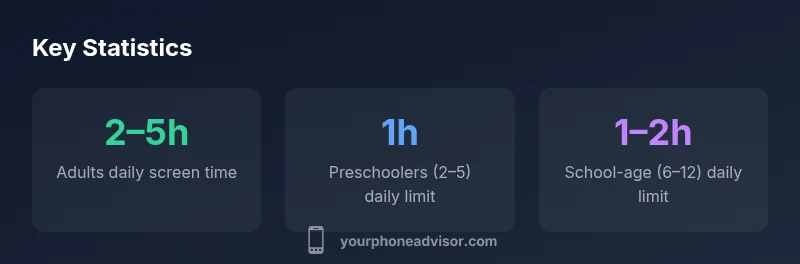
There isn’t a universal cutoff for adults, but a practical answer to how much phone screen time is too much depends on context. If time spent interferes with sleep, mood, or daily tasks, that’s a red flag. For kids, guidelines often cap preschoolers at about 1 hour and school-aged children at 1–2 hours of recreational use, with emphasis on high-quality content and active engagement.
Understanding what counts as screen time, and why the question how much phone screen time is too much matters
Screen time isn’t only the minutes on a clock; it’s the quality and context of usage. It includes time spent on notifications, social media scrolling, video streaming, gaming, reading, and even productive work on a device. For many people, the line between productive work and leisure can blur, making it hard to describe a single threshold for “too much.” In practice, the question how much phone screen time is too much should consider three dimensions: duration, content, and impact. If you’re asking this question, you’re already taking a constructive step toward healthier tech habits. Consider your baseline: how many hours per day do you spend on your phone, and what happens when you hit a typical limit? If you notice sleep disruption, mood swings, or trouble concentrating after you use your phone, those may be signals to reassess your pattern.
Adults: how much screen time is potentially problematic, and why context matters
For adults, there isn’t a one-size-fits-all threshold. A useful approach is to separate work-related screen time from personal, recreational use. If your phone usage begins to erode sleep quality, jeopardize important relationships, or reduce productivity at work, it’s worth dialing back. Some studies identify links between extended non-work screen time and poorer sleep, lower physical activity, and more sedentary time, though causality is often complex. The practical takeaway is to set a personal budget that aligns with your responsibilities and values. For many adults, monitoring non-work screen time and ensuring days include offline moments can yield noticeable benefits in mood and energy.
Kids and teens: guidelines by age group and how to apply them at home
Children aren’t miniature adults; their developing brains and bodies respond differently to screen exposure. For preschoolers (2–5 years), many organizations recommend about 1 hour of high-quality, supervised content daily. School-age children (6–12 years) are often advised 1–2 hours of recreational screen time, with emphasis on content balance and offline activities. Teens benefit from structured routines and parental involvement to ensure screen use supports learning and social connectedness rather than passive consumption. The key is to pair limits with meaningful activities, teach digital literacy, and model balanced behavior. Customize rules in a family plan: define clear times for study, meals, and sleep, and negotiate screen-free zones.
Health and productivity: how screen time affects sleep, attention, and mood
Excessive screen time, especially before bed, is associated with longer sleep latency and poorer sleep quality. The blue light from screens can delay melatonin release, while highly stimulating content can increase arousal. Beyond sleep, prolonged device use can influence attention span, mood, and daytime fatigue. On the productivity front, stringing together screen time across multiple tasks can fragment focus, reducing deep work time. The practical approach is to implement a daily rhythm that protects sleep and prioritizes tasks that require concentration, while still allowing social connection and entertainment within reasonable boundaries.
Practical strategies to reduce screen time without sacrificing productivity
Start with a clear, realistic plan. Create a screen-time budget that accounts for work, communication, and leisure. Use device features like focus modes, notifications snooze, and bedtime schedules. Swap passive scrolling for intentional activities: a short walk, a quick call with a friend, or reading a physical book. Establish screen-free zones (bedroom, dining table) and routines (no devices during meals). Track progress weekly, celebrating small wins, and adjust your targets as habits stabilize. The goal isn’t elimination but mindful use that supports your goals and well-being.
How to measure screen time and set personalized limits
Begin by measuring baseline usage with built-in tools (iOS Screen Time, Android Digital Wellbeing) and third-party trackers if needed. Compute a simple daily average and observe patterns on weekdays vs weekends. Set incremental targets (e.g., reduce by 15–30 minutes per week) and monitor for signs of improvement in sleep, mood, and productivity. Review content quality regularly and favor engaging, educational, or connective activities over passive scrolling. Reassess your limits every 4–6 weeks to account for changing routines.
When to seek help: signs screen time is affecting mental health or daily life
If screen time is linked to persistent anxiety, depression, sleep problems, or impaired functioning, consider seeking professional guidance. For families, persistent conflicts around device use or noticeable behavioral changes in children warrant a consult with a pediatrician or mental health professional. Early intervention can prevent more serious issues and help establish healthier long-term habits.
Representative screen time ranges by age group
| Group | Typical Time Range | Notes |
|---|---|---|
| Adults (general) | 2–5 hours | Varies with work and leisure |
| Preschoolers (2–5) | 1 hour | Quality content prioritized |
| School-age (6–12) | 1–2 hours | Balance with physical activity |
| Teens (13–18) | 1–3 hours | Monitor social media use |
Got Questions?
How do I know if my screen time is too high for me personally?
Assess impact on sleep, mood, focus, and daily responsibilities. If you notice disruption in any of these areas, it’s worth adjusting usage even if the exact number isn’t clear.
Listen for sleep problems, mood changes, or trouble focusing. If those show up, it’s time to consider reducing screen time.
What counts as screen time when I’m on a work device?
Work-related screen time serves a purpose, but personal use during work hours should be mindful. Create boundaries like lunch breaks or post-work evenings to separate leisure from work.
Separate workscreen time from personal use by designating breaks for non-work activities.
What are practical steps to start reducing screen time today?
Set a modest daily limit, enable focus modes, and remove nonessential notifications. Create screen-free zones such as the bedroom or dining area and gradually extend offline periods.
Begin with one limit, use focus modes, and add a screen-free zone tonight.
Do teenagers need stricter limits than adults?
Yes, teens typically benefit from guided limits and ongoing conversations about content, safety, and balance, since their developing brains are more sensitive to time spent on screens.
Teens usually need more structured limits and open conversations about content and balance.
How can I measure screen time across devices?
Use built-in tools on each device (Screen Time, Digital Wellbeing) and align data to get a comprehensive sense of total daily time. Regularly review trends.
Use device tools to track time and compare across devices weekly.
Are there signs screen time affects mental health?
Increased anxiety, irritability, or social withdrawal can accompany heavy use. If you notice these signs, seek professional guidance.
Watch for anxiety or mood changes and seek help if they persist.
“Smart screen habits come from awareness, not restriction. Small, consistent changes beat drastic cuts.”
What to Remember
- Track your baseline and look for sleep or mood disruptions
- Differentiate work vs. recreational screen time
- Set gradual, realistic limits that fit your life
- Prioritize high-quality content and offline activities
- Use device features to support healthy habits