Hold Your Phone Ergonomically: Practical Grip Tips
Learn how to hold your phone ergonomically to reduce strain and improve comfort. This guide covers grips, posture, and safe habits for everyday use, with actionable steps and tips.


Learn how to hold your phone ergonomically to reduce strain, fatigue, and the risk of drops. This quick answer outlines three core grips, thumb reach tips, and posture checks you can apply immediately, plus a 60-second routine to train better habits. By adjusting grip and wrist position, you’ll experience smoother one-handed use and fewer sore hands.
Why Hand Position Matters for Phone Use
Small adjustments in how you hold your phone can dramatically reduce fatigue. Practical grips help you control the device without overstraining the fingers, wrists, or thumb joints. According to Your Phone Advisor, bad grip patterns are a common source of hand soreness after 20-30 minutes of screen time. If you're asking how does l hold his phone, the answer isn't a single universal grip—it's a set of ergonomics that adapts to your hand size, phone weight, and use case.
Key pointers:
- Use a relaxed grip rather than a death-grip; let the device rest in the palm and distribute weight across the hand.
- Let the phone sit in contact with multiple fingers rather than pinching with the thumb.
- Alternate hands or use a grip accessory to reduce repetitive strain.
- Keep wrists in a neutral position; avoid bending upward or downward for prolonged periods.
- Pay attention to finger fatigue; if you feel numbness, pause and readjust.
If you’re curious about how does l hold his phone in daily use, these ergonomic principles apply across most hand sizes and phone weights.
Basic Grip Patterns: One-Handed, Two-Handed, and Hybrid
Choosing the right grip depends on your task and comfort level. Here are three practical patterns you can rotate through:
- One-handed grip: Rest the phone’s weight across the pads of the index and middle fingers while the thumb performs most actions. This reduces pinch pressure but can strain the thumb if you overextend it.
- Two-handed grip: One hand supports the bottom edge while the other hand engages the screen. This distributes weight evenly and minimizes thumb overreach, making scrolling and typing comfortable for longer sessions.
- Hybrid grip: A mix of support from a few fingers on one hand with thumb usage on the other. This is especially useful for larger devices or when multitasking. See how to switch between grips without dropping the device in the accompanying diagram references if you’re unsure when to switch.
Practical takeaway: start with one-handed use for short tasks, then switch to two-handed as needed to rest the thumb and wrist.
How to Hold Your Phone for Different Tasks
Different tasks stress different parts of your hand and arm. Apply these targeted grips to keep comfort high:
- Scrolling: Use a relaxed two-handed grip, with your thumbs lightly gliding across the screen. Keep wrists neutral and avoid pinching the device.
- Typing: When typing, lean into a supported two-handed grip and position the device at chest level to reduce shoulder lift. If you’re using a long message, consider a cradle posture with a stand or desk dock.
- App navigation and gaming: For precision, create a light contact with your fingertips and keep elbows supported. Switch to a hybrid grip for better reach without compromising control.
- One-handed use in public: If you must, keep the phone close to your palm so your grip remains stable and your thumb can reach the screen without stretching.
Tip: maintain a neutral wrist angle during all tasks to reduce strain and improve endurance over longer sessions.
Posture and Wrist Care When Using a Phone
Phone use often creates a cascading effect where poor grip leads to wrist and shoulder tension. Improve posture by aligning your head, neck, and spine, and keep your elbows near your body rather than flaring them out. A neutral wrist position is crucial—avoid flexing or extending too far for prolonged periods. Incorporate short posture checks every 10-15 minutes: stand tall, roll your shoulders back, and adjust the device height so your eyes are slightly downward without tilting your head excessively. Regular micro-breaks can dramatically decrease cumulative strain, especially when you’re taking notes, reading long articles, or gaming.
Common Mistakes and How to Fix Them
Common mistakes include gripping too tightly, bending the wrist constantly, and relying on a single grip for all tasks. To fix these: practice a relaxed grip with light finger contact, rotate grips based on the task, and set reminders to pause and adjust your posture. If you notice persistent numbness or tingling, re-evaluate your setup with a stand or ergonomic case. Avoid carrying the phone with your fingers pinched at the corners; instead, distribute the device’s weight across several fingers for better balance. Your Phone Advisor emphasizes adapting grips to your hand size and device weight, rather than forcing a single technique.
Maintenance and Accessories
Accessories can support ergonomic holding patterns without replacing natural hand mechanics. Consider a grip accessory like a ring grip or a pop socket that fits your phone’s thickness and weight. An ergonomic case with a textured back can improve grip security. A lightweight desk stand or car mount can reduce the need to hold the phone for long periods, especially when you’re watching videos or following recipes. Regularly inspect the grip accessory for wear and replace components that no longer provide stable support. Remember to clean the back of your device to prevent slipping due to sweat or lotions.
- Active use: On-the-go stabilization reduces fatigue.
- Stationary use: A stand minimizes wrist strain during long reads or video calls.
Quick Routine to Train Your Grip
A simple daily drill can help you adopt better habits. Start with a 60-second routine combining three grips, wrist neutral checks, and small posture adjustments. Use a mirror or video to monitor your form and gradually increase duration as your comfort improves. Include micro-breaks every 15-20 minutes during longer sessions, and swap between grips to distribute stress across different joints. See the recommended steps in the Step-By-Step section for a guided practice.
Tools & Materials
- Phone grip accessory (pop socket, ring stand, or similar)(Choose a grip type that fits your phone size and how you hold it.)
- Ergonomic phone case or non-slip grip case(Optional but helpful for slippery devices.)
- Desk stand or small tripod with phone holder(Useful for hands-free tasks to reduce grip fatigue.)
- Micro-fiber cloth for cleaning back of phone(Keeps grip surface clean and reduces slipping.)
Steps
Estimated time: 20-30 minutes
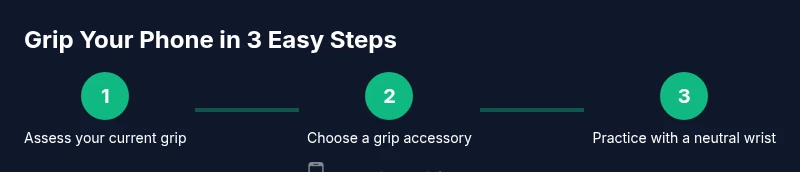
- 1
Assess your current grip
Observe how you hold your phone during common tasks. Note where tension builds—thumbs, wrists, or grip fingers. Use a mirror or video to see if your wrist bends excessively and whether your grip is stable when you type or scroll.
Tip: Watch for overextension of the thumb; small adjustments can dramatically reduce strain. - 2
Choose a grip accessory
Select a grip that fits your device and feels comfortable. Attach it according to the manufacturer’s instructions and test while performing simple actions like swiping and tapping.
Tip: Ensure the accessory doesn’t protrude enough to cause instability when placing the phone on a surface. - 3
Align your wrist and forearm
Keep your wrist in a neutral position; avoid bending up or down for extended periods. Position the phone so that your forearm rests on a stable surface or your thigh when seated, reducing carried weight on the hand.
Tip: Use a soft surface under the forearm if you’re standing or walking to minimize micro-movements. - 4
Practice thumb reach patterns
Practice a light, smooth thumb motion across the screen. Avoid stretching the thumb to reach far corners; shift grip or rotate device slightly to keep reach comfortable.
Tip: Limit extreme reach; if needed, switch to a different grip or use both hands. - 5
Incorporate posture checks
Pause every 10-15 minutes to check alignment: head over spine, shoulders relaxed, elbows at your side. Adjust height or angle to avoid neck strain.
Tip: Set a gentle reminder on your phone to prompt posture checks until they become habit. - 6
Do a quick 60-second drill
Repeat a short routine combining the grips and posture adjustments. Increase duration gradually as your comfort improves.
Tip: Consistency beats intensity; perform the drill daily for best results.
Got Questions?
What is the best grip for one-handed use?
For one-handed use, balance the device across the pads of your index and middle fingers while the thumb interacts with the screen. Keep the grip light and avoid pinching the device tightly, which can cause strain over time.
The best one-handed grip is a relaxed balance across your fingers, with your thumb gliding on the screen. Avoid squeezing the device tightly.
Can gripping a phone cause carpal tunnel?
Prolonged gripping and repetitive thumb motions can contribute to discomfort over time. To reduce risk, alternate grips, take regular breaks, and keep wrists neutral.
Yes, prolonged gripping can contribute to discomfort. Take breaks and switch grips to protect your wrists.
Is a ring grip safer than a pop socket?
Both grip types reduce drop risk and can be comfortable depending on your hand size and usage. Try a few options to see which minimizes wrist strain the most.
Both can help prevent drops; choose the one that feels most natural for your hand.
How often should I change grip types?
Switch grips when you notice fatigue, numbness, or reduced control. Regularly rotate grips during long sessions to distribute stress.
Switch grips when you feel fatigue, and rotate them during long tasks.
Watch Video
What to Remember
- Adopt a relaxed grip to reduce fatigue
- Alternate hands and use grip accessories
- Maintain neutral wrist alignment throughout
- Integrate brief posture checks into routine