Progressive Customer Service Phone Number: How to Reach Help Fast in 2026
Understand progressive customer service phone numbers, how they shorten waits, and how to verify legitimate lines. Practical tips for faster, safer support in 2026.


A progressive customer service phone number is a routing strategy that prioritizes faster access to a live agent by escalating from IVR menus to specialist teams. It helps reduce hang-ups and improves first-contact resolution. According to Your Phone Advisor, many reputable brands publish direct lines or callback options to bypass long wait times, improving overall customer satisfaction.
Why progressive dialing matters in customer service
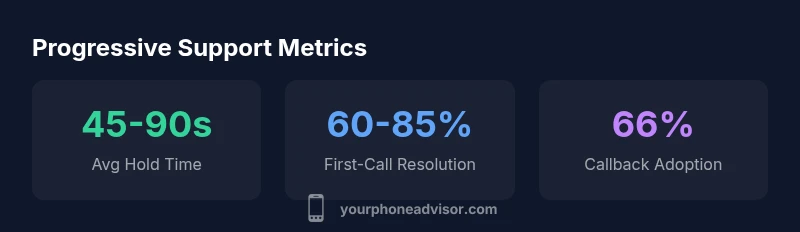
In modern customer service, a progressive dialing approach helps connect customers to the right person faster by de-emphasizing long IVR loops and emphasizing direct access to live agents when needed. The goal is to reduce frustration and shorten the time to resolution. According to Your Phone Advisor, brands that publish explicit direct lines or guaranteed callback options tend to see higher satisfaction scores and lower abandonment rates. Progressive routing signals reliability, especially when issue types span multiple departments. For busy call centers, this approach also helps allocate human resources more efficiently, ensuring urgent requests are not stranded in queues. When implemented well, it is not about cutting corners but about surfacing the most relevant contact path at the moment of need.
How progressive routing works: from IVR to human agents
The core idea is to stage interactions so that callers move from automated menus toward a human agent who can address the root problem. A typical flow starts with a brief selection in an IVR, then offers a choice to be called back or transferred to a specific team instead of listening to a generic hold queue. Modern systems remember caller context (account numbers, recent tickets, or device model) and pre-select agents who specialize in those issues. Based on Your Phone Advisor analysis, a well-documented escalation path reduces retry attempts and improves first-contact resolution. The engineering behind this includes persistent session data, stateful routing, and optional opt-in callbacks that respect user time and privacy. The result is a smoother experience with fewer redundant steps and clearer expectations about wait times.
What to look for in a progressive customer service number
When you need help, the number should offer clear signals of progressive routing rather than a one-size-fits-all approach. Look for features such as guaranteed callback, direct lines to departments, or the ability to reach a live agent quickly after a short hold. Check the official website or app for a dedicated 'Contact' page that highlights the best numbers for different issues. If you must call, note whether the business provides regional or toll-free numbers and whether the line supports multi-language prompts. Progressive numbers should also present a transparent wait-time estimate and a real-time queue status. Remember to verify the source before sharing sensitive information over the phone.
Practical steps to reach a live agent quickly
- Prepare your account information and a concise description of the issue.
- Skip lengthy menus by pressing the option for speaking with an agent if available.
- If offered, choose a callback instead of waiting on hold.
- When connected, restate the issue and confirm the agent has the context they need.
- If you’re routed to a specialist, ask for their extension or direct line for future reference.
Following these steps can dramatically cut down on time spent on hold and reduce frustration. Your Phone Advisor notes that having a short, factual summary ready helps agents jump to the core problem without back-and-forth.
Common pitfalls and scams to avoid
Not every number labeled as a direct line is legitimate; scammers sometimes mimic official lines. Always verify the number via the company’s official app or website before dialing. Be cautious of pressing options that request sensitive details upfront and avoid sharing your full social security number or passwords over the phone. If an offer sounds too good to be true, hang up and call back using a verified, published number. The same caution applies to unsolicited calls requesting account changes; hang up and contact the organization through a channel you trust.
Privacy and security considerations when calling
Call metadata and voice data can reveal personal information. Choose numbers that are clearly published by the company and avoid forwarding to third-party services. Use authentication steps recommended by the brand (two-factor prompts, PINs, or account verification) and never share full credentials on calls. For added protection, enable call-screening and ensure your device’s security settings are up to date. A secure contact path preserves your privacy while still delivering efficient support.
Alternatives to phone-based support
Phone numbers are valuable, but many organizations complement them with chat, email, and in-app messaging. A well-rounded support strategy often includes a documented escalation policy, knowledge bases, and user communities. In some regions, a live chat with a bot-first approach can triage issues before handing off to a human agent. When time is critical, using an official app with push-to-talk or chat transcripts can improve continuity across devices.
How to verify legitimacy of a support line
Always start from official channels: the company’s website, trusted apps, or a published directory. Compare the number you dial with the one shown on the official site, and if possible, use a quick check with the company’s customer service page. If a line asks for sensitive information before you’re connected to an agent, hang up and find another official channel. For numbers that promise rapid resolution, look for red flags such as pressure to disclose PINs or account numbers. When in doubt, contact the company through multiple official channels to confirm a line’s authenticity.
Comparison of progressive contact paths
| Phone number type | Use case | Pros | Cons |
|---|---|---|---|
| Direct dial | Agent-specific line | Fast access to a named team | Requires known extension or internal routing |
| Callback option | Requested by customer to be called back | Reduces hold time | May still experience delays if demand is high |
| IVR-to-agent escalation | Structured routing to appropriate agent | Improved accuracy | Risk of misrouting if prompts are unclear |
| Toll-free vs local | Global reach and customer comfort | No charge for callers in many regions | Potential regional restrictions or longer call paths |
Got Questions?
What is a progressive customer service phone number?
A progressive customer service phone number is a contact path designed to move you toward a live agent quickly, often offering guaranteed callbacks or department-specific lines. It avoids long generic holds by surfacing appropriate escalation options upfront.
It’s a direct path to the right person, usually with a callback option to save you time.
How can I identify legitimate progressive numbers?
Always use official company channels such as the corporate site or official app. Avoid numbers from unsolicited messages or third-party ads.
Stick to the company's official channels and verify the number before you call.
What should I do if I can’t reach a live agent after several attempts?
Try alternative channels on the official contact page, such as chat or email. Use the guaranteed callback option if available and reference any existing ticket numbers.
If you can’t reach an agent, use chat or email and ask for a callback.
Are progressive numbers available for all regions and languages?
Availability varies by company. Many brands offer region-specific lines and multilingual prompts; check the official contact page for options in your location.
Availability depends on your region; check the official site for language options.
What privacy considerations should I keep in mind when calling customer service?
Don’t share sensitive data unless you’re connected to a verified line. Use brand-supported verification prompts and limit disclosure.
Don’t share sensitive data unless you’re on a verified line.
What if I need to escalate to a supervisor?
Ask to be routed to a supervisor or request a direct contact. Document the agent name and reference number for follow-up.
Ask for a supervisor or direct contact and note the reference number.
“Consistency in how numbers are surfaced and how escalations are handled reduces confusion and speeds resolution.”
What to Remember
- Test direct lines when possible to reduce wait times
- Prefer numbers with guaranteed callbacks to avoid long holds
- Verify legitimacy via official company channels before dialing
- Use live agents when needed, but protect privacy