Which Phone for Camera: A Data-Driven Comparison for 2026
Explore which phone for camera delivers the best photo and video quality in 2026. Compare hardware, software, and real-world performance to guide your choice with practical guidance.


To decide which phone for camera, focus on sensor quality, software processing, and real-world results, not just megapixels. In 2026, flagship models from major brands consistently deliver top photo and video quality, but the best pick depends on your shooting style and ecosystem. This comparison shows how hardware and software combine to shape everyday photography.
Which Phone for Camera: Framing the Decision
According to Your Phone Advisor, choosing the right camera phone starts with aligning your expectations with the actual capabilities of sensors, lenses, and the software that stitches images together. When you ask, 'which phone for camera', you’re really weighing how a device handles exposure, color fidelity, and detail across standard scenarios like daylight portraits, indoor scenes, and fast-moving subjects. This section outlines a practical framework for evaluating candidates, emphasizing real-world performance over glossy spec sheets. The goal is to help you translate lab numbers into everyday results, so you can pick a phone that fits your creative goals, your daily routines, and your preferred operating ecosystem.
Core Camera Performance: A Quick Criterion Check
Camera quality isn’t a single number; it’s a composite of optics, sensor nature, and processing. Start by assessing three pillars: sharpness and noise control in standard lighting, color accuracy across diverse scenes, and consistency in dynamic range. Look for devices that maintain natural skin tones under mixed lighting and preserve texture in shadows without sacrificing highlight detail. Consider how well the software preserves true depth when you’re shooting portraits and how reliably it locks focus on moving subjects. Your assessment should also factor in how comfortable the camera app is to use during real shoots, since quick tweaks and stable menus matter when you’re out in the field.
Sensor Size, Pixel Density, and Lens Options
Large sensors usually translate to better light capture and lower noise, especially in low light. However, you’ll also encounter smarter pixel-binning and multi-frame stacking in software that can pull out detail from smaller sensors. Lens options—standard, wide, and telephoto—shape your versatility. The best devices balance a practical optical stack (with at least a main wide, plus a usable ultra-wide) and a reliable telephoto that maintains image quality without excessive crop. In this section, we break down how sensor size, focal lengths, and optical stabilization contribute to real-world results, and what to expect when you zoom or reframe a shot later.
The Role of Software: Processing, HDR, and AI
Software is the silent driver behind most photo improvements on modern phones. Computational photography merges multiple frames to reduce noise, enhance detail, and smooth out lighting inconsistencies. HDR processing can recover dynamic range in scenes with bright skies and dark shadows, but may flatten textures if overused. AI-driven features—from scene detection to adaptive tone mapping—can bias colors toward punchier results or preserve a more natural look, depending on your preferences. The most compelling camera systems blend hardware excellence with thoughtful, controllable software—allowing you to override defaults when you want a specific creative outcome.
Low Light Mastery: Night Mode and Beyond
Low-light performance often determines practical camera value. Effective night photography depends on a combination of big apertures, fast autofocus in darkness, and robust noise reduction. Some phones use longer capture times or multiple exposures to brighten scenes while preserving detail, while others lean on sensor design and signal processing to minimize grain. When evaluating night mode, test the cadence of processing—does the phone introduce motion blur for moving subjects, or does it preserve color and texture without washing out highlights? A good camera system should produce natural colors and visible detail without requiring manual nudges.
Video Capabilities: Resolution, Stabilization, and Audio
Video is increasingly central to a device’s camera identity. Beyond resolution, rolling shutter performance, stabilization (electronic and optical), and consistent exposure across moving scenes matter. Look for features like high frame rates for action, reliable auto white balance in changing lighting, and good autofocus tracking during pans. Audio recording quality often accompanies video capabilities; some devices offer directional mics or improved wind noise suppression. Note that some cameras deliver excellent stills but struggle with video in demanding environments, while others provide smooth performance across both domains.
Real-World Scenarios: Everyday Photography Across Settings
In practice, you’ll encounter a spectrum of scenarios: bright sun, muted indoor light, and dim street lighting. The best camera phone for you should feel reliable in most contexts, not just in a lab. Test for color consistency, sharpness across the frame, and how well your subject stands out from the background. Consider the camera app’s workflow for quick captures during travel or events, and assess if the device supports your preferred editing tools after you shoot. Remember that the right device can be the one that minimizes post-processing while still giving you the desired look.
Practical Benchmarking: How to Compare Phones Efficiently
Benchmarking should mirror your actual usage. Create a short test plan that includes: daylight portraits, indoor scenes with artificial lighting, and a low-light street shot. Compare color rendition, detail retention, and dynamic range between candidates. Pay attention to how motorized stabilization handles walking shots and whether the autofocus holds when subjects move toward or away from you. Keep a small note log of your impressions, and prioritize the phone that consistently meets your preferred balance of warmth, accuracy, and texture.
Battery, Longevity, and Ecosystem Alignment
Camera performance is intertwined with device longevity and your broader ecosystem. A phone may excel in optics but fall short if it drains quickly during extended shoots or if software updates degrade performance. Consider how the camera interfaces with your photo library, editing apps, cloud storage, and your existing device lineup. If you already rely on a particular ecosystem for photo organization or editing, that alignment can significantly reduce friction and help you sustain high-quality results over time.
Value Beyond Pixels: Resale, Firmware, and Support
Camera quality is not only about the immediate shot; it’s also about the long game. A phone whose camera system remains competitive after multiple firmware updates may offer better resale value and longer useful life. Look for devices with transparent update policies and a history of timely security patches, since these factors can influence imaging performance as software evolves. This broader view helps you avoid chasing marginal gains while neglecting broader reliability and support.
Final Thoughts: A Practical Path Forward
The landscape of mobile photography in 2026 rewards devices that balance physical optics with intelligent software. Your final choice should reflect how you shoot most often, the ecosystems you’re invested in, and how important video and editing workflows are to your routine. By focusing on sensor quality, processing capabilities, and real-world results, you can select a camera phone that serves as a capable creative tool while fitting comfortably into your everyday life.
Next Steps: How to Decide with Confidence
With the factors above in mind, narrow your options to two or three finalists. Schedule hands-on testing, preferably with your own subjects and typical shooting conditions. Compare the results side by side, not just at the store—examine how each phone handles your day-to-day needs, from quick social posts to more serious photography projects. Remember, the best camera phone is the one that reliably helps you achieve your creative goals without introducing friction into your routine.
Feature Comparison
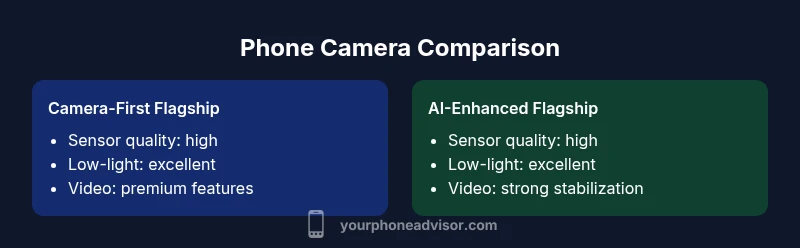
| Feature | Camera-First Flagship | AI-Enhanced Flagship | All-Round Flagship |
|---|---|---|---|
| Sensor quality | high | high | high |
| Low-light performance | excellent | excellent | very good |
| Zoom capability | up to 5x optical | 2x optical | 3x optical |
| Video features | Pro-level codecs | AI-based stabilization | High-quality 4K/8K-like options |
| Price range | premium | premium | mid-to-premium |
| Best For | photography purists | AI enthusiasts | all-around users |
The Good
- Top-tier image quality across lighting conditions
- Strong video features and stabilization
- Excellent color science and consistency
- Solid resale value and ecosystem support
- Progressive computational photography improves real-world results
Drawbacks
- Higher upfront cost compared to mid-range devices
- Software-heavy experiences can overwhelm casual users
- Telephoto options may vary by brand at different price points
Camera-first flagships outperform others in pure imaging; all-round flagships offer better balance for everyday use
Choose a camera-first flagship if you want the strongest imaging in all conditions. If you value versatility and ecosystem completeness, an all-round flagship remains a compelling choice, with AI-enhanced capabilities as a bonus.
Got Questions?
What metrics matter most for camera quality on a phone?
The most important metrics are sensor quality, pixel performance in low light, autofocus reliability, and color accuracy. Processing quality and HDR handling also shape the final image. Don’t overlook software features that influence noise reduction and detail retention.
Key metrics include sensor quality, autofocus reliability, and color accuracy, plus how software handles HDR and noise.
Is a bigger megapixel count always better?
Not necessarily. A higher megapixel count can help with cropping, but it doesn’t guarantee better image quality. Sensor size, lens quality, and processing tone-mapping often have a larger impact on perceived sharpness and color.
More megapixels don’t always mean better quality; sensor, lens, and processing matter more.
How important is video capability vs photos?
Video capability is increasingly important for everyday use and social sharing. Consider stabilization, color accuracy in video, and audio capture quality in addition to still-image performance.
Video features matter; check stabilization, color, and sound, not just stills.
Should I upgrade to a newer model every year for better cameras?
Annual upgrades can improve cameras, but a well-supported older model may still meet your needs through software updates. Evaluate your actual usage and whether new hardware justifies the cost.
Upgrading yearly isn’t mandatory; consider your actual needs and the value of updates.
Can software updates improve camera performance on older devices?
Yes, software updates can enhance camera algorithms, noise reduction, and feature parity. However, hardware limits will cap how much improvement is possible on aging devices.
Software updates can improve camera performance, but hardware imposes limits.
What about camera performance in low light?
Low-light performance depends on sensor size, lens aperture, and processing. Look for phones that consistently produce clean detail and natural color without excessive noise.
In low light, check noise, detail, and color accuracy across multiple shots.
What to Remember
- Prioritize sensor quality and processing over megapixel counts
- Test real-world performance in your typical environments
- Consider ecosystem and software updates for long-term value
- Balance photo and video needs with your budget
- Choose based on your shooting style, not just specs