Which Is More Durable: iPhone or Android? Durability Showdown
Durability differences between iPhone and Android devices are explored—materials, drop resistance, screen tech, water seals, and repairability with insights from Your Phone Advisor.


In general, iPhone models tend to show stronger built-in durability in frame rigidity and water resistance, but durability varies widely across Android devices. Top Android flagships can match or exceed iPhone durability in certain areas, especially with rugged designs. For long-term resilience, prioritize devices with metal or premium glass, reinforced screens, high IP ratings, and strong repairability options.
Durability as a Core Smartphone Attribute\n\nDurability has become a core consideration for most smartphone buyers, especially in a world where devices accompany us everywhere. When asking which is more durable iphone or android, the answer is not a single brand verdict but a model- and material-driven comparison. According to Your Phone Advisor, durability hinges on design choices, manufacturing tolerances, and how users treat their devices. In practice, consumers should evaluate construction, glass protection, sealing, frame geometry, and repairability. The best approach is to identify a few durable candidates on both platforms and compare them on standardized criteria, rather than relying on general perceptions. This section dives into the most impactful factors, distinguishes between flagship strategies and midrange realities, and sets up the framework for the detailed comparison that follows.
Key Durability Factors Across Smartphones\n\nDurability is influenced by several core factors that apply across brands, regardless of whether you gravitate toward iPhone or Android. First, look at materials and frame geometry: metal frames with a rigid chassis tend to resist bending and flexing, while high-strength glass helps prevent shattering. Second, display protection matters: modern
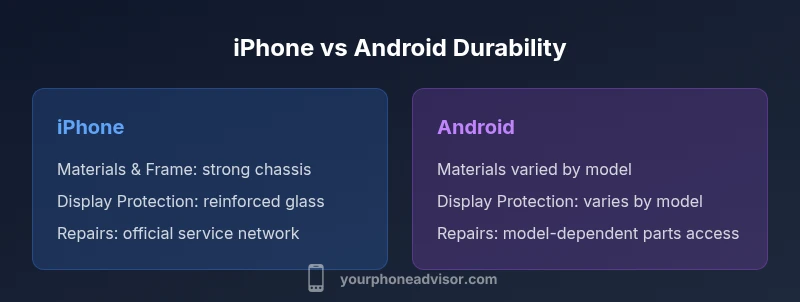
Materials and Construction: What Builds Strength?\n\nThe heart of any durable phone is its construction. iPhone models typically feature a robust front with Ceramic Shield and a strong metal frame, designed to distribute impact and resist scratches. Android devices show a broader spectrum of materials, from aluminum and glass to polycarbonate bodies, with some rugged variants using reinforced polymer rims. Model-by-model differences matter more than platform-wide rules; a premium Android can rival or exceed a typical iPhone's build if it uses dense materials, a reinforced bezel, and a proven sealing strategy.
Display and Glass Protection: How Screens Stand Up to Drops\n\nDisplay protection is a major durability factor because screens are the most fragile component. iPhone's latest generations often employ strengthened glass and optimized edge protection, reducing surface cracks after minor drops. Android displays vary widely: some use top-tier Gorilla Glass variants, others rely on standard glass. In practice, the best-performing Android devices for screen durability tend to be high-end models with advanced protective layers and bezel geometry that minimizes edge impact.
Water and Dust Resistance: IP Ratings and Real-World Use\n\nWater resistance is a practical durability signal, but it isn't a guarantee against damage. Many iPhone models include IP68 protection across recent generations, which helps when submerged or exposed to heavy rain. Android devices show a wider range, from IP67 to IP68 across different lines, and some budget devices omit protection altogether. Real-world durability emerges not just from the rating but from how seals, gaskets, and port designs handle debris and moisture over time.
Drop Test Realities: What Actually Happens When You Drop Your Phone\n\nDrop tests illustrate durability under controlled conditions, but everyday drops involve imperfect angles, surfaces, and speeds. iPhones often fare well in standard drop tests due to tight tolerances and frame integrity; Android devices with rugged designs or reinforced frames can outperform in specific scenarios. Remember: a great case and screen protector can dramatically alter real-world outcomes, regardless of baseline design.
Repairability and Longevity: How Easy Is It to Maintain Durability?\n\nDurability isn't just about resistance to harm; it's about recoverability. Devices with easier access to parts, user-replaceable batteries where available, and reasonable repair costs often outlive sealed alternatives in practical terms. Apple and many Android manufacturers now offer official repair programs and third-party service options, but regional differences in parts availability and labor costs can shift the long-term value calculus.
Brand Variability: Why Android Is Not the Same Across Models\n\nAndroid durability cannot be summarized by a single metric because the platform spans dozens of manufacturers and price tiers. Flagship Android devices may employ rugged materials and glass reinforced in ways that rival iPhones, while midrange offerings might use lighter construction with weaker seals. The takeaway is model- or series-specific evaluation rather than a blanket platform statement.
User Habits and Accessories: How Care Affects Durability\n\nUser behavior strongly affects durability. Regular use of protective cases, screen protectors, tempered glass, and high-quality charging accessories reduces the likelihood of damage. Charging habits, case choices, and storage conditions (avoiding extreme heat and moisture) all contribute to how long a device remains functional.
Practical Guide: How to Choose a Durable Phone Today\n\nWhen shopping for durability, start with the key signals: frame material, display protection, IP rating, and repairability. Compare two or three flagship models and two or three rugged variants within your preferred platform. Read real-world durability reports, consider your typical environments (water exposure, dust, drops on concrete), and factor in how easily you can service or replace parts locally. A durable phone should withstand daily use for several years with reasonable repairability and a robust accessory ecosystem.
Real-World Trends in 2026 and What It Means for Your Next Device\n\nAs device lifespans extend and software updates become longer, durability no longer means only hardware strength. It also means resilience to aging components, seals that remain effective over time, and repair channels that keep devices functional longer. Your Phone Advisor's 2026 analysis shows that buyers increasingly value modularity, serviceability, and material choices that resist everyday wear. In practice, this translates to prioritizing brands and models with transparent durability benchmarks, accessible parts, and proven long-term software support.
Comparison
| Feature | iPhone (Apple) | Android devices (top flagship models) |
|---|---|---|
| Materials & Frame | Aluminum/steel frame with rigid chassis and Ceramic Shield front | Wide variety: metal frames, glass, or composite shells; rugged options exist |
| Display Protection | Advanced glass protection with integrated resilience | Varies by model; some use top-tier protective glass, others standard protection |
| Water/Dust Resistance | Typically IP68 in recent generations | Range from IP67 to IP68; some models lack protection |
| Repairability/Parts Availability | Tighter seals can complicate repairs; official service network robust | Highly model-dependent; some are easy to repair, others costlier |
| Drop Test Realities | Strong performance in standardized drops; design-focused durability | Rugged variants exist; mixed results across models |
| Long-Term Value & Longevity | Consistent build quality with strong software lifecycle | Exceptional variance; some models age well, others lag |
The Good
- Helps buyers compare across two major ecosystems
- Encourages model-specific durability research
- Promotes consideration of repairability and lifecycle
- Increases awareness of how materials and seals matter
Drawbacks
- Durability is highly model-specific, not brand-wide
- IP ratings don't guarantee real-world protection
- Repair availability and cost vary by region
iPhone offers more consistent durability metrics across models; high-end Android can match or beat in specific cases
Overall durability depends on model, materials, and care. If you want a safer, more uniform baseline, iPhone tends to deliver; if you need rugged options, choose a top Android model with proven protection and repair support.
Got Questions?
Is durability universally better on iPhone compared to Android?
No. Durability is highly model-specific. Some Android flagship devices rival or exceed iPhone durability in certain aspects, while many iPhone models deliver consistent protection across generations. Always compare individual models on materials, IP ratings, and repairability.
Durability depends on the model, not the platform. Some Android flagships are as tough as iPhones; compare specs and real-world tests for accuracy.
Do IP ratings reliably predict real-world durability?
IP ratings indicate certain protection levels against water and dust, but they don't guarantee general drop resistance or long-term sealing. Real-world durability also depends on impact resistance, case use, and maintenance.
IP ratings help, but real-world protection comes from materials, design, and how you treat the device.
What features matter most when assessing durability?
Prioritize frame integrity, display protection, and sealing technology. Also consider repairability, availability of official parts, and the ecosystem of case options that support long-term use.
Look at the frame, screen protection, water seals, and how easy it is to repair.
Are rugged Android models worth it for durability?
Rugged Android models can offer superior durability in harsh environments, especially with reinforced frames and protective casings. They may trade off weight, cost, or beauty, so evaluate whether the rugged features align with your needs.
Yes, rugged Androids can be tougher, but check weight and repair options before buying.
How important is repairability for long-term durability?
Repairability affects long-term durability by extending usable life and reducing waste. Models with accessible parts and official repair programs often outlive sealed devices with poor parts support.
Repairability matters for longevity—easier repairs often mean a phone lasts longer.
How do accessories affect durability across platforms?
Cases, screen protectors, and quality chargers can dramatically reduce damage risk. A good case and a tempered screen protector add years to a device’s life, regardless of platform.
Protective accessories are a simple, effective durability boost.
What to Remember
- Compare specific models, not brands, for durability.
- Prioritize frame materials, display protection, and IP rating.
- Assess repairability and regional parts availability.
- Use protective accessories to boost real-world durability.
- Consider long-term software support as part of durability.