What kind of phone does the government give? A practical guide
Explore how government phone programs work, who qualifies, device types, and security considerations. Learn what to expect, how to apply, and practical alternatives for reliable mobile access.


There isn't a single universal government phone. What you receive depends on the country and the specific program. In many places, governments subsidize phone service (not always a device) through programs that reduce monthly costs. Some programs provide devices in limited cases or to particular groups, while others require you to use your own phone with a government-supported plan. Availability and rules vary widely.
What counts as a government phone?
The phrase what kind of phone does the government give isn't one-size-fits-all. In many jurisdictions the government doesn't supply a device at all, or only does so under narrowly defined programs. Instead, individuals may receive a subsidized mobile service plan, discounted or waived fees, or access to specific, program-approved devices. When a device is provided, it often comes with pre-installed security settings or management software to protect data across the public network. Government-issued devices may also arrive with device- or carrier-agnostic policies, so eligibility and benefits hinge on local regulations and funding streams. For applicants, understanding the exact rules—such as whether a device is included at no cost or if only service is subsidized—is essential. Across regions, this landscape shifts with budget cycles and political priorities, so you should verify with the official program in your area.
A key point for the reader: the availability of a device versus a service discount depends on eligibility, program design, and local procurement. If you’re wondering about your own situation, the safest starting point is the official government portal or the public utility that administers the program. Your questions about device provision should be answered by those sources, not third-party sites.
The question: what kind of phone does the government give
The direct question many readers have is exactly phrased as a query: what kind of phone does the government give? The short answer is that it varies widely. Some programs provide a basic phone or a budget smartphone to eligible participants. Others offer only discounted service plans with no device supplied. A few initiatives in particular communities may distribute devices to students, seniors, or low-income households as part of a broader digital inclusion strategy. Because policies are tied to funding, governance, and public health or economic goals, you should expect a spectrum—from zero-device plans to devices bundled with data and security features. When evaluating options, compare the device type, the degree of subsidy, the length of eligibility, and any ongoing service commitments. This reality underscores why a single universal answer can’t exist across every country or state.
How government device programs typically differ by country
In high-income countries, programs often subsidize service first, with a device offered only if a particular need is demonstrated or during a targeted initiative. In other regions, a dedicated device might be provided as part of a social support program for families, students, or unemployed individuals. The exact models, brands, and operating systems are usually dictated by procurement contracts, accessibility considerations, and security requirements. Some programs emphasize durability and simple interfaces, while others lean toward smartphones with modern features. If you want a crisp map of what’s available where you live, start with the national telecommunications regulator or the ministry responsible for social programs. They typically publish eligibility criteria, device details (if any), and how to apply. As you read, keep in mind: this space is dynamic and updated with budget cycles and policy shifts.
Who qualifies and how eligibility is determined
Eligibility for government-provided phones or subsidized service is commonly linked to income thresholds, enrollment in social programs, disability status, age, or specific use cases (like students or veterans). Some regions require you to demonstrate necessity (for example, a job-seeking remit or care responsibilities) and to apply through an approved portal or local service provider. In many cases, households with income at or below a program threshold automatically qualify for discounted services, while devices may be limited to particular demographics or programs. To assess your eligibility, gather standard documents (proof of income, residency, and program-specific forms) and review official guidance. The most reliable guidance comes from government websites or officially contracted service providers. If you’re unsure, contact the program administrator and ask for a clear, written eligibility checklist.
What kinds of devices might you receive in practice
When devices are provided, the options range from basic feature phones to mid-range smartphones with secure configurations. A feature phone offers long battery life and essential calling/texting, while a smartphone unlocks web access, apps, and mobile data. In many cases, phones come preconfigured with accessibility features or security settings to comply with national standards. Practical realities matter: device availability can depend on procurement cycles, stock levels, and regional needs. If you’re handed a device, inspect it for policy-compliant security features (encrypted storage, screen-time controls, and remote wipe options) and confirm what support is offered for software updates. If you already have a preferred phone, you may need to opt for service-only support rather than device ownership. The key is to read the contract and policy documents carefully before accepting.
How to apply or enroll in government phone programs
Enrollment usually begins with a government portal, a contracted service provider, or a local social services office. Prepare to verify your identity, income status, or program eligibility. You’ll typically select the plan type (device included or service-only), review any device options, and acknowledge security or privacy terms. In some cases, you’ll be required to attend a brief in-person or virtual briefing about program rules, device usage, and data protection. After submitting an application, you should receive a confirmation with timelines for eligibility determination and delivery or activation. If a device is part of the package, expect a shipping window and setup instructions. Keep a copy of all communications for reference and know how to escalate if you encounter delays.
What to expect after enrollment: setup, delivery, and activation
Post-enrollment steps vary, but a typical path includes a confirmation email, selection of a device (if applicable), a shipping notification, and activation steps. If you receive a SIM card, you may need to insert it and follow prompts to configure data, voicemail, and security settings. For device-driven programs, plan for initial charging, basic setup, and software updates. In many programs, you’ll have access to a help desk for onboarding questions and to troubleshoot connectivity or policy questions. If the device arrives damaged or delays occur, contact the administrator promptly with your enrollment ID. Remember that program terms may require you to use the device in a specific manner or to report changes in eligibility.
Security and privacy considerations with government devices
Government-oriented programs often implement security policies to protect sensitive data. Expect management profiles, mandatory updates, and restrictions on app installation. Data privacy provisions vary by program and country, but many initiatives emphasize minimal data collection and transparent usage policies. If you receive a device, review privacy settings, disable unused features, and understand what data is collected through the program’s services. In some cases, you may be enrolled in a corporate or government-managed environment that allows remote data wipes or monitoring for security reasons. If you have privacy concerns, request a written summary of data practices and the right to opt out where allowed by policy. Always keep software updated and be mindful of suspicious apps or links.
Alternatives and practical tips if you don’t qualify for a device
If you don’t qualify for a device, you can still access government-supported mobile options. Look for programs that subsidize monthly service costs, offer low-cost devices through participating retailers, or provide refurbished devices through community partnerships. Compare total cost of ownership, including data limits, roaming fees, and device longevity. Consider bring-your-own-device (BYOD) options where permitted, while ensuring you meet security requirements and understand any program-specific restrictions. Budget planning can help: set aside funds for repair or replacement, and explore official discounts for students or seniors. In many cases, combining a discounted plan with a basic device you already own is a practical path to maintain connectivity without stretching limited resources.
A practical decision guide: should you pursue a government device or service subsidy?
To decide, map your needs against program offerings: Is a device essential for work, education, or healthcare access? Do you require data for daily tasks, or is talk/text enough? Is the program in your area primarily service-focused or device-inclusive? Gather official policy documents, confirm eligibility, and read the terms before enrolling. If you rely on consistent data access for remote work or healthcare apps, a smartphone option with a robust data plan may yield better long-term value. If budget is the main constraint, a service subsidy with a low-cost device or BYOD strategy could meet your needs without compromise. Always verify the latest program details through official sources and document your enrollment steps for future reference.
Takeaways and next steps
What this means for you is clarity about your local options. Start with the official program page to determine whether devices are provided and under what conditions. If a device is included, review security requirements and update schedules. If only a service subsidy is available, compare plans, data allowances, and network coverage to find the best fit. Keep a record of eligibility criteria and application steps so you can act quickly if policy changes occur. By understanding the range of possibilities, you’ll be better prepared to navigate government phone programs with confidence.
Overview of common elements in government phone programs
| Aspect | Typical Device | Notes |
|---|---|---|
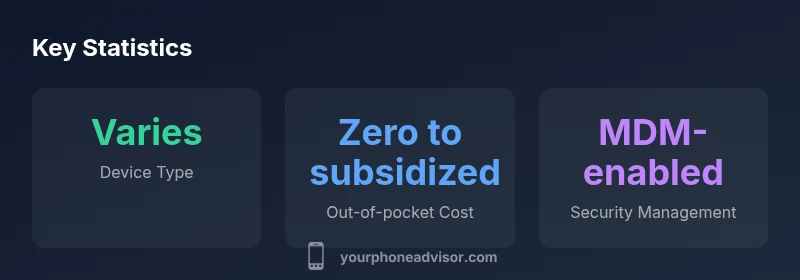
| Device type | Feature phone to mid-range smartphone | Varies by program |
| Cost to user | 0 or subsidized | Depends on program policy |
| Security model | MDM-enabled profiles | Program-dependent |
| Eligibility criteria | Income/region/student status | Country-specific rules |
Got Questions?
Do government phones come with data plans?
In many programs, service subsidies include data, minutes, or texts. Whether a device is provided alongside the plan varies by location. Always confirm the exact terms on the official program page.
Some programs include data with the plan, but device inclusion depends on your area.
Can I choose the device I receive?
Most programs don’t offer broad device choice. If a device is included, it’s typically limited to a set of approved models. If you need a specific device, check if BYOD is allowed under the policy.
Device choices are usually limited to approved models.
Are government devices locked to a program?
Yes, many devices arrive with pre-installed management software and restrictions. You’ll usually be guided on how to use the device within program rules and security requirements.
Devices often have program-specific restrictions.
How long does enrollment take?
Processing times vary by program and region, from days to a few weeks. Have your documentation ready and monitor the official portal for status updates.
Expect some waiting period depending on the program.
Can I upgrade to a smartphone later?
Some programs allow an upgrade path within the same initiative or via a different tier. If a smartphone is important, check the policy and eligibility before applying.
Upgrades are possible in some cases, but not guaranteed.
“Government phone programs are as varied as the communities they serve, but they share a common goal: expand access while preserving security and privacy.”
What to Remember
- Expect variability by country and program
- Service subsidies are common; devices may be limited
- Security controls may be applied to devices
- Check official sources for eligibility details and timelines
- BYOD and refurbished options can be practical alternatives