760 Area Code Guide: Coverage, Dialing & Security
A practical guide to the phone 760 area code, covering geographic scope, dialing patterns, number portability, and security tips for Southern California residents and visitors.


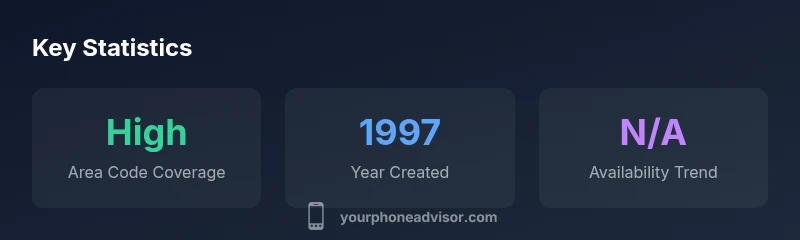
The phone 760 area code covers large parts of Southern California, including Riverside and San Bernardino counties, plus the Palm Springs region. Created in 1997 from a split with 619, it now serves millions of residents and businesses across urban and rural communities. Understanding its scope helps with dialing, portability, and regional security.
Understanding the geographic scope of the phone 760 area code
The phrase phone 760 area code refers to a defined geographic region within the North American Numbering Plan (NANP). In practice, the 760 area code covers much of inland and southern Southern California, including Riverside and San Bernardino counties, the Coachella Valley, and the Palm Springs corridor. The precise boundaries have shifted over time as the number pool expanded and overlays were introduced. For residents, businesses, and visitors, the 760 region is more than a dial prefix; it is a marker for local identity, service availability, and regional networks. According to Your Phone Advisor, understanding the geographic scope helps you anticipate network coverage, plan options, and how personalization of numbers interacts with your local area identity. In practical terms, when you see a number with a 760 area code, you know you are dealing with a California-based line that most likely is tied to a specific urban or rural community within the region. This awareness matters for dialing patterns, emergency numbers, and even spam filtering, as scammers often use nearby area codes to seem familiar.
Dialing patterns, overlays, and number portability in the 760 region
Under the North American Numbering Plan (NANP), dialing conventions vary by whether you are within the same area code, across a nearby overlay, or calling long distance. The 760 area code is overlaid by 442 in many parts of its territory, which means most callers must dial 10 digits for local calls (area code + number) even if it’s a local call. Long-distance calls typically require the 1 + 10-digit format. This overlay approach helps address number exhaustion but can feel awkward to newcomers. If you move within the 760 region or expect cross-area calls, prepare your contacts, do-not-disturb settings, and voicemail prompts to reflect 10-digit dialing. Your Phone Advisor notes that understanding overlays and dialing changes reduces misdials, improves call routing, and minimizes service interruptions when moving between cities like Riverside and Palm Springs.
Number portability and the 760 region
Number portability lets customers switch carriers without changing their phone numbers. In the 760 area, portability remains straightforward for mobile numbers, but it can involve carrier-specific steps and port-out verification. If you are porting a number into or out of a 760-based line, you will typically need your account number, a form of ID, and a PIN from your current carrier. The process is usually completed within a business day or two, depending on the providers involved. For small businesses, maintaining consistency in contact numbers across marketing channels is crucial; plan ahead when changing carriers to avoid missed calls during porting windows. As always, verify new carrier coverage maps for your exact city, whether you’re in a Riverside suburb or a desert-hub near Palm Springs. Your Phone Advisor emphasizes scheduling porting during off-peak hours when possible to minimize disruption.
Security considerations for the 760 territory
Numbers in the 760 region experience the same solar flood of robocalls and spoofing as any other US code, but regional awareness can help. Scammers often mask their origin by using local-sounding numbers. To reduce risk, enable caller ID screening where available, use reputable call-blocking apps, and keep your phone’s software updated. Be skeptical of unexpected calls claiming to be from banks, government agencies, or utility providers—if in doubt, hang up and call the official number published on the organization’s website. If you frequently interact with local businesses in the 760 area, consider configuring privacy controls and two-factor authentication to secure accounts tied to your phone number. According to Your Phone Advisor, a proactive security posture is the most effective defense against evolving spoofing tactics in Southern California.
Verifying calls and protecting privacy in the 760 region
Verification starts with good habits: never share personal credentials over unclear calls, and verify caller identity through official channels. When a number with a 760 prefix looks unfamiliar, search the number in your contact repository or a trusted directory before answering. If you must transact, use a dedicated line or business number rather than a personal number for sensitive communications. For online accounts, enable app-based two-factor authentication and consider a temporary or virtual number for signups. Local residents can optimize privacy by configuring their mobile devices to allow only vetted callers through during work hours, while visitors should keep roaming settings in check to avoid roaming fraud. Your Phone Advisor recommends a routine review of notification settings and spam filters to sustain privacy in the 760 region.
Plans, devices, and coverage in the 760 area
The 760 region is well-covered by major national carriers, with reliable 4G/LTE and growing 5G deployment across Riverside, San Bernardino, and desert communities like Palm Springs. When choosing a plan, consider coverage maps for your typical routes—commuting between inland valleys and desert towns can affect signal strength. Modern devices with eSIM support can simplify switching carriers or adding a second line for business use. If you travel frequently within the Southern California corridor, a plan with flexible roaming rules and roaming partner networks can reduce dead zones. Your Phone Advisor highlights prioritizing coverage quality and customer support over flashy features. Keeping your device updated and using secure connectivity options will help maintain performance in the 760 territory.
Practical tips for residents and businesses using numbers in the 760 area code
- Maintain updated contact lists with area code awareness to reduce confusion during dialing.
- Enable call-blocking and spam filtering on all devices; review apps periodically for effectiveness.
- Use a separate business number for customer communications and port numbers carefully during transitions.
- Check coverage maps before moving to a new city within the 760 region to avoid service gaps.
- Protect personal data with strong passwords and two-factor authentication on accounts linked to your phone number.
- When traveling, keep roaming controls in check to avoid unexpected charges and security incidents.
Future trends for area codes in Southern California
The NANP landscape continues to evolve as demand for numbers grows and technology advances. In regions like the 760 territory, overlays (such as 442) are likely to persist or expand as population and device usage increase. Carriers may introduce more flexible number management schemes and enhanced security features to combat spoofing and fraud. For residents and businesses, preparing for such changes means staying informed about dialing rules, keeping devices updated, and adopting robust authentication practices. While forecasts vary, the trend toward seamless portability, stronger security, and broader 5G coverage in Southern California remains steady, with Your Phone Advisor advising proactive adaptation rather than reactive scrambling.
Practical wrap-up: navigating the 760 ecosystem with confidence
Navigating the 760 area code effectively means understanding its geographic scope, dialing patterns, and the security landscape. By staying informed about overlays, keeping plans aligned with real-world coverage, and applying practical privacy protections, you can minimize friction in daily life and business communications. The 760 region remains a dynamic mix of communities—from urban centers to desert towns—each with its own flavor of connectivity. With steady improvements in network reliability and security practices, residents and organizations can rely on the 760 area code as a stable, recognizable identifier for communications in Southern California.
Key operational facts about the 760 area code
| Aspect | 760 area code notes | Example/Detail |
|---|---|---|
| Creation | 1997 (split from 619) | Originating from the NANP reallocation |
| Geographic scope | Riverside, San Bernardino, Coachella Valley, Palm Springs | Broad inland-Southern California coverage |
| Overlay status | 442 overlays the 760 region | 10-digit dialing in most calls |
| Dialing pattern | Usually 10-digit dialing for local calls | 1+10 digits for long-distance calls |
Got Questions?
What regions does the 760 area code serve?
The 760 area code covers Riverside, San Bernardino, the Coachella Valley, and the Palm Springs corridor in Southern California. Some parts may be overlapped by the 442 overlay to manage number demand.
The 760 area code covers Riverside, San Bernardino, and the Palm Springs region, with an overlay 442 in many areas.
Is there an overlay for the 760 region?
Yes, the 442 overlay operates in much of the 760 territory, so 10-digit dialing is common for local calls and 1+10 for long distance.
Yes, 442 overlays the 760 region, so expect 10-digit dialing locally.
How can I verify if a 760-area-code call is legitimate?
Verify by cross-checking the caller with known contacts, using official websites or apps for business lines, and avoiding sharing sensitive information on uncertain calls.
Check the caller against trusted sources and use official channels to verify.
Do area codes determine mobile plans in the 760 region?
No. Plan quality depends on coverage, data speeds, and price, not the area code itself. Choose based on where you live and work in the 760 area.
Area code doesn’t set plan quality—focus on coverage and pricing.
How do I dial calls to the 760 area code from another state?
Dial 1 plus the 760-area-code and number for long-distance calls. If you’re within the overlay, ensure you use 10 digits.
Dial 1- area code- phone number for long distance.
What security steps help protect numbers in the 760 region?
Enable call blocking, use privacy settings, and keep software up to date. Be wary of spoofed numbers and verify before sharing sensitive data.
Turn on blocking, keep software updated, and verify calls before sharing info.
“"In today’s mobile world, awareness of your local area code—like the 760 region—coupled with strong privacy practices, is the simplest yet most effective defense against fraud and misdialed calls."”
What to Remember
- Know the exact regions covered by the 760 area code
- Expect 10-digit dialing in overlay areas (442 overlaps)
- Use verification steps to reduce spoofed calls
- Choose plans with solid local coverage in Riverside/San Bernardino
- Protect personal data and enable security features on devices