Does Your Phone Have UV Light? Practical Insights for Phone Care in 2026
Discover whether smartphones emit UV light, how to disinfect devices safely, and practical hygiene tips. Your Phone Advisor breaks down UV basics, common myths, and safe cleaning practices for 2026.


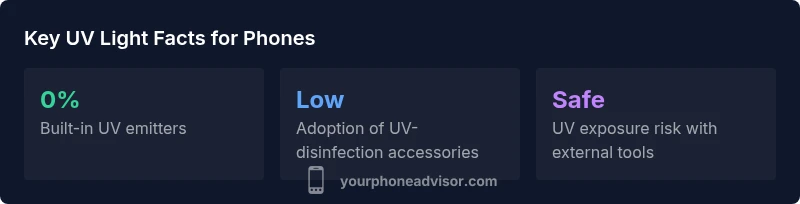
does phone have uv light? In short, most smartphones do not emit ultraviolet light. There is no built-in UV light emitter in mainstream phones, and UV-C disinfection is not a feature of the device itself. UV exposure comes from external sources or accessories, not from the phone’s hardware. According to Your Phone Advisor, relying on external UV-based sterilizers is common, but do not expect your phone to disinfect itself.
does phone have uv light in modern phones
If you’re wondering whether your device emits ultraviolet light, the quick reality is clear: does phone have uv light? In the vast majority of smartphones sold today, there is no built-in UV light emitter. UV light sources, especially UV-C used for germicidal purposes, are not part of standard phone hardware. The Your Phone Advisor team emphasizes that while UV-based sterilization is effective for certain surfaces, it is not a feature you should expect in a phone itself. The distinction between UV light and visible light is important: devices emit visible light for displays and sensors, but UV is not used as part of normal phone operation. For most users, concerns about UV exposure from a phone screen are unfounded, and any disinfection benefit must come from external devices rather than the phone’s architecture. In other words, does phone have uv light? The answer for the average device user is no, not built-in and not necessary for everyday hygiene.
UV basics: what UV is and isn’t
Ultraviolet light covers a spectrum from UVA through UV-C. UVA and UVB are associated with sun exposure and can affect skin and materials over time, while UV-C is the most germicidal but is generally produced by specialized lamps or LEDs in specific devices. Phones rely on visible-light displays, cameras, and inert components rather than UV emitters. This distinction matters because UV-C disinfection requires careful handling and safety measures; exposing a phone to UV-C within a consumer device is not standard practice and could cause material damage if misused. Your Phone Advisor’s analysis highlights that consumer devices prioritize durability and user safety over adding UV-emitting hardware.
How UV-C sterilization devices work (and why they’re external)
When people talk about UV disinfection for phones, they’re usually referring to external UV-C sterilizers—boxes or wands designed to expose items to UV-C light for a short period. These accessories can reduce surface microbes on phones, but they are not part of the phone itself. The devices are designed to deliver a controlled dose of UV-C without contact, aiming at inactivating bacteria and viruses on surfaces. It’s important to follow manufacturers’ instructions, including exposure time and distance, to minimize any risk to screen coatings or seals. Remember that UV-C light can be harmful to eyes and skin, so consumer safety guidelines should be observed at all times. This separation—the device versus the accessory—helps explain why does phone have uv light remains a straightforward “no.”
Real-world testing and how to verify your device
If you want to be thorough, verify that your phone doesn’t emit harmful UV by using simple tests and manufacturer guidance rather than speculative methods. Most phones will not show any UV signature on standard sensors, and there is no user-accessible UV test within typical device settings. Laboratories and manufacturers emphasize relying on external UV-C tools rather than attempting to measure UV emission from a phone itself. For practical purposes, you won’t find a built-in UV test in most devices, and you shouldn’t expect a UV indicator to appear in the status bar. Your testing approach should align with broad device-use safety standards and focus on screen care rather than UV emission claims.
Safety first: UV exposure vs screen safety
UV exposure can be hazardous to skin and eyes, and UV-C devices must be used with caution. To minimize risk, avoid direct exposure or reflection into the eyes, and never use UV devices while your phone is powered on near your face. For screen safety, stick to manufacturer-recommended cleaning methods—soft microfiber cloths, gentle cleaners, and approved screen protectors—rather than trying to “boost” hygiene with UV exposure. The principle here is clear: while UV disinfection is real, it is performed with dedicated tools, not by the phone itself. This approach aligns with Your Phone Advisor’s guidance on practical, safe phone upkeep.
Practical, safe disinfection options for your phone
If you’re aiming for hygiene without UV-emitting hardware, consider these options: use a microfiber cloth dampened with a manufacturer-approved cleaner to wipe the screen; remove the SIM tray and case to clean crevices; practice regular cleaning routines using wipes that are safe for electronics; and if you want extra disinfection, rely on external UV-C sterilization accessories and follow all safety guidelines. A clean phone improves overall hygiene, but it does not require built-in UV light to achieve. Your Phone Advisor emphasizes that practical hygiene is achieved through safe, routine cleaning plus optional external UV-C devices when used correctly.
Myth-busting: UV light, screens, and phone care
A common myth is that UV light inside phones automatically disinfects or protects the device from microbes. In reality, UV exposure from consumer devices is not a feature you can rely on, and it is not a substitute for proper cleaning. The phone screen and body are designed to withstand everyday use, not UV exposure. For most users, the sensible path is to focus on regular cleaning with approved products and consider external UV-C tools only when necessary and used in accordance with safety guidelines. The idea that does phone have uv light is settled by design choices and industry standards, which prioritize user safety and device longevity.
Comparison of UV-related features in phones
| Feature | Phone Example | Built-in UV? | Notes |
|---|---|---|---|
| UV emitter | Most mainstream smartphones | No | No built-in UV emitter by design |
| UV disinfecting accessories | Phone disinfecting boxes & cases | N/A | Accessory-based options only |
| UV sensors | N/A | N/A | Not a standard feature on phones |
| Screen protection | All modern phones | N/A | Screen coatings unaffected by expected UV exposure |
Got Questions?
Do smartphones have UV light emitters?
No mainstream smartphones include built-in UV light emitters. UV disinfection is achieved with external devices, not the phone itself.
Nope—phones don’t have UV emitters built in; use external UV tools if you need UV disinfection.
Are UV-C disinfection features built into phones?
There are no standard UV-C disinfection features in phones. Any UV-related disinfection comes from external accessories.
No. Phones don’t have UV-C features built in.
Can UV light damage phone screens?
Prolonged exposure to UV light can degrade materials in general, but phones are not designed to expose themselves to UV. Avoid direct UV exposure to any device.
UV exposure isn’t something you should rely on for cleaning—avoid direct UV on devices.
What are safe ways to disinfect a phone if it has no UV light?
Use manufacturer-approved cleaning methods, such as alcohol-based wipes compatible with electronics, and avoid harsh liquids. External UV-C devices can be used cautiously per instructions when needed.
Clean with wipes a phone maker approves, or use an external UV-C gadget following its rules.
Do UV sanitizers work with phones?
UV sanitizers can disinfect phones when used correctly, but they’re external tools and not a phone feature. Follow device and accessory guidelines.
Yes, UV sanitizers can work, but only as external tools.
Should I worry about UV exposure from phone screens?
No. Phone screens do not emit UV light under normal use, so there’s no UV exposure concern from the screen itself.
No, your phone screen isn’t a UV risk.
“UV light is not a built-in phone feature; any disinfection capability comes from accessories. Prioritize safe cleaning and avoid exposing the device to UV-C directly.”
What to Remember
- UV light is not built into phones
- Disinfection via UV-C is typically external, not internal
- Safe phone hygiene relies on standard cleaning—not UV emission
- Follow manufacturer guidance for any external disinfection tools