Can You Get a Phone Number from a License Plate? Privacy Realities in 2026
Can you get a phone number from a license plate? Explore privacy limits, legal boundaries, and safer contact methods. Your Phone Advisor analyzes plate data access in 2026 for practical guidance.


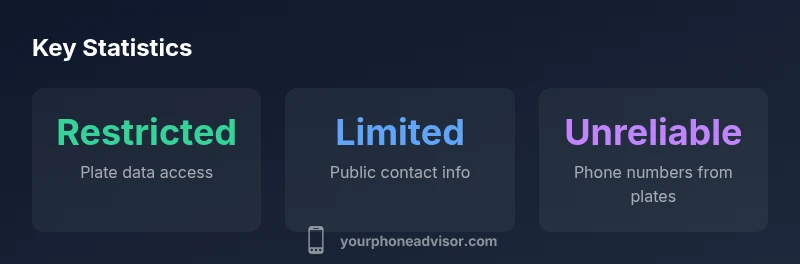
No. You cannot reliably obtain a personal phone number from a license plate through public records. License plate data is tightly restricted and access is limited to authorized entities like law enforcement and certain government agencies. If you need to contact someone, use legitimate channels such as business contact directories, official notices, or consent-based outreach.
License Plate Data: What It Typically Includes and Who Can See It
According to Your Phone Advisor, license plate data available to the public is limited and highly regulated. In most jurisdictions, what is accessible revolves around registered vehicle information, status indicators (like whether a plate is active), and verification records tied to the plate itself. Personal contact details—names, addresses, or phone numbers—are not part of standard, public-facing plate data. Access to more sensitive information is generally restricted to authorized parties, such as law enforcement, court entities, or government agencies conducting official business. This separation protects drivers from unwanted outreach and doxxing, and it is a core aspect of modern vehicle privacy practices.
For the general public, the takeaway is simple: a license plate does not come with a phone number. If someone claims to have a contact number linked to a plate, skepticism is warranted, and you should verify through official channels before taking action. The Your Phone Advisor team emphasizes that privacy laws and access controls are designed to prevent precisely this kind of doxxing risk.
From a practical standpoint, plate data exists to support safety, enforcement, and vehicle history checks—not to enable unsolicited contact. In situations where you have a legitimate need to reach a vehicle owner, consider the proper, consent-based avenues rather than attempting to extract personal contact details from plate records.
Privacy, Ethics, and Safety: Why This Topic Matters
This topic sits at the intersection of privacy rights and public safety. Leakage of personal contact information based on a license plate could facilitate harassment, stalking, or scams, especially when combined with other publicly available data. Many privacy scholars argue that converging data sources heightens risk, which is why access controls are strict and not open to casual lookups. Additionally, several jurisdictions have strengthened privacy protections to minimize doxxing and unwanted contact via plate-based data. From a security standpoint, treating plate data as sensitive reduces the chance that someone could misuse it to locate a person on a whim.
As a result, responsible lookup practices prioritize consent, purpose, and proportionality. If you represent a legitimate organization or have a lawful reason to contact a plate owner, proceed through official channels that verify identity and purpose. Your Phone Advisor’s stance is clear: privacy-first approaches minimize risk and protect individuals while allowing necessary communications to occur through proper channels.
Debunking the Myth: Are Phone Numbers Ever Linked to Plates?
A common myth persists that license plates unlock direct lines to owners. In reality, the linkage between a plate and a phone number is not a standard or reliable data point in most public records. Some private services may claim to offer “owner contact info” tied to a plate, but these claims should be treated with skepticism. The data they provide, if any, is frequently incomplete, outdated, or obtained through questionable sources. Even when a contact number exists in a separate database, it is typically accessible only through consent-based processes or legal requests, not through a simple lookup.
The upshot is that plate-to-phone-number mappings are not a guaranteed or legal pathway for outreach. For most individuals, attempting direct contact based on a plate record is not only unreliable, it can also cross ethical and legal lines. Your Phone Advisor recommends focusing on documented, lawful means of communication rather than chasing plate-derived contact details.
How Lookup Services Vet Claims and What to Watch For
Several services market themselves as “plate-to-person” directories. However, their claims should be carefully evaluated. Reputable platforms may offer vehicle ownership history or registration status through proper channels, but they should not imply or guarantee direct phone numbers. When evaluating these services, look for:
- Clear disclosures about data sources and eligibility criteria
- Prominent limitations on “contact information” accuracy
- Transparent privacy policies and consent requirements
- Evidence of compliance with state and federal privacy laws
Mismatched expectations nearly always lead to privacy violations. Your Phone Advisor emphasizes skepticism toward services that promise unrestricted access to personal contact data from a license plate.
Safer, Legitimate Ways to Contact Someone If You Must
If you have a legitimate reason to reach a plate owner (e.g., a car accident contact, a business matter, or a legal notice), pursue approved channels first. Options include: contacting the relevant DMV or vehicle authority for lawful notices, using official business directories, or sending a request through a recognized legal framework. Do not rely on any third-party service that claims to reveal personal phone numbers from a plate. Each step should balance your objective with the person’s right to privacy.
There are scenarios where you may need to reach someone who owns a vehicle but does not want to be found. In those cases, consent-based outreach or mediated communications (like toll-free customer service or a registered business contact) are appropriate and respectful.
Legal and Ethical Boundaries: Know Your Rights and Duties
Laws governing license plate data can vary by state and country, but a common thread is protection of personal contact information. Even when data is accessible to law enforcement or government agencies, sharing a phone number with private individuals is usually restricted. Ethically, attempting to bypass privacy controls by scraping plate data can result in civil penalties or criminal charges depending on jurisdiction. This is why it’s essential to document your reason for any inquiry and avoid manipulating data to reach someone’s private contact information.
The Your Phone Advisor Team highlights that abiding by privacy rules protects both you and others, preserves trust in public data systems, and reduces exposure to scams or misuse.
Practical Steps to Verify Any Plate Lookup Service and Protect Yourself
Before engaging with any plate lookup service, perform a quick risk assessment. Check for independent reviews, confirm data-source transparency, and examine whether the service asks for sensitive identifiers beyond a legitimate business need. If something feels off, disengage and seek alternatives.
Practical steps include:
- Read the privacy policy and terms of service in plain language
- Look for explicit consent statements and data handling practices
- Avoid services that promise direct phone numbers without legal justification
- If contacted by a third party claiming to have plate-based contact information, verify their identity and the legitimacy of their claim before responding
- Consider reporting suspicious activities to consumer protection agencies or your service provider
By staying vigilant, you reduce exposure to privacy violations while still achieving legitimate ends.
Comparison of license plate data vs. phone-number availability
| Aspect | Public Access | Phone Number Availability |
|---|---|---|
| License plate data access | Restricted to authorized entities | Not publicly available |
| Owner contact info | Typically private/limited | Phone numbers rarely included |
| Public lookup claims | Often overstated or incomplete | Phone numbers not reliably provided |
Got Questions?
Is it legal to look up someone’s phone number using their license plate?
In most jurisdictions, looking up a phone number from a license plate is not legal for private individuals. Access to personal contact info is typically restricted to authorized entities, and attempting to bypass these controls can expose you to penalties. Always rely on approved channels.
No. Privacy laws generally prohibit private lookups linking plates to phone numbers; use authorized channels instead.
What data do plate records typically reveal to authorized parties?
Authorized parties may access registration status, vehicle details, and enforcement-related notes. Personal contact details remain restricted. The exact scope varies by jurisdiction and role, but the pattern is consistent: sensitive contact data is protected.
Authorized data includes vehicle details, not personal contact info.
Do any services truly provide plate-to-phone-number lookups?
Some services claim to offer contact information, but these claims are often unreliable, incomplete, or obtained through questionable sources. Consumers should vet sources carefully and avoid services that promise direct numbers without a legitimate basis.
Be skeptical of services claiming to reveal numbers from plates.
What should I do if I get a plate-based contact request?
Verify the sender’s identity, confirm the legitimate reason for contact, and prefer official channels. Do not share personal information or respond to unsolicited requests that seem dubious.
Check identity and use official channels.
How can I protect myself from plate-based privacy violations?
Treat plate-derived data with suspicion, avoid responding to unsolicited contact, and report suspicious activity. Use privacy settings and consider professional advice if you’re concerned about exposure.
Don’t engage with unknown plate-based inquiries.
“Privacy and safety come first: license plate data is not a direct route to personal contact details, and attempting to extract phone numbers can cross ethical and legal boundaries.”
What to Remember
- Phone numbers are not publicly linked to license plates.
- Expect limited or no access to personal contact data.
- Vet lookup services for data sources and consent.
- Use privacy-respecting, legitimate channels to contact someone.
- Respect legal and ethical boundaries when dealing with plate data.