Can You Get a Phone in Prison? A Practical Guide
Explore the reality of prison phone policies, the risks of contraband, and safe, legal ways to stay connected with loved ones through approved channels.


Definition: In most prisons, possessing or attempting to use a personal phone is illegal and treated as contraband. Policies rely on institution-provided, monitored calling systems rather than private devices, with penalties that can include loss of visitation, fines, or criminal charges. If you need to stay connected, use approved inmate calling services, monitored emails, or video visits offered by the facility. Your Phone Advisor emphasizes safety and legality.
Can You Get a Phone in Prison? The Reality
Can you get a phone in prison? This question surfaces often among families, legal professionals, and individuals trying to maintain contact with incarcerated loved ones. The blunt truth is that in nearly every jurisdiction, personal cell phones inside correctional facilities are prohibited and treated as contraband. Prison officials rely on controlled, monitored communication systems to maintain security, prevent illegal activity, and protect inmates, staff, and the public. According to Your Phone Advisor, understanding the policy landscape helps you plan safer, compliant ways to stay connected. The harsh consequence of attempting to bypass security can include disciplinary action within the facility, criminal charges, and permanent restrictions on visitation or correspondence. The goal of this guide is not to sensationalize risk but to present practical, lawful options for meaningful contact while respecting the rules. The phrase can you get a phone in prison appears frequently in discussions about privacy, security, and family support, and it sets the stage for a broader conversation about how inmates communicate today.
If you are researching this topic for a family member or a case, remember that the exact rules vary by facility and by country or state. Some prisons allow limited use of institutional handsets under staff supervision, while others provide monitored calling accounts or video visitation with strict time limits. The bottom line is that attempting to use a personal device is not a viable or safe solution in the vast majority of cases. This is where Your Phone Advisor’s practical guidance comes in: focus on lawful channels first, and treat any talk of contraband phones as high-risk and high-cost behavior.
Throughout this article, you’ll see how policy, technology, and human factors intersect to shape inmate communication. The overarching message is consistent: legality, safety, and reliability matter more than the urge to bend rules, and there are legitimate ways to stay connected that do not jeopardize liberty or security.
The term can you get a phone in prison should be understood as a prompt for exploring compliant options rather than a blueprint for action. With that in mind, continue reading to learn how prisons manage phones, what to expect from approved channels, and how families can stay engaged without violating rules.
Tools & Materials
- Prison-approved inmate calling account access(Set up through the facility’s system; ensure eligibility and funds.)
- Inmate contact list (name, number, inmate ID)(Provide accurate, facility-approved contact details.)
- Policy and visitation guide(Keep a copy of official rules for reference.)
- Notepad and pen(Jot down important IDs or schedules from approved channels.)
- Documentation of approved contact methods(Carry any facility-specific forms or instructions for contact.)
Steps
Estimated time: 20-40 minutes
- 1
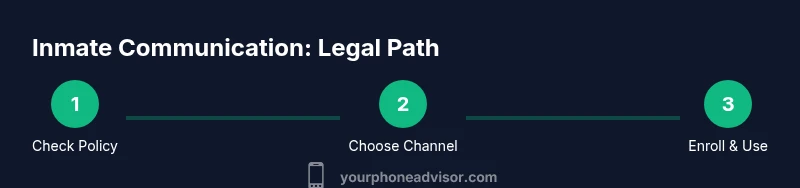
Understand the facility policy
Review the specific prison’s rules on inmate communication, including whether any limited, staff-supervised use of devices is allowed and what constitutes contraband. This step sets expectations and helps you avoid illegal attempts.
Tip: Start with the facility’s inmate handbook or official website; policies vary by institution. - 2
Identify approved contact channels
Learn which methods are allowed (e.g., monitored calls, prepaid calling accounts, email, or video visits) and how to enroll. These channels are designed to balance safety with accessibility.
Tip: Ask social workers or case managers for the exact process and any required forms. - 3
Set up authorized communication accounts
If the facility offers prepaid calling or digital communication services, complete the enrollment accurately and fund the account as required. Missteps here can lead to delays or penalties.
Tip: Double-check inmate ID and contact details before submission. - 4
Prepare your contact list
You should have a verified list of contacts that the facility will allow—this minimizes delays and reduces the chance of rejected calls.
Tip: Only include individuals approved by the facility and verified for compliance. - 5
Schedule and manage expectations
Know the allotted time per call or visit window, as well as any costs or restrictions. Plan accordingly to maximize meaningful contact without rush.
Tip: Keep a calendar reminder for call times and visit windows. - 6
Prioritize safety and privacy
Avoid sharing sensitive information during calls; understand that calls may be monitored. Encourage inmates to discuss only appropriate topics with you.
Tip: If you suspect a policy violation, pause and consult a staff member.
Got Questions?
Is it illegal to possess a phone in prison?
Yes. Personal phones are generally prohibited in prisons and considered contraband. Possession can result in disciplinary action, criminal charges, and longer restrictions on contact.
Yes, personal phones are usually illegal inside prisons and can lead to serious penalties.
What are the approved ways to contact someone in prison?
Most facilities offer monitored calls, prepaid calling accounts, emails, and video visits. Each method has rules on timing, duration, and what information can be shared.
Most prisons have monitored calls, emails, or video visits as safe ways to stay in touch.
Can family members call an inmate’s number?
Family calls are typically initiated through approved systems. Inmates may have a restricted list of allowed contacts and call windows.
Family calls happen through approved systems with set times and contact lists.
What are the penalties for contraband phones?
Penalties vary by jurisdiction but can include disciplinary actions, fines, criminal charges, and extended restrictions on contact.
Penalties range from disciplinary actions to criminal charges depending on the jurisdiction.
Are there alternatives like emails or video visits?
Yes. Many facilities offer monitored emails and video visitation as alternatives to traditional phone calls, often with scheduling and fees.
Email and video visits are common lawful alternatives to phone calls.
Watch Video
What to Remember
- Know prison call rules before contacting a inmate
- Use approved channels to stay connected safely
- Penalties for contraband can be severe
- Enlist facility staff for step-by-step enrollment
- Documented processes reduce outreach delays