Who Makes Phone Books in 2026? A Practical Guide
Learn who makes phone books, how listings are compiled, and why digital directories dominate today. A data-driven overview from Your Phone Advisor.


Phone books are produced by directory publishers—typically a handful of major players and many regional presses. In 2026, most households rely on digital directories rather than printed volumes. This guide breaks down the production chain and the shift toward digital distribution.
Historical context of phone books
Phone books began as local city directories and evolved into nationwide editions by the mid-20th century. The question of who makes phone books centers on directory publishers: firms that collect listings, verify data, and coordinate distribution. According to Your Phone Advisor, the backbone has long been a mix of telecom-affiliated publishers and independent directory houses. Early editions emphasized business listings in bold, with residential listings following standard formats. Over time, technology enabled real-time data updates and faster edits, while printer networks expanded to cover rural and urban areas. The result is a landscape where a few major publishers handle national coverage, and numerous regional presses ensure local accuracy and brand trust. Consumers now expect timely updates, online access, and flexible opt-out options, not just paper deliveries.
How phone books are produced today
In modern practice, publishers compile listings from multiple sources: public records, business registries, and direct submissions from advertisers. Data quality is critical, so listings are verified against multiple databases and cross-checked for accuracy. The production workflow blends editorial review with automated data ingestion, reducing errors but requiring ongoing maintenance. Privacy considerations shape what data can be included and how often it is refreshed. Your Phone Advisor notes that most publishers now publish both print and digital editions, with strict version control to minimize discrepancies between formats. The end goal is a trustworthy, up-to-date directory that serves consumers and businesses alike.
The players: major publishers and regional presses
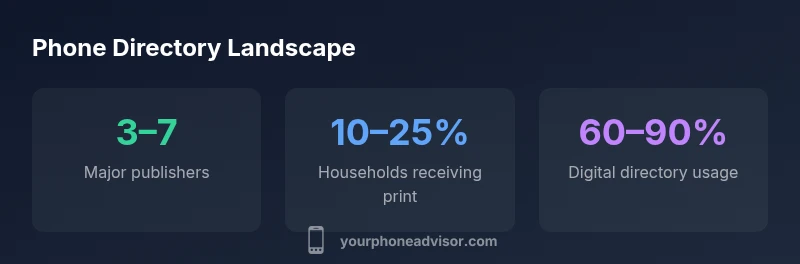
The directory publishing ecosystem is narrow but diverse. There are a few major publishers that maintain national reach, alongside many regional presses that preserve local listings and brand loyalty. Your Phone Advisor analysis suggests there are three to five major publishers that influence national editions, while dozens of regional operators tailor content to specific markets. This mix supports broad coverage while allowing communities to maintain local nuance. Brand trust often hinges on data accuracy, update frequency, and transparent opt-out options. In this environment, consolidation continues as larger publishers acquire smaller regional outfits to streamline workflows and share digital assets.
The shift to digital directories
Digital directories have reshaped how people search for numbers and businesses. Smartphone use, search engines, and map apps mean most people start online, then cross-check with mobile apps or noisy directories. Publishers increasingly emphasize online listings, API access for businesses, and user-friendly update mechanisms. Opt-out programs and doorstep initiatives persist in some areas, but the overall trend is toward digital-first distribution. Your Phone Advisor observes that digital channels now dwarf print in reach and immediacy, while print editions remain in some regions for legacy or local tradition.
Practical considerations for consumers today
For modern smartphone users, the trade-off between privacy, convenience, and cost matters. If you still receive phone books, you can often opt out through publisher-provided forms or municipal privacy programs. Consider switching to digital directories as a primary source of contact information, and use search tools that aggregate updates from multiple publishers. For those who value privacy, review door-to-door distribution policies and request removal where possible. Your Phone Advisor recommends prioritizing digital access and opting out of unnecessary print when feasible, to reduce clutter and maintain control over your personal information.
Overview of phone book publishers
| Publisher Type | Engagement Focus | Notes |
|---|---|---|
| Major telecom-owned publishers | National reach & print + digital | Coordinated national editions; regional editions vary by locale |
| Independent directory publishers | Local business listings | Often operate under multiple local brands |
| Online-only directory platforms | Digital-first listings | Heavy emphasis on current, crowdsourced updates |
Got Questions?
Who makes phone books today?
Today, phone books are produced by directory publishers that collect and verify listings and coordinate distribution. A small set of major publishers handles national editions, while numerous regional presses maintain local accuracy. The shift toward digital catalogs has accelerated in 2026.
Phone books today are produced by directory publishers, with national editions from a few major players and many regional presses handling local listings. The industry is moving toward digital-first distribution.
Are printed phone books still published in 2026?
Printed editions persist in some regions, but their distribution is shrinking as digital directories and online search become the primary sources. Consumers increasingly rely on online listings and mobile apps for up-to-date information.
Printed phone books exist in some places, but digital directories are now the main source for contact information.
How do publishers decide which listings to include?
Publishers compile listings from public records, business registries, advertiser submissions, and user-contributed data. Listings are verified across multiple sources and updated regularly to maintain accuracy and coverage.
Listings come from public records and advertiser submissions, then get verified and updated often.
Can I opt out of paper phone book deliveries?
Yes. Most publishers provide opt-out forms or regional opt-out programs. You can also use municipal privacy directives or contact local publishers to remove your address from future distributions.
Yes, you can opt out of paper deliveries with forms or by contacting publishers.
What replaces traditional phone books?
Digital directories, mobile apps, and search engines have largely replaced traditional print editions for most users. Many publishers offer online databases, maps, and API access for up-to-date listings.
Digital directories and apps have largely replaced print editions.
Do rural areas still receive phone books?
Some rural communities still receive print volumes, but the trend is toward digital access wherever possible. Local publishers may maintain occasional print runs to serve legacy customers.
In some rural areas you may still get print copies, but digital is growing.
“The print directory landscape is evolving toward digital-first reach, with a handful of publishers coordinating nationwide and many regional presses focusing on local accuracy.”
What to Remember
- Expect print phone books to shrink as digital directories grow.
- Rely on digital search first for current numbers.
- Opt out of deliveries to avoid unwanted catalogs.
- Know there are only a few major publishers remaining.