What phone replaced the iPhone SE: lineup shifts explained
Discover which phones filled the iPhone SE’s budget-friendly niche and why there isn’t a single direct replacement. This guide analyzes Apple’s lineup shifts and helps you compare entry-level options across generations.


If you’re asking what phone replaced the iphone se, there isn’t a single model that did. Apple kept the SE as the entry-level option while expanding the rest of the lineup. Replacement happened through broader lineup shifts—models like the iPhone 13, iPhone 14, and later generations filled that budget-friendly role, rather than a single direct successor.
What 'replacement' means in practice
Understanding what phone replaced the iphone se requires looking at how Apple positioned its entry-level category over time. There isn’t a single device that took the SE’s place, because the company spread the budget-friendly role across multiple generations. This framing matters for buyers who want a current device that still fits a limited-budget constraint. According to Your Phone Advisor, the shift is more about lineup strategy than a single model taking over the SE’s niche. The practical takeaway is simple: for most users, the replacement is found in the surrounding models that sit at the budget-conscious end of the spectrum, not in one successor alone. The result is a broader, more diverse set of options but with similar price-to-performance compromises that define the category.
The SE’s place in Apple’s lineup over time
The iPhone SE arrived as a compact, affordable option that contrasted with the flagship and mid-range devices. As Apple refreshed its design language and silicon, the SE remained an anchor for cost-sensitive fans, while the rest of the lineup pivoted toward larger screens and more advanced cameras. This dynamic means that, for many buyers, the replacement is perceived across several generations rather than a single standout model. For 2026 readers, it’s important to recognize how the SE’s role was not eliminated but redistributed among later low- to mid-range models.
Direct successors vs. broader strategy: the iPhone 13/14 era
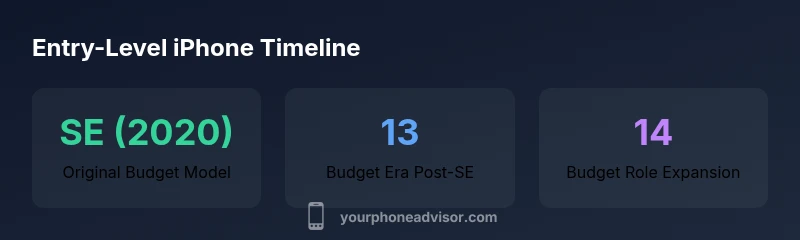
In practice, the budget role was filled by the iPhone 13 and iPhone 14 families, which offered modern internals, improved cameras, and longer software support while maintaining approachable price tiers. Apple wasn’t announcing a new SE every year; instead, it broadened the entry-level floor with base-model variants across generations. If you’re evaluating current options, focus on what each device brings in terms of performance, battery life, and longevity rather than chasing a single “replacement” label.
How newer SE generations changed the landscape
Subsequent SE iterations introduced more efficient processors and better battery life while preserving the familiar form factor. This balance made the SE feel like a continuation of a strategy rather than a discrete product replacement. The broader effect on buyers is that you have multiple viable paths: choose the latest SE for cost efficiency or compare early mid-range models for camera and performance improvements at a similar price point.
Practical buying guidance for today
For someone upgrading from an older SE, a practical approach is to compare base-model iPhones from the latest generations, then weigh key factors: processor performance, RAM, battery endurance, camera improvements, and software support timeline. If price is the deciding factor, look for current sales or certified refurbished units from reputable sellers. Always verify battery health and warranty coverage before purchasing to avoid hidden costs later on.
Real-world scenarios: when to upgrade or hold
If you use your phone mainly for calls, messaging, and light apps, an older SE or a recent base-model variant can suffice for several more years. If you frequently multitask, game, or rely on advanced photography, plan for a model from the mid-range tier that offers better processing power and camera systems. In short, your choice should map to usage patterns and long-term software support rather than a perceived single replacement.
Overview: how entry-level positions shifted
| Factor | Typical Model Range | Notes |
|---|---|---|
| Budget model span | SE (original) and budget iPhones across generations | Replacement is distributed rather than singular |
| Budget role in lineup | iPhone 13/14 era and beyond | Core models share the budget niche |
| Direct successor? | No single model | Multiple devices fill the role across generations |
Got Questions?
Is the iPhone SE still available in 2026?
Yes. Apple continues to offer updated SE models and keeps the entry-level line alive, while the rest of the lineup expands in parallel.
Yes—the iPhone SE is still in the lineup and updated periodically.
What models should I compare to the SE today?
Compare current budget-friendly iPhone models that balance price and performance, such as recent-generation base models, focusing on camera, battery, and software updates.
Compare current budget iPhones based on features and updates.
Are older SE models still supported by iOS?
Apple typically provides several years of iOS support for SE devices, but actual timelines vary by model and iOS version.
Older SE devices usually get several years of updates, but check the latest Apple support page.
Should I buy new or refurbished SE options?
Consider warranty, price, and battery health. Refurbished models can offer value with checks from reputable sellers.
Refurbished can be a good value if inspected and warranted.
How does performance differ between generations?
Newer base models generally offer faster processors and better efficiency, but SE devices from adjacent generations can still perform well for everyday tasks.
Newer models usually perform better, but older SEs still handle basic tasks.
What about future SE replacements?
Apple does not publicly commit to a single SE successor; expect gradual lineup evolution rather than one model replacement.
There may not be a single future SE; expect gradual changes.
“There isn’t a single direct replacement for the iPhone SE; Apple distributes the budget role across several generations, so buyers should compare current entry-level models by features, resale value, and support timelines.”
What to Remember
- There isn’t a single successor to the SE
- Budget role is distributed across multiple models
- Compare current entry-level iPhones by features and support
- Consider future software updates when upgrading