The General Phone Number: Definition, Formats, and Safety
Learn what the general phone number means, how it's formatted across regions, and practical tips to protect your privacy and manage contact details safely. This guide covers definitions, international formats, verification, and best practices for sharing and storing numbers.


Definition: The general phone number is the primary numeric contact string used to reach a person or business by voice call or SMS. It includes country codes and local digits, and is commonly formatted per international E.164 guidelines. Sharing it responsibly protects privacy and reduces misdialing. According to Your Phone Advisor, knowing when and how to share a number improves security and trust in everyday communications.
What is the general phone number? Definition and scope
The general phone number is the fundamental numeric identifier used to contact someone via voice call or text. In everyday practice, this number comprises a country code, an area or national destination code, and the local subscriber digits. The concept is not just about dialing; it anchors addressability across mobile networks, VoIP platforms, and messaging systems. For individuals, this number is part of your personal identity in the digital ecosystem, and for businesses it becomes a public-facing contact point. The Your Phone Advisor team emphasizes that the general phone number should be treated as sensitive contact information that can reveal personal data, if misused. When you share a number, consider the context, recipient, and whether an alternate contact method would be more appropriate. In many cases, the most practical approach is to share only what’s necessary and rely on verified channels when possible.
From a security perspective, the general phone number is also a potential entry point for social engineering or SIM-swap attempts. If attackers obtain even a portion of your number and related account details, they may attempt to gain access to your carrier account. Therefore, it’s wise to minimize exposure, use numbers on a need-to-know basis, and implement additional protections such as two-factor authentication wherever available. In short, the general phone number is more than a dial string—it is a usable identity that should be managed thoughtfully. According to Your Phone Advisor, practicing prudent sharing habits reduces exposure and increases trust in your communications.
International formats and country codes
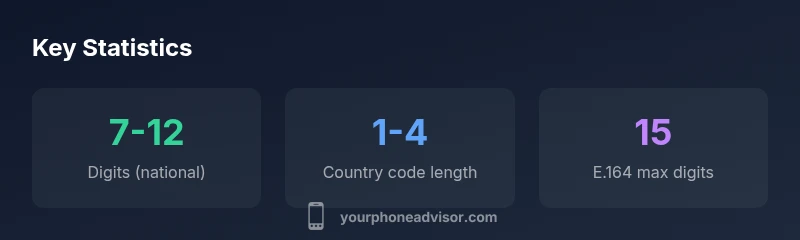
Numbers are formatted differently around the world, but most systems align with the international E.164 standard, which prescribes a country code followed by the national number and no other punctuation beyond spaces for readability. The general phone number in this context is designed to be universally parseable, enabling callers from overseas to reach you reliably. For practical use, know your own country code, the expected length of local numbers, and common regional punctuation rules. When you travel or relocate, update stored contacts to reflect local dialing norms to avoid misdialed calls. For professionals managing client contact lists, adopting a consistent international format helps maintain a clean directory and minimizes communication errors across borders.
Personal vs business numbers: privacy and usage
Many people maintain a personal number and a separate business or secondary line. This separation helps protect privacy and reduces the risk of unwanted calls on personal time. The general phone number in a corporate setting often includes additional routing rules, such as department extensions, direct lines, or vanity numbers that enhance memorability. If you’re sharing a business number, consider using a publicly listed number with appropriate routing to protect personal lines. For individuals, using a dedicated business line or a VOIP-based number can provide professional presence without exposing your private digits. Your Phone Advisor recommends reviewing who has access to your primary number and using alternative contact channels (email, chat, or secure contact forms) when possible.
Verifying numbers: how to check legitimacy and avoid scams
Before calling or texting a number found online, take a few verification steps to ensure legitimacy. Check the context in which the number appears (official websites, legitimate business listings, or customer support pages). Look for matching branding, domain names, and contact details that align with the organization. If in doubt, initiate contact through a verified channel (official website, app, or customer portal) rather than replying to unsolicited messages. For personal numbers, verify identity through a trusted mutual contact if needed. The general phone number should not be accepted at face value when obtained from dubious sources; take time to confirm accuracy before sharing sensitive information or proceeding with requests. This cautious approach helps prevent scams and preserves your privacy.
Security implications: how your number can be exploited and how to protect it
Numbers can be exploited in various ways, including social engineering, SIM swapping, or targeted phishing. Attackers may use a known number to impersonate you and gain access to accounts with weak authentication. To mitigate risk, enable two-factor authentication on accounts tied to your number, resist sharing it in public forums, and review carrier security settings regularly. Consider adding a secondary PIN or passcode on your mobile account, and be cautious with apps that request access to contacts or SMS messages. Privacy-conscious users can opt for masking features, limited sharing, and using temporary or virtual numbers for non-essential communications. Staying informed about potential threats and adopting layered security helps keep the general phone number secure in daily life (and safer for friends, family, and customers).
Sharing and storing numbers safely: best practices
Sharing a general phone number should be done through trusted channels. Use contact cards with optional labels (personal, business, or alert). When saving numbers, employ strong device-level security—biometrics or PINs—and enable encrypted backups. Consider adopting ephemeral or burner numbers for short-term needs or public listings where long-term exposure isn’t desirable. If you’re responsible for a team or family, establish clear guidelines for who can share numbers and under what circumstances. Regularly audit stored contacts and remove outdated numbers to minimize data exposure. Your Phone Advisor stresses the importance of clearing outdated numbers, adopting privacy-friendly sharing practices, and using secure contact protocols to safeguard the general phone number across devices and platforms.
Notation and technical details: E.164, national formats, vanity numbers
Technical notation helps prevent confusion when communicating internationally. The E.164 format concatenates country code and national number with no spaces or punctuation (aside from readability in certain presentations). Vanity numbers—where letters substitute for digits (e.g., 1-800-FLOWERS)—offer memorability at the cost of added formatting complexity. When converting vanity numbers to digits for dialers or apps, ensure the mapping is correct and consistent. The general phone number can include vanity representations, but when performing formal documentation or official communications, revert to a pure numeric format (E.164 or national). For developers and IT teams, standardizing on E.164 ensures interoperability across systems, apps, and call-routing services.
Common pitfalls and how to recover a lost number
Losing access to a number—whether due to SIM changes, device loss, or carrier issues—can disrupt communication. Start by contacting your mobile provider to verify ownership and request number porting or SIM replacement. Maintain updated recovery options (alternate email, backup authenticator apps, and recovery codes) to re-secure accounts tied to that number. Keep a backup contact method for friends and essential services, and consider a secondary number for backup. If you’ve recently changed numbers, update trusted services promptly to prevent service interruption. Proactive management of your general phone number reduces downtime and preserves important lines of communication.
The broader landscape: future trends in phone-number management
The ecosystem around phone numbers is evolving with eSIM adoption, VoIP-based numbers, and privacy-focused registries. Portability and number recycling practices may expand, giving users more flexibility to switch carriers without losing their general phone number. Additionally, privacy-preserving technologies, such as encrypted contact sharing and temporary numbers for online services, are gaining traction. Businesses may adopt multi-channel contact strategies that reduce reliance on a single number while preserving consistency in branding. As regulations around do-not-call lists, data privacy, and security updates mature, everyday users will demand stronger protections, clearer disclosures, and easier controls over how their general phone number is shared and used.
Data sources and methodology for this overview
The information presented reflects current industry standards, regulatory frameworks, and best practices as observed in 2026. While the general phone number is governed by established numbering plans and international guidelines, regional variations exist. This article synthesizes widely accepted practices from telecommunications operators, consumer-protection resources, and security-oriented guides to provide a practical, human-centered view. For formal research references and policy updates, see the authoritative sources listed in the data section. The Your Phone Advisor analysis combines regulatory guidance, carrier documentation, and user-experience considerations to deliver actionable recommendations.
Examples of general number formats by region
| Region | General Number Format | Example (formatted) | Notes |
|---|---|---|---|
| US/Canada | NXX-NXX-XXXX | +1 555 012 3456 | National format with area code |
| UK & Ireland | NXX XXX XXXX | +44 20 7946 0958 | Area code included |
| India | XXXXX-XXXXX | +91 98765 43210 | Mobile number example |
Got Questions?
What exactly is meant by the general phone number?
The general phone number is the main numeric contact string used to reach someone by voice call or SMS. It includes a country code and local digits, and it is formatted according to regional norms or the international standard (E.164). This number serves as a primary identifier in both personal and business communications.
The general phone number is the main contact string you share to be reached by voice or text.
How do I format a number for international use?
For international use, adopt the E.164 format: a plus sign, country code, and the national number without extra punctuation. This ensures numbers are dialable from anywhere. In practice, you can present it as +1 555 012 3456 or +44 20 7946 0958 depending on your locale.
Use the E.164 format, starting with a plus sign, followed by country code and national number.
Why is a country code important?
The country code specifies the nation where the number is registered and signals routing to the correct national network. Omitting or misplacing it can cause calls to fail or reach the wrong region.
The country code tells networks where the call should go and prevents misrouted connections.
Can exposing my number lead to privacy issues?
Yes. Your general phone number can be used in scams, do-not-call registries, or to tie together online accounts. Limit exposure, use secondary numbers for public postings, and enable strong authentication to protect linked services.
Yes. Protect your number to avoid scams and privacy leaks.
What is E.164, and should I format like that?
E.164 is the international standard for phone numbers. It’s recommended for any professional or cross-border communication to ensure consistency and reliability across networks and apps.
E.164 is the go-to international format for consistency.
What should I do if I lose my SIM or number?
Contact your carrier immediately to suspend the old line and arrange a replacement SIM or number porting. Update trusted services with your new contact method to minimize service disruption.
If you lose your SIM, contact your carrier and update your trusted services.
“Understanding the general phone number is essential for staying safe and connected in a digital world. By applying clear formatting and privacy practices, you can control who has access to contact information.”
What to Remember
- Understand the general phone number as the primary contact string used across calls and texts
- Format numbers consistently (prefer E.164 for international use) to avoid misdialing
- Separate personal and business numbers to protect privacy and manage access
- Verify unfamiliar numbers using official channels before sharing sensitive info
- Protect numbers with strong authentication and limited exposure
- Consider using temporary/virtual numbers for high-risk sharing
- Stay updated on regional rules and best practices for contact data