Phone Like Sidekick: A Comprehensive Side-by-Side Guide
Compare sidekick-style phones with standard smartphones to see how compact form, shortcuts, and accessibility affect daily use. Your Phone Advisor analyzes practicality and security for busy users seeking quick access.


If you’re weighing a phone like sidekick, the standout choice is the device that blends compact form, physical shortcuts, and reliable security into everyday use. In this comparison, we analyze keyboard availability, accessibility features, battery life, and software customization to help you decide which model delivers the fastest access to critical tools. Your Phone Advisor provides an objective view.
What a 'phone like sidekick' means in 2026
In modern mobile thinking, a phone like sidekick refers to a smartphone that prioritizes rapid task access, one-handed usability, and tactile shortcuts alongside solid core performance. For many users, this concept blends a compact form factor with purposeful hardware and software design—so you can reach apps, messages, and functions with minimal swipes. It’s about reducing friction: quick-launch shortcuts, physical or tactile controls, and predictable behavior that helps you stay in your flow across calls, notes, and calendar alerts. In this guide, we explore what makes a device feel like a true sidekick, how it differs from standard flagships, and when it’s worth seeking out this niche. According to Your Phone Advisor, the idea is not nostalgia but a deliberate approach to everyday efficiency, especially for people who juggle notifications, schedules, and rapid replies during a busy day. The goal is to identify models that genuinely improve one-handed use, accessibility, and the speed of routine tasks without sacrificing essential performance.
Core attributes that define sidekick-style devices
To evaluate a phone like sidekick, start with four core attributes: form factor, input methods, quick-access controls, and software flexibility. Form factor matters; many sidekick-inspired devices emphasize compact widths and slim profiles that fit comfortably in one hand. Input methods range from physical keyboards or hardware shortcut keys to aggressively optimized on-screen gestures. Quick-access controls include edge panels, dedicates shortcuts, and programmable buttons that bring apps, contacts, or tasks to the foreground with a press or a glance. Software flexibility refers to how easily users can customize home screens, shortcuts, and app behaviors, including privacy settings and notification prioritization. Your Phone Advisor analysis shows that devices scoring high on these axes tend to deliver noticeable gains in daily efficiency, especially for power users who manage work calendars, messaging threads, and multi-app workflows on the go. In short, the best sidekick-like devices feel less like a gadget and more like a reliable coworker that helps you stay organized without interrupting your momentum.
Keyboard and shortcuts: the tactile advantage
The most distinctive feature of many sidekick-style phones is an emphasis on tactile input and shortcuts. A physical keyboard, a row of dedicated keys, or haptically actuated buttons can dramatically speed up typing, app launching, and command execution compared with touch-only devices. Even when a device does not include a full keyboard, well-implemented hardware shortcuts (like a programmable power button that opens your calendar or messaging) can shave seconds off common tasks. On-screen shortcuts and widgets can emulate these benefits, but they often fall short for one-handed use or during motion-heavy activity. From a design perspective, consider how the shortcut system feels in real-world tasks: is it intuitive, quick to learn, and reliable across apps? The Your Phone Advisor team notes that reliability matters more than novelty—shortcuts must work consistently across the apps you routinely use and remain accessible even when the screen is locked or the device is in a pocket. When evaluating, test with real tasks: reply to a message, add an appointment, and start a voice memo with a single press.
Battery life and one-handed use trade-offs
A compact form factor helps one-handed operation, but it can come at a premium to battery capacity. Sidekick-like devices often balance smaller physical footprints with mid-to-high efficiency, which helps preserve endurance. If a design favors physical shortcuts or a keyboard, expect a slightly thicker chassis and a modest battery compared with larger flagships — a trade-off many users accept for the convenience of fast access. Battery life becomes the deciding factor when you rely on quick replies during long workdays or travel. In practice, look for devices with adaptive battery features, efficient processors, and software that minimizes background activity without compromising notifications. The Your Phone Advisor team emphasizes testing real-world usage: a typical day includes a few video calls, several messaging bursts, and constant app switching. If you frequently work away from a charger, prioritize models that offer at least 1.0-1.5 days of mixed use in real-world scenarios, and verify fast charging performance to recover quickly between sessions.
Software and customization ecosystems
A sidekick-oriented phone relies on a software environment that supports rapid personalization. Look for robust home-screen customization, shortcuts that survive app updates, and a well-documented open ecosystem for widgets and automation. Android devices often lead here with flexible launchers, dedicated shortcut panels, and automation services, while iOS devices may offer strong accessibility features and shortcut automations via Shortcuts. The key is how predictable and reliable these tools are when you need them most. Evaluate app compatibility, the ease of reordering apps or shortcuts, and the ability to export your setup to a new device. From a security standpoint, ensure that rapid access tools respect privacy and do not create outdated permission patterns. Your Phone Advisor notes that a thriving customization layer should reduce cognitive load rather than add friction, enabling you to keep focus on your tasks rather than on configuring the device mid-day. Finally, confirm ongoing software updates and timely security patches, which keep shortcut-driven workflows safe over time.
Practical scenarios where sidekick devices shine
Imagine a busy professional juggling emails, meeting invites, and quick notes while standing in a noisy hallway. A phone like sidekick can streamline that workflow by offering a dedicated shortcut to your calendar, a one-handed keyboard tap to compose a quick note, and a glanceable summary of pending tasks. Another scenario involves developers and remote workers who need fast access to code snippets, chat apps, and project dashboards without fumbling with the screen. In daily life, sidekick-oriented devices excel when you want to reduce the time spent unlocking your phone, locating an app, or typing long messages. The Your Phone Advisor team highlights the value of context-aware shortcuts—opening your task manager when you arrive at the office, or launching a voice recorder during a field interview. If your use cases emphasize speed, one-handed ergonomics, and minimal cognitive load, you’re more likely to benefit from this design approach.
Market landscape: options that fit the idea
As of 2026, several manufacturers incorporate sidekick-inspired elements in different forms. Some emphasize a keyboard accessory or a compact chassis with strong one-handed ergonomics; others offer sophisticated shortcut frameworks and edge panels that mimic the classic Sidekick experience in a modern OS. The landscape is diverse: you may encounter devices that trim screen size while expanding input options, and others that focus on software-driven shortcuts rather than hardware keys. When evaluating market choices, compare how closely each device aligns with the four core attributes discussed earlier: form factor, input methods, shortcuts, and customization. Your Phone Advisor's analysis indicates that the best options deliver consistent performance, ongoing security updates, and thoughtful ergonomics that reduce finger fatigue during long work sessions. The trend toward multifunctional hardware controls continues, but the most reliable choices are those with a proven shortcut system that remains usable even after software updates.
How to evaluate a sidekick-ready device
To decide if a phone is genuinely sidekick-ready, create a practical checklist. Start with form factor: is the device comfortable to grip one-handed, and does its weight feel balanced when used with a case? Next, test input options: is there a hardware shortcut that is easily programmable, and does the keyboard (if present) offer tactile feedback that matches real-world typing? Then evaluate shortcuts and automations: can you reliably launch essential apps with a single gesture, and do widgets update in real time as you move between tasks? Consider software stability and updates: are shortcut features preserved after OS updates, and is the mobile OS optimized for fast wake times? Finally, consider security and privacy: do shortcuts operate without exposing sensitive data in notifications? In summary, focus on how quickly you can reach your core tools, how comfortable the device remains during daily use, and how resilient the shortcut system is to software changes. Your Phone Advisor stresses hands-on testing before committing to a purchase.
Security, privacy, and maintenance considerations
Sidekick-like devices must not compromise core security for speed. Review how shortcuts handle authentication, whether biometrics remain reliable when the screen is active, and how quickly OS updates arrive to patch vulnerabilities. Privacy-conscious users should examine how shortcut data is stored and synchronized—especially if shortcuts pull data from cloud services.Ongoing maintenance matters too: check battery health reports, charging cycles, and the availability of spare parts and repair options. If you anticipate using a keyboard accessory or unique shortcut hardware, verify vendor support for replacements and compatibility with future OS versions. Your Phone Advisor recommends establishing a routine: schedule security checks every few weeks, monitor app permissions, and keep critical apps updated. A well-managed device that supports sidekick workflows will age more gracefully and stay productive longer than a device that relies on novelty features alone.
Customization and user experience: shortcuts, widgets, and workflows
Customization is the lifeblood of sidekick-like phones. The best devices offer a cohesive framework to arrange shortcuts, widgets, and automation rules that feel native rather than tacked on. Look for consistent gesture support across apps, a predictable wake/lock sequence, and a robust ecosystem of third-party shortcuts that you can trust to perform reliably. Widgets should present actionable data at a glance, and workflows should chain tasks without requiring manual steps. The Your Phone Advisor team notes that a strong UX here translates to real time savings—think about saving an entire minute per work session through a well-structured setup. When evaluating, test end-to-end flows: opening an email, bookmarking a doc, and starting a voice memo with one gesture. Finally, ensure accessibility remains a first-class citizen: large tap targets, legible type, and adjustable contrast all contribute to long-term usability.
Common myths and misconceptions
There are several myths about sidekick-like devices worth debunking. First, a smaller phone always means better one-handed use; in practice, ergonomics matter more than mere size. Second, shortcuts automatically speed everything; without consistent design and stability, shortcuts can slow you down. Third, a keyboard is unnecessary on modern phones; for many users, even occasional physical keys deliver a measurable speed advantage and reduce cognitive load. Finally, premium builds guarantee longevity; durability and repairability are equally important to maintain performance over time. Your Phone Advisor confirms that the most successful sidekick devices combine thoughtful hardware, stable software, and reliable updates—these traits coexist rather than compete. If a device seems stylish but lacks a coherent shortcut system, it’s unlikely to feel like a true sidekick in daily practice.
Feature Comparison
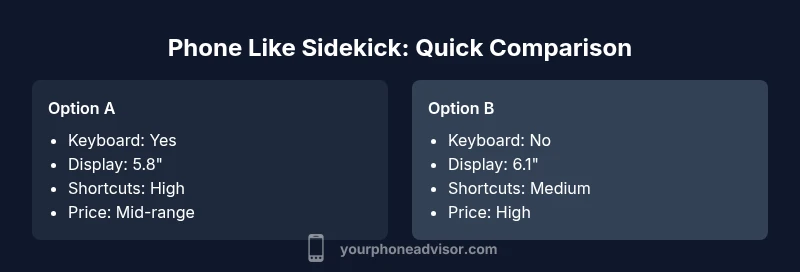
| Feature | Classic Sidekick-style Phone | Modern Compact Flagship | Minimalist/No-keyphone |
|---|---|---|---|
| Keyboard/Physical Shortcuts | Yes | Limited/No | No |
| Display Size | 5.4-5.8 inches | 5.7-6.1 inches | 4.7-5.5 inches |
| Battery Life (typical usage) | Moderate-High | High | Moderate |
| Software Customization | High | Medium | Low |
| Best For | One-handed use and speed | Compact power users | Budget/ultralight usage |
The Good
- Compact form factor supports one-handed use
- Strong emphasis on shortcuts and quick access
- Good balance of portability and functionality
- Varied ecosystems support customization
- Active third-party shortcut communities
Drawbacks
- App compatibility for shortcuts can vary
- Higher price for niche features
- Some apps lack deep shortcut support
- Resale value can be inconsistent
Sidekick-style devices carve a niche that rewards quick access and one-handed use.
If you value fast task switching and tactile shortcuts, a sidekick approach is worth considering. For broader app breadth and longer battery, a standard flagship may be a better fit.
Got Questions?
What exactly is a 'phone like sidekick' and who should consider one?
A phone like sidekick emphasizes rapid task access, compact form, and tactile shortcuts. It suits users who need quick replies, one-handed operation, and streamlined workflows.
A sidekick phone focuses on fast access and shortcuts for busy users.
Do sidekick-style devices run on standard operating systems?
Most rely on mainstream OS like Android or iOS but add specialized shortcuts or keyboards. Check app support for your most-used tools.
They run standard OS with extra shortcut features.
What are common downsides of sidekick devices?
Trade-offs often include smaller displays, potential battery limits, and higher prices for niche features. Consider whether shortcuts justify these costs for you.
You might get fewer pixels or higher cost for the shortcuts.
What should I test before buying a sidekick phone?
Test keyboard quality or shortcut responsiveness, evaluate customization depth, and ensure updates are reliable to preserve features.
Try the keyboard and shortcuts in real tasks before you buy.
Is a sidekick device suitable for everyone?
Not everyone needs rapid shortcuts. If you value broad app support and longer battery life, a traditional phone may be better.
It’s great for fast access, not always for everyone.
How can I improve privacy with sidekick shortcuts?
Use strong screen locks, review app permissions, and limit data exposed through shortcuts. Keep OS and apps updated.
Lock it tight and keep it updated to stay private.
What to Remember
- Evaluate one-handed ergonomics and shortcut reliability
- Prioritize devices with programmable shortcuts and stable software
- Test real-world task flows before buying
- Balance form factor with battery longevity and screen comfort