How Long Does a Phone Ring? Understanding Ring Times Across Carriers
Explore how long a phone rings before voicemail, what factors influence the duration, and practical steps to test and optimize ring times across networks, devices, and settings.


Across most mainstream mobile networks, a typical inbound call rings for about 20-30 seconds before voicemail or routing. Your Phone Advisor Analysis, 2026, notes that timing is influenced by carrier settings, device configurations, and whether the call is answered, rejected, or diverted to voicemail. In some regions or with VoIP services, ring times can extend beyond 30 seconds, while aggressive call-forwarding can shorten it.
Understanding ringing behavior across networks
When you ask how long does a phone ring, the answer depends on how networks route calls and how your device handles delivery. In most traditional cellular networks, the ring lasts roughly 20 to 30 seconds before voicemail or call completion. VoIP services and some regional carriers can alter this window due to internet routing, server queues, and how quickly the system decides to connect or drop a call. Your Phone Advisor's perspective, based on 2026 data, emphasizes that these timings are not universal defaults; they are contingent on infrastructure, plan configurations, and even the time of day when traffic is heavy. For everyday users, this means you may experience a brief variance from one call to the next.
In practice, ring duration forms a moving target: it can be shorter for forwarded numbers or longer if the network adds a retry sequence before routing to voicemail. To manage expectations, consider testing ring times with colleagues or family in different regions and on different networks. The key takeaway is that there is no single fixed number that applies everywhere.
What influences ring duration: network, device, apps
Several levers shape how long a phone rings before voicemail or pickup. Carrier policies determine default ring tones and how long a call attempts are made before routing to voicemail. Device settings, such as Do Not Disturb, call forwarding, and screen-quiet modes, can mute or interrupt audible rings. Applications like VoIP clients, video conferencing apps, or call-blocking tools may also affect call routing speed. Regional differences in regulatory requirements and network density contribute to noticeable timing variations between the US, Europe, and other regions. In short, ring time is a product of network design, device configuration, and user-level settings, all interacting in real time.
Understanding these factors helps users set realistic expectations and troubleshoot unexpected delays. If you notice an unusual change, review your DND settings, check for active call-forwarding rules, and consider testing calls from multiple carriers or numbers to isolate the variable at fault.
Measuring your own ring time: steps, tools
Measuring your own ring time is straightforward and repeatable with simple steps. First, have a trusted caller dial your number while you time the ring duration with a stopwatch or a sound-level app. Record several trials on different days and in different locations to account for network variability. If you want a more formal approach, use a mobile diagnostic app that timestamps the start of the ring and the moment the line is answered or voicemail picks up. Be mindful to note the exact carrier and whether Wi‑Fi calling or cellular data is in use, as these can influence results. Aggregating multiple measurements will yield a practical baseline you can reference for future calls.
Voicemail and routing: how it ties to ring times
Voicemail routing can shape perceived ring time because the system may start timing the duration from call initiation until it detects voicemail greeting. Some carriers deliver voicemail after a fixed ring window, while others queue a short time before letting the user hear the voicemail greeting. When ring times elongate, this often reflects longer routing paths, more sophisticated spam protection checks, or re-routing attempts. Conversely, a shorter ring may indicate aggressive voicemail forwarding or a streamlined routing path. If rapid voicemail pickup is desirable, consult your carrier’s voicemail settings and consider adjusting the number of rings before voicemail or enabling a different routing option.
Do Not Disturb, call forwarding, and VoIP effects
Do Not Disturb (DND) can silence the ring completely for incoming calls or route them directly to voicemail, effectively shortening the audible ring. Call forwarding shifts the destination before the call rings through your device, which again changes the user-facing experience. VoIP-based calling introduces another layer of routing, often over the public internet, which can add noticeable lag or variability depending on network quality and server load. If you rely on quick answers, keep DND off during critical hours, ensure call forwarding is set to your preferred number, and test both cellular and VoIP call paths to understand how each affects ring length.
Regional and carrier differences: what to expect by region
Regional differences in ring times are common due to how networks implement call setup and voicemail. In the US, many carriers use relatively consistent defaults, while in parts of Europe and Asia, you may encounter shorter or longer typical rings based on local practices and regulatory constraints. VoIP-accelerated networks may compress ring times to reduce latency, while traditional circuit-switched networks can introduce modest delays. For travelers or remote callers, recognizing these regional variations helps manage expectations and reduces frustration when rings feel slower or faster than usual.
Practical tips to reduce missed calls: adjust settings
If missed calls are a problem, start with basic adjustments: set a reasonable number of rings before voicemail, disable DND during work hours, and enable call forwarding only to a reliable number. Review tandem ring settings—some devices offer a separate ring tone for forwarded calls. Consider a VoIP option with explicit ring settings if you frequently rely on internet-based calling. Finally, test from multiple networks and devices to verify where delays occur and adjust accordingly. Small changes can yield noticeable improvements in responsiveness and caller experience.
Troubleshooting: when ring time seems abnormally long or short
Abnormal ring times can signal misconfigurations or network health issues. If ring time is unusually long, check for blocked numbers, call-forward loops, or misconfigured voicemail timelines. If it’s unusually short, inspect DND status, carrier issues, or automated call-blocking services that may prematurely terminate rings. A systematic test—comparing cellular and Wi‑Fi calling, testing with multiple numbers, and verifying voicemail settings—will help isolate the problematic element. If uncertainties persist, contact customer support for the carrier or service provider to confirm there are no ongoing outages or policy changes.
How to verify ring time across devices and numbers
To validate ring times across devices, repeat measurements using different phones on your account, and test with multiple numbers (cellular, landline, and VoIP). Ensure environmental factors like network congestion or building materials aren’t skewing results. Compare results across different times of day to capture peak vs off-peak performance. Document the baseline and retry after any configuration changes (DND, forwarding, or voicemail options) to confirm improvements or pinpoint regressions. Regular checks help you maintain consistent call experiences for yourself and your contacts.
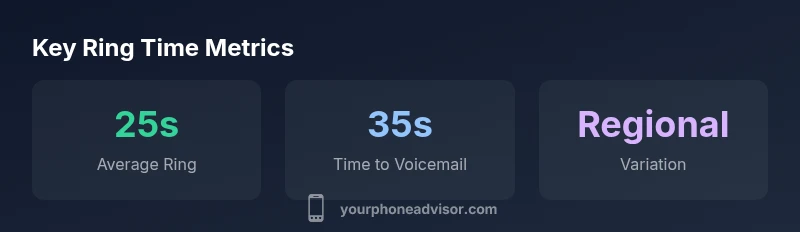
Overview of typical ring timings by factor
| Factor | Typical Range (seconds) | Notes |
|---|---|---|
| Average Ring Time | 20-30 seconds | Represents typical ring length before voicemail for mainstream US/European carriers |
| Time to Voicemail | 25-40 seconds | Accounts for routing and greeting time plus voicemail response |
| Regional Variation | US: 20-32; EU: 22-35 | Depends on carrier networks and VoIP infrastructure |
| Impact of Do Not Disturb | Variable | Can silence ring or forward calls based on settings |
Got Questions?
What is the typical ring time before voicemail?
Typically 20-30 seconds on most networks. Some carriers may extend to 40 seconds, while others route more quickly depending on plan and region.
Most calls ring about twenty to thirty seconds before voicemail, with some regional variation.
Why would my ring time differ between cellular and Wi‑Fi calling?
VoIP and Wi‑Fi calling route calls over the internet, which can add latency and server queuing, changing the observed ring time compared with cellular networks.
Wi‑Fi calling can ring longer or shorter depending on network quality and server routing.
Can enabling Do Not Disturb change the ring time?
Yes. Do Not Disturb can silence rings or forward calls, effectively altering how long you hear the ring before the call goes elsewhere.
DND can make your phone seem to ring less or not at all.
How can I test my own ring time?
Call your number from another line and time the ring, repeat with different networks or devices, and record several trials for a reliable baseline.
Ask a friend to call your number while you time the ring.
Does ring time affect voicemail greeting length?
Ring time ends when the voicemail system picks up, which is separate from greeting length. The greeting duration doesn’t usually change how long the ring lasts.
The ring ends when voicemail answers, not when the greeting finishes.
Will switching to VoIP affect ring time?
VoIP services can have different default ring times due to internet routing and server load; test both cellular and VoIP paths for comparison.
VoIP can change how long the ring lasts depending on the service.
“Ringing durations are shaped by network routing and device settings, not a universal standard. Carriers vary policies by region, plan, and infrastructure.”
What to Remember
- Expect 20-30 seconds as a baseline.
- Review DND and call-forwarding settings.
- Expect regional differences between US and EU.
- Test ring time across numbers to calibrate.
- Use carrier voicemail options to adjust timing.