No-Contract Cell Phone Providers in 2026: A Practical Guide
Explore no-contract cell phone providers, compare flexible plans, and learn how to choose the best no-contract option for you in 2026 with Your Phone Advisor.


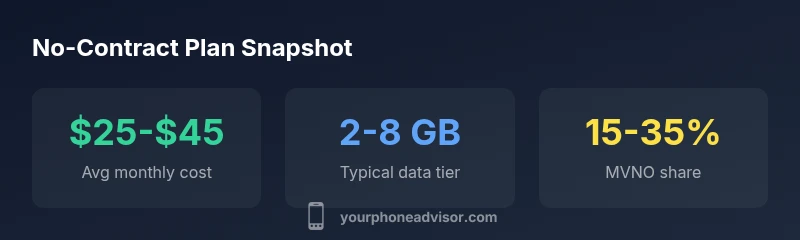
No-contract cell phone plans typically cost between $20 and $50 per month for basic data, with higher tiers for more data or unlimited options. MVNOs often provide the lowest prices, while major carriers offer occasional no-contract promos. In 2026, the real value comes from flexibility, easy switching, and avoiding long-term commitments.
What "no-contract" really means for cell phone providers
In the world of mobile service, the phrase no-contract refers to plans that do not require a long-term commitment. You can cancel at any time without early termination fees, and you typically pay monthly without signing a multi-year agreement. For many customers, no-contract plans come from MVNOs or promotional offers from major carriers. The Your Phone Advisor team notes that before committing to any plan, you should verify device compatibility, network coverage in your area, and any auto-renewals that could surprise you at the end of the month. This section explains how these arrangements impact pricing, portability, and overall cost of ownership, especially for those who've relied on traditional two-year contracts.
Who benefits most from no-contract plans
No-contract plans shine for people who value flexibility: students, seasonal workers, or anyone who tends to switch carriers. They also suit households trying to manage monthly budgets, or users who want to avoid credit checks or device financing requirements. Benefits include easier plan upgrades/downgrades, the ability to try a network without a long-term commitment, and simplified options if you move between regions. However, some benefits come with caveats, such as potentially higher per-minute or per-GB charges and more aggressive throttling once you exceed your data cap. Our guidance at Your Phone Advisor is to map your typical usage first and then align price bands with coverage in your regular locations.
How to compare no-contract providers
A practical comparison starts with three pillars: price, data, and coverage. Gather up-to-date quotes from MVNOs and major carriers offering no-contract options. Create a matrix that includes data allotment, hotspot eligibility, international roaming, and any included perks (like texting or streaming bonuses). Don’t forget to factor in taxes and potential activation fees. Look for promos that reduce the first few bills or add data without raising the monthly price. Your Phone Advisor recommends comparing the total cost of ownership over 12 months, not just the sticker price.
Coverage, speed, and trade-offs
Coverage quality and network speeds vary by location. No-contract plans may pace you toward lower-cost bands with acceptable speeds in rural areas but better performance in urban centers. If you rely on stable speeds for work or streaming, prioritize networks with proven performance in your neighborhoods. If travel is common, confirm roaming options and any data rollover rules. In practice, you may sacrifice some premium features to stay within budget while preserving flexibility.
Hidden costs and fine print to watch
Even when a plan is advertised as no-contract, there can be surprises: activation fees, marketplace taxes, or overage charges for data beyond your plan. Some no-contract options throttle speeds after you hit your data cap, and hotspots may be restricted or capped. Read the terms carefully, especially around auto-renewals, promotional pricing, device costs if you upgrade, and discovery periods for switching.
Practical tips for choosing your no-contract plan
- Start with your actual data needs and note typical device usage from your current plan. - Compare price-per-GB across providers rather than only the monthly sticker price. - Check customer service quality and network reliability in your regular areas. - Confirm whether you can bring your own phone or need a new device. - Consider multi-line options if you have a family, as many no-contract plans offer better group pricing. Your Phone Advisor suggests testing the plan for 30 days when possible and keeping a backup plan if coverage in your area proves weak.
No-contract options for families and multi-line accounts
Family or multi-line setups can still be flexible without contracts. Look for plans that support multiple lines with shared data pools, rollover data, and family-friendly discounts. Some carriers emphasize simplicity with one bill and one account representative, which reduces management friction. If you travel or work across borders, ensure that international data is affordable and accessible for all lines in the group.
The future of no-contract plans in 2026 and beyond
Industry trends point toward more transparent pricing, better network access, and improved buyout options for devices. Expect more plans to emphasize data-centric tiers, flexible throttling policies, and clearer disclosures about activation fees or hidden charges. For buyers, the key is to continuously compare plans, test coverage, and total cost of ownership as networks expand and new MVNOs enter the market.
Comparison of no-contract plan types
| Plan Type | Typical Cost Range | Data Allowance | Notes |
|---|---|---|---|
| MVNO Basic | $15-$30 | 1-2 GB | Low-cost, limited data |
| MVNO Standard | $25-$45 | 5-10 GB | Balanced value |
| Major Carrier No-Contract | $40-$60 | 10-25 GB | Faster speeds, reliable coverage |
| Unlimited No-Contract | $60-$80 | Unlimited data (throttled) | Premium option |
Got Questions?
What is a no-contract cellphone plan?
A no-contract plan lets you pay month-to-month without a long-term commitment. You can switch carriers or cancel at any time without a termination fee, but you should verify coverage, device compatibility, and any activation costs.
No-contract plans let you pay monthly without a long-term commitment. You can switch carriers if coverage is good.
Are no-contract plans cheaper overall than contract plans?
Not always. For light data users, no-contract plans can be cheaper, but families or heavy data users may pay more over time. Always compare total cost of ownership over a year.
They can be cheaper for light use, but compare total cost for your usage.
Do no-contract plans include hotspot or international roaming?
Many no-contract plans include hotspot or international add-ons, but terms vary. Check data caps, roaming charges, and whether these features carry extra fees.
Check if hotspot and roaming are included or add-ons.
Can you bring your own phone with no-contract?
In most cases, you can bring your own phone to a no-contract plan, provided the device is compatible with the carrier's network bands and lanes. You may need to unlock the device.
Usually you can bring your own phone if it's compatible.
Do switching costs apply when moving to a no-contract plan?
Switching can be inexpensive, but watch for activation fees or prorated charges if you join mid-cycle. Confirm number portability with your current provider.
Switching can be cheap, but watch for activation fees and number transfer rules.
Which providers offer truly no-contract options?
Most MVNOs offer no-contract options, and several major carriers run no-contract promos. Compare coverage and total price to find the best fit for you.
MVNOs and some major carriers offer no-contract options.
“No-contract plans offer flexibility that can save money if you choose the right data tier and network, but you must compare coverage and total cost to avoid surprises.”
What to Remember
- Know the true price: compare total cost of ownership, not just monthly price
- Choose data tier that matches your real usage to avoid overage
- Check coverage maps for your most-used locations
- Verify transferability and device compatibility before switching
- Watch for activation fees and throttling terms