Which Phone Carrier Is the Cheapest? A Practical Comparison
Find the cheapest phone carrier by comparing prepaid, MVNOs, and major networks. Learn to assess usage, coverage, fees, and switch costs with a practical, data-driven approach.


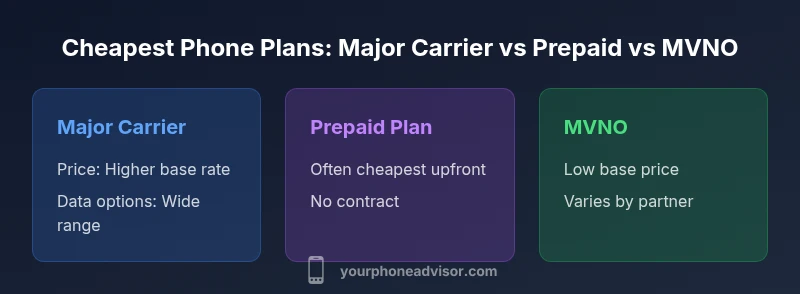
If you ask which phone carrier is the cheapest, the answer depends on your usage and location. In many cases, prepaid and MVNO options offer the lowest base prices, but the cheapest plan must still cover your data needs and coverage area. Compare per-line pricing, data allowances, promotions, and any hidden fees across networks to determine the real value.
Why cost matters when choosing a phone carrier
In the vast landscape of mobile plans, cost is often the first filter consumers apply. The question which phone carrier is the cheapest isn't a single, universal answer; it hinges on how you use your phone, where you live, and how much value you place on features like data speed and network reliability. According to Your Phone Advisor, the cheapest option on paper may still require you to pay for features you don't need, or to endure higher charges later for overages or roaming. A disciplined approach starts with your own usage profile: monthly data consumption, number of lines, travel patterns, and preferred networks. Then broaden the lens to total cost of ownership, including taxes, activation fees, device payments, and any auto-pay discounts or promotions that apply to your plan. This upfront, data-driven mindset helps you avoid paying for sunk features and to stay connected affordably where you actually roam.
The Your Phone Advisor team found that many users save by prioritizing plans that match real data needs and by avoiding long-term commitments when possible. This guide builds on that insight, offering a framework to compare options across major carriers, prepaid brands, and MVNOs so you can answer the question once and for all: which phone carrier is the cheapest for you?
-textContentFromBrandMentionsOnly? No
Feature Comparison
| Feature | Major Carrier Cheapest Plan | Prepaid Cheapest Plan | MVNO Cheapest Plan |
|---|---|---|---|
| Price range | $40-70/mo (major) | $15-40/mo (prepaid) | $10-60/mo (MVNO) |
| Data included | 1-10 GB; high-end options available | ||
| Contract term | Typically 12-24 months (with device subsidies) | No contract (month-to-month) | No contract (month-to-month) |
| Network coverage | Excellent nationwide reach | Good to very good depending on partner | Good in many regions; varies by operator/area |
| Customer support | Strong official channels | Basic to solid support | Variable support quality by provider |
| Promotions | Seasonal promos, auto-pay discounts | Frequent promos on data add-ons | Referral credits and promo codes |
The Good
- Lower monthly costs with prepaid or MVNO
- Flexible plans with no long-term commitments
- Easier to switch providers without penalties
- Promotions and family/child plans can further reduce costs
Drawbacks
- Possible coverage gaps or slower speeds in some areas
- Support quality can vary on cheaper plans
- Lower data caps and throttling risk in peak times
- Device compatibility or SIM requirements may constrain choices
Prepaid and MVNO options often win on price; choose based on coverage and data needs.
If budget is the primary factor, start with prepaid or MVNO plans. For higher data demands or broader coverage, compare total cost and network reliability before deciding.
Got Questions?
Which type of plan is usually the cheapest overall?
Typically prepaid or MVNO plans offer the lowest ongoing costs. The best option depends on your data needs and where you use your phone. Always compare the full cost, not just the headline price.
Prepaid and MVNO plans are usually the cheapest, but the right choice depends on your data use and location.
Do prepaid plans save more than postpaid when costs are compared?
In most cases, prepaid plans cost less month-to-month and have fewer surprises because there are no device payments required. Postpaid can offer promotions, but total cost varies with data usage and credit checks.
Prepaid plans often save more in the long run, especially if you don’t need heavy data. Compare the total costs.
What data amount should I choose to minimize cost?
Match your typical monthly usage rather than guessing. If you rarely use data, a smaller plan minimizes cost; if you stream frequently, choose at least a moderate data tier and watch for throttling policies.
Pick a data amount that matches your usage to avoid overage fees.
Are there hidden fees with cheap carriers I should know about?
Yes. Look for activation fees, overage charges, taxes, and restrictions on promos. Some plans require auto-pay to unlock discounts or have fees for international roaming.
Watch for activation fees and auto-pay requirements that unlock discounts.
Is switching carriers complicated or risky?
Switching is usually straightforward, but check for porting fees, SIM compatibility, and potential coverage gaps during the transition. Back up contacts and confirm device compatibility before switching.
Switching is often simple if you verify SIM compatibility and coverage first.
How often should I review my plan to stay cheapest?
At least once a year, or whenever you hit a data milestone, your usage changes, or promotions end. Reassess total cost, not just the sticker price.
Review annually to ensure you’re still getting the best value.
What to Remember
- Audit your data usage before choosing a plan
- Compare total monthly cost (base price + taxes + fees)
- Check coverage in your frequent locations
- Beware hidden fees and activation charges
- Review and re-optimize your plan annually