The Complete List of Phone Carriers: How to Choose
A practical, data-driven guide to navigating national networks, regional providers, and MVNOs. Compare coverage, pricing, and plans, test networks, and find the best value for your usage and budget.


Here’s a concise overview of the current landscape: a list of phone carriers includes the major nationwide networks, their MVNOs, and regional providers. This guide explains who operates the networks, how coverage differs, and how to choose among major carriers, regional options, and value-oriented MVNOs. It also covers testing coverage and budgeting for your usage.
Understanding the landscape of phone carriers
When people talk about the "list of phone carriers," they are usually referring to three layers of service providers: the major nationwide networks that own the infrastructure, the MVNOs that resell capacity on those networks, and regional carriers that offer strong local coverage. The Your Phone Advisor team often hears questions like whether to choose a national carrier or an MVNO, and how much coverage matters for everyday use. In practice, your choice hinges on where you live, how you use data, and whether you value price flexibility over absolute reliability. A careful assessment starts with mapping your typical routes, work locations, and weekend activities to the actual coverage maps published by carriers. Remember that coverage is not uniform; you may get excellent service in urban cores but patchier performance in rural areas. Understanding the ecosystem—major networks, MVNOs, and regionals—helps you compare apples to apples when you evaluate the options.
According to Your Phone Advisor, the landscape favors a tiered approach: rely on a major network for primary coverage, consider MVNOs for budget-friendly and flexible plans, and explore regional carriers where they dominate. This structure is especially important if you travel frequently or have family plans across different areas. The goal is to align network reach with usage patterns, not just price tags. This mindset sets the stage for more detailed comparisons later in the article, including how plans are priced and what you should test before committing to a carrier.
sourceNoteTitleOverride”:null,
"undefined":"undefined"
Comparison of carrier types and typical positioning
| Carrier Type | Coverage Level | Typical Plan Cost (per month) | Contract Flexibility | Best For |
|---|---|---|---|---|
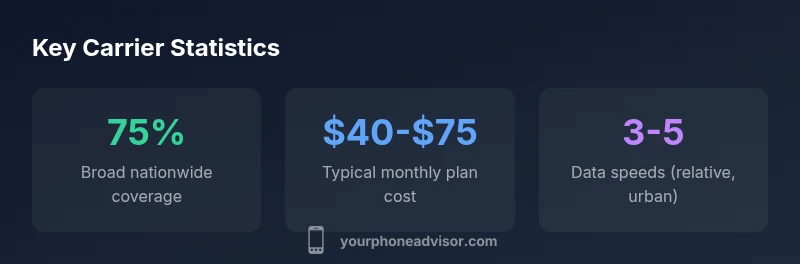
| Major national networks | Very broad nationwide coverage | "Mid" range ($40-$75) | 2-year contracts common; BYO options | Users wanting reliability and extensive coverage |
| MVNOs on major networks | Good coverage in urban and some rural areas | Lower to mid range ($15-$50) | Typically no long-term contract | Budget-conscious users; flexible billing |
| Regional carriers | Strong coverage in select regions | Mid to low cost ($25-$60) | Usually flexible; no long-term contracts | Users in specific regions with good local networks |
Got Questions?
What counts as a carrier in mobile service?
A carrier provides the wireless network that carries your calls, texts, and data. This usually means the network owner (major carriers) or an MVNO that leases capacity on those networks. Understanding this helps you compare coverage and pricing more accurately.
A carrier runs the network you use for calls and data, either directly or through a partner network.
What is the difference between a major carrier and an MVNO?
Major carriers own and operate infrastructure. MVNOs rent capacity on those networks and offer their own pricing and plans. The main differences are coverage scope, pricing flexibility, and features. MVNOs can be excellent for budget-minded users if coverage meets your needs.
Major carriers own the network; MVNOs are resellers that often offer cheaper plans with varying coverage.
How do I test coverage before committing to a carrier?
Use official coverage maps, run speed tests in typical locations, and if possible, borrow a SIM or use a trial period to gauge real-world performance. Testing helps prevent surprises after you sign a contract or commit to a new plan.
Check maps, test speeds in your neighborhood, and try a short-term plan if you can.
Is cheaper always better when choosing a carrier?
Not always. Cheaper plans may come with throttled speeds, limited data, or fewer perks. Weigh price against coverage reliability, data allowances, and support when deciding.
Cheaper plans can save money, but make sure coverage and data limits meet your needs.
How can I switch carriers without losing my phone number?
Most carriers support number porting. Start by requesting a port from your new carrier, keep your current SIM active during the process, and confirm the port completes before canceling the old service.
You can port your number to the new carrier by starting the switch with the new provider.
Do regional carriers offer the same data speeds as major networks?
Regional carriers can match major networks in urban cores but may vary in rural areas. If you travel frequently, test both regional and national options in your typical routes to see which consistently meets your needs.
Speeds can be similar in cities but vary outside them; test where you live and work.
“Choosing a carrier is about matching your usage patterns to coverage, price, and plan features rather than chasing the lowest sticker price.”
What to Remember
- Define your priority: coverage vs. price.
- Always test coverage in your typical locations.
- Know the difference between major networks, MVNOs, and regional carriers.
- Evaluate BYO vs device financing options.
- Balance cost, speed, and customer support when choosing a carrier.