List of Phone Carriers in USA: A Practical 2026 Guide
Explore the list of phone carriers in the USA, from major networks to MVNOs, with coverage, pricing, and switching tips for 2026. Learn how to compare plans, check coverage, and choose the right carrier for your data needs.


The list of phone carrier in usa includes the three national networks—Verizon, AT&T, and T-Mobile—along with numerous mobile virtual network operators (MVNOs) like Mint and Cricket that reuse those networks. For practical shopping, focus on coverage in your area, plan needs, and device compatibility. Your Phone Advisor's guide helps you compare pricing, data, and terms across the major and MVNO options.
Overview of the US mobile carrier landscape
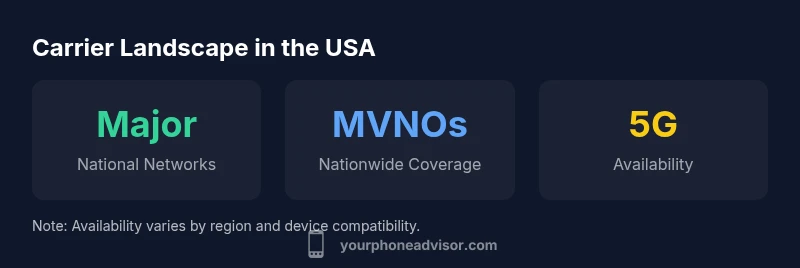
The United States hosts a dynamic mix of nationwide carriers and regional players. For a reader evaluating the list of phone carrier in usa, it's useful to categorize options into three tiers: the major networks that own nationwide infrastructure (Verizon, AT&T, T-Mobile), mobile virtual network operators that piggyback on those networks (MVNOs), and smaller regional carriers serving specific markets. The landscape also includes numerous prepaid and postpaid pricing options, device financing, and promotional deals that can influence total cost. In 2026, coverage and performance continue to vary by region, with 5G becoming more ubiquitous across the major networks. The Your Phone Advisor team observes that the best choice depends on your location, data usage, and device compatibility. A practical method is to map your typical locations—home, work, school, and leisure spots—and compare networks accordingly, while accounting for roaming needs and network prioritization.
Major carriers at a glance: Verizon, AT&T, and T-Mobile
-
Verizon Wireless is known for broad national coverage, especially in rural areas, and strong 5G nationwide reach. Prices tend to be on the higher side, but they often include generous unlimited data options and robust customer service.
-
AT&T Mobility balances coverage with competitive pricing on many plans. Its 5G footprint is extensive, and it frequently offers family and multi-line discounts. Prepaid options can provide lower-cost entry points.
-
T-Mobile consistently emphasizes fast speeds in urban areas and strong 5G coverage in many regions. It often features flexible plans, frequent promos, and robust value-focused options for families and individuals.
-
When considering these major carriers, many customers also evaluate MVNOs that reuse the same networks for savings, as well as regional carriers that tailor plans to specific communities. Your Phone Advisor recommends verifying coverage in your specific ZIP codes and testing signal reliability indoors, outdoors, and in transit.
Overview of major carriers and their network footprints
| Carrier Type | Network | Typical Coverage Area | Notes |
|---|---|---|---|
| Major | Verizon | National (urban & rural) | Strength in coverage; often higher price |
| Major | AT&T | National | Balanced coverage and price; expanding 5G |
| Major | T-Mobile | National | Strong speeds; strong urban presence |
Got Questions?
What is an MVNO and how does it differ from a major carrier?
An MVNO is a Mobile Virtual Network Operator that doesn’t own its own network infrastructure but rents capacity from one of the major networks (Verizon, AT&T, or T-Mobile). MVNOs typically offer lower prices and simpler plans, but coverage and data speeds can vary by region. Always verify the MVNO’s coverage in your area and the terms of service before subscribing.
MVNOs are cheaper because they rent space on big networks; check local coverage first.
How do I know which carrier has the best coverage where I live?
Start with official coverage maps from the major carriers and compare real-world performance in your ZIP code. Read local user reviews for the areas you frequent, and if possible, test a short-term SIM or eSIM trial before committing.
Check maps, read reviews, and test coverage in your key places.
Can I keep my phone number when switching carriers?
Yes. Porting your number to a new carrier is common. You’ll provide your current account number and a PIN code, and the new carrier handles the transfer. The process usually completes within a few hours to a day, depending on the providers involved.
Yes—porting a number is common; bring your account details to the new carrier.
Are SIM-only plans cheaper than device installment plans?
SIM-only plans can be cheaper month-to-month, especially if you already own a device or plan to keep it for several years. Device installment plans spread the cost of a new phone over time but often include interest or financing fees. Compare total cost over your typical device lifecycle.
SIM-only plans can save money if you already own a device.
What should I check before buying an MVNO?
Confirm coverage in your regular locations, data throttling policies,_data caps, and roaming options. Look at the data prioritization rules—some MVNOs deprioritize data during peak times, which can affect streaming and navigation. Also verify customer support options and contract terms.
Check coverage, data policies, and support before joining.
Do all carriers support eSIM, and what about my device?
Most major carriers support eSIM for newer devices, but availability varies by device model and region. Check your phone’s settings and carrier pages to confirm eSIM compatibility and activation steps before switching.
Most big carriers support eSIM on newer devices; verify your model.
“Choosing a carrier isn’t just about price—it’s about coverage, device compatibility, and service terms. Start with your area’s coverage map and then compare plans side by side.”
What to Remember
- Know the three national networks first: Verizon, AT&T, and T-Mobile.
- Compare coverage maps for your home and commute.
- Consider MVNOs to save money without sacrificing coverage.
- Check device compatibility and eSIM support before switching.
- Factor in data needs, family plans, and potential promo offers.