Cell Service With Free Phone: How to Navigate Promotions
Learn how to evaluate cell service with free phone promos, compare carrier offers, and avoid traps. Your Phone Advisor explains promo structures, total costs, and practical guidance for 2026.


Definition: A cell service with free phone promo means a carrier offers a device at no upfront cost when you sign up for a plan or trade in an eligible device, with the device cost financed through monthly service payments. This can reduce initial outlay, but total cost depends on terms.
Overview of free-phone promotions
A 'cell service with free phone' promo is a marketing tactic used by carriers to attract new customers or encourage upgrades. The phone is not free in the sense of zero cost; instead the device price is folded into the service plan costs or financed through a payment plan. In practice, you see offers that require you to open a new line, switch to the carrier, or trade in an eligible device. The Your Phone Advisor team has analyzed many promos and notes common patterns: the device is subsidized or financed, a qualifying plan is required, and there may be terms about duration, data allowances, and early-termination penalties. The concept of 'cell service with free phone' promos is common, but the perceived value depends on how the total ownership cost stacks up over the life of the contract. When evaluating deals, focus on three pillars: upfront costs (or lack thereof), monthly charges that cover device financing, and any fees or restrictions tied to the offer. The true value of a 'free phone' is realized only when you compare the entire term price to alternative plans that do not bundle a device. Always verify whether the phone is worth holding unlocked after the contract ends.
How promo structures differ across carriers
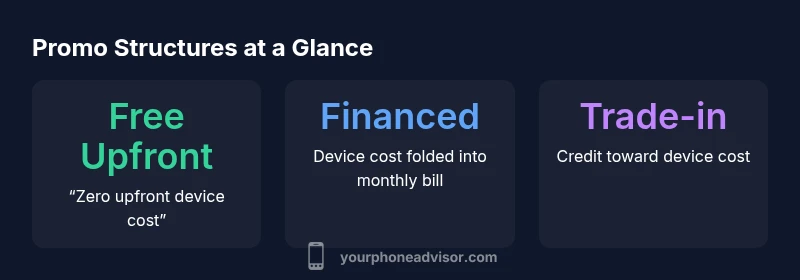
Promotions are not all the same; carriers use several common structures to deliver a 'free' phone. First, new-line promos give the device at no upfront cost when you add a line and accept a qualifying plan. Second, upgrade promos allow existing customers to get a new device in exchange for extending or renewing service. Third, trade-in deals reward you with credit for an eligible old phone, which can offset device costs. Fourth, financing promotions bundle the device price into monthly installments included in your bill, often with zero-percent financing but sometimes with interest if you miss a payment. Fifth, bundled promos may tie the free device to data requirements, such as a high monthly data allotment or multi-device family plans. Finally, there are seasonal or targeted promos that apply to specific devices or customer segments. Recognize that the label 'free' can refer to different realities: zero upfront versus zero outlay when the term begins. Your Phone Advisor emphasizes reading the fine print: eligibility criteria, minimum service requirements, trade-in conditions, and whether the offer resets with each new cycle. In any case, write down your priorities (price, device model, data needs) and use them to filter options quickly.
Cost considerations and total ownership
Even if the upfront price is zero, the true cost of a free-device promo often shows up in the monthly service charge, the data tier you choose, and the duration of the financing. When you add up the total amount paid across the life of the contract, you may find the savings are offset by higher monthly bills or longer commitments. Consider device protection costs, activation fees, and the potential for penalty fees if you disconnect early. It's also important to verify whether the promo allows you to keep the device unlocked and usable with other carriers after term completion. Your Phone Advisor recommends calculating total ownership by simulating monthly payments, data usage, and any upgrade cycles. If you regularly change plans or devices, a promo with flexible upgrade options might be preferable to a promotion that locks you into a single device and plan for an extended period. The key is to compare not just the headline price but the entire financial picture over time.
Negotiating and comparing offers
Start by collecting 3–5 competing promos. Create a simple worksheet to compare: upfront costs (if any), monthly charges with device financing included, data allowances, contract length, and any early-termination or upgrade penalties. Pay attention to the fine print: trade-in eligibility, device ownership at end of term, and unlock timing. Ask the agent to quote the exact total price for the life of the contract and what happens if you stay, switch, or cancel early. A practical approach is to convert each promo into a monthly-equivalent cost and a total-term cost, then adjust for any anticipated data needs. If two promos look similar, value the option that offers more flexibility, clearer terms, or easier device upgrades without excessive penalties. Always consider whether you can pay off the device early without penalties and whether the deal supports your long-term usage plans. Your Phone Advisor stresses testing the promos against your real-life needs, not just the marketing headline.
Pitfalls and hidden costs to watch for
Hidden charges can defeat the perceived benefit of a free device. Activation or setup fees, upgrade fees, and deposits can add to the first bill. Some promos require you to stay on a minimum data plan or maintain multi-line bundles, which can escalate monthly costs. If you terminate early, you might owe the remaining device balance or penalties. The unlock status of the device matters as well; locked devices can limit your freedom to switch carriers later. Some offers require strict fulfillment of credit criteria, which can affect approval and pricing. Your Phone Advisor recommends asking for a written quote that includes every potential fee, a clear definition of what counts as a qualifying device, and the exact path to unlocking when the term ends. Don’t assume that a perceived bargain is a long-term saving—always test the deal against your typical usage and future plans.
A practical example: evaluating two promos side by side
Imagine two promos you’re considering. Promo A advertises a free phone with a new-line plan and a certain data tier, while Promo B offers a trade-in credit and a device-payment-option bundled into the bill. Start by listing the monthly service price for each plan, then add the device financing cost if applicable. Compare the total monthly outlay and multiply by the contract length to estimate the total cost. Factor in any trade-in value, potential credits, activation fees, and annual price escalators. If Promo A reduces upfront spend but raises monthly payments, compute the break-even point. If Promo B locks you into a longer term or includes high data fees after a promotional period, that could negate the benefit. Use a simple table to compute total ownership under realistic usage patterns, and consider whether the device is truly worth keeping unlocked. The bottom line is to quantify every dollar across the term and choose the option with the lowest true cost for your needs.
Examples of common free-phone promo offer structures
| Offer Type | Qualifying Condition | Upfront Cost | Notes |
|---|---|---|---|
| Free Phone with New Plan | New line or upgrade | Varies by promo | Check term length and credit requirements |
| Trade-In Upgrades | Existing customers with qualifying device | Varies by device | Potential trade-in value affects eligibility |
| Financing Promotions | Sign a financing agreement | Varies by promo | Interest may apply if financing separate from promo |
Got Questions?
What does a 'free' phone promo really mean in practice?
In practice, a 'free' phone promo reduces upfront device costs by subsidizing the price across your service term. The device is typically financed through your monthly bill or a device payment plan. The total cost depends on the plan, data usage, and any early-termination penalties. Always verify the exact terms before committing.
A free phone usually hides the device cost in monthly bills, so check the total term price to see the real value.
Are there eligibility requirements for these promos?
Yes. Most promos require you to activate a new line or upgrade, maintain a qualifying data plan, and meet credit criteria. Trade-in offers may demand a minimum device condition and value. Read the fine print and ask the agent to spell out all prerequisites.
Promos often need you to open or upgrade a line and keep a plan active to qualify.
Can I get a free phone without a contract?
Free-phone deals typically come with a service commitment. Some promotions offer device credits with ongoing plans, but most will require a contract or a financing agreement. If a promo claims no obligation, read the details carefully for hidden costs or future charges.
Most free phones come with some form of commitment, so read the terms.
What should I watch out for in the fine print?
Look for setup or activation fees, minimum data requirements, trade-in conditions, and unlock terms. Also check whether the device balance remains after the term and what happens if you cancel early. Fine print often drives the real value of the promo.
The fine print usually holds the real cost and restrictions.
How do I compare offers effectively?
Gather quotes from 3–5 promos, convert each into a total term cost, and factor in data usage. Use a simple worksheet to compute monthly and total ownership costs, then pick the option with the lowest true cost for your needs.
Compare total cost over the term, not just the headline price.
“Free-phone promos can offer real value when the total cost over the term is lower than alternative plans. Always calculate the long-term price before deciding.”
What to Remember
- Calculate total cost, not just upfront price
- Watch contract length and upgrade terms
- Compare promos using a monthly and total-term approach
- Read the fine print for eligibility and fees
- Prefer flexible upgrades and unlocked devices over restrictive bundles