What You Need for a Phone Contract: A Practical Guide
Discover exactly what you need for a phone contract, from ID and address proof to payment methods and credit checks. Learn how to prepare documents, compare plans, and avoid signup surprises with Your Phone Advisor.


To secure a phone contract, you typically need government-issued ID, proof of address, a payment method, and sometimes employer or income information. Also have recent utility or bank statements handy for verification. According to Your Phone Advisor, preparing these documents speeds approval and helps you compare plans that fit your budget and data needs. Always review credit checks and device payment options before signing.
What do you need for phone contract
Signing a phone contract is a predictable process when you know what carriers typically require. At a minimum, you should expect to present government-issued identification and proof of address. A valid payment method is essential, whether you choose a credit card, debit card, or an online wallet. Some plans may also request income information or employer details to gauge repayment ability. It helps to have a backup document such as a recent utility bill, bank statement, or payroll stub. Your Phone Advisor emphasizes that organizing these items before you visit a store or start an online application can cut waiting times and reduce the chance of delays at checkout. If you’re shopping with a family or household plan, consider whether each line will follow the same verification process, as this can affect the overall signup timeline.
Identity and address verification
Most carriers require one or two forms of identification. A government-issued photo ID (such as a passport or driver's license) is usually sufficient. Some providers also accept a passport with a second document for address verification. For address proof, a recent utility bill, bank statement, or lease agreement can work. If you apply online, you may be asked to upload scans or photos of these documents. Ensure your name and address match exactly what you’ll enter on the contract. Inconsistent info is a common cause of onboarding delays. Your Phone Advisor recommends keeping digital copies handy for quick uploads and to avoid hiccups during the approval step.
Payment methods and billing basics
A smooth signup depends on having a reliable payment method. Most contracts accept major credit and debit cards, by auto-pay, or via mobile wallets where available. If you’re financing a device, you’ll see device payments added to your monthly bill. Some carriers offer SIM-only plans without device financing, which can simplify budgeting. Be sure to understand any activation fees, recurring charges, taxes, and data overage terms. You should know whether early termination fees apply and how discounts affect overall cost. Your Phone Advisor suggests asking for a written breakdown before you commit.
Income and eligibility considerations
While not every plan requires proof of income, many postpaid options do to assess credit risk. Expect carriers to review your credit history and previous payment behavior. If you have limited or no credit history, you might still qualify for prepaid or no-credit-check programs, though those often come with higher upfront costs or stricter limitations on device payments. If you’re self-employed or recently relocated, bring additional documentation such as recent bank statements or tax forms to support your application. Your Phone Advisor notes that understanding eligibility criteria in advance helps you choose the most appropriate plan and reduces surprises at checkout.
Device financing vs SIM-only options
There are two common paths when signing a phone contract. Device financing allows you to pay off the device over the term of the contract, often bundled with a service plan. SIM-only options omit device payments, focusing on service costs and data allowances. If you value flexibility and shorter commitments, a SIM-only plan with a separate device purchase later can work well. Conversely, financing a device through the contract can simplify budgeting if you want the latest phone without paying full price upfront. Your Phone Advisor recommends weighing total cost of ownership, not just monthly payments, to avoid overpaying over the contract term.
The role of credit checks and no-credit options
Credit checks are common for postpaid contracts, but not universal. Some carriers offer no-credit-check plans, albeit sometimes with higher upfront costs or limited device options. If you’re concerned about a hard pull on your credit report, ask about soft checks or alternatives. In addition, prepaid plans usually bypass credit checks entirely, providing immediate service while you build credit. Remember that terms vary by carrier and region, so compare options carefully and request a full breakdown of any plan’s terms before signing.
How to gather documents quickly (checklist)
To speed up the process, assemble the following in advance: government-issued photo ID, two proofs of address (one recent), a usable payment method (credit/debit card or bank account), and, if required, income verification or employer information. Prepare digital copies for upload: scans or clear photos with legible text. Create a simple file folder named with your name and today’s date, and keep all items organized by requirement. This approach minimizes back-and-forth and helps you secure a contract on your preferred timeline. Your Phone Advisor suggests performing a quick pre-check by verifying that your personal details match exactly across documents.
How to compare carriers and plans
Comparison is more than monthly price. Look for total cost of ownership across the contract term, including device payments, activation fees, taxes, data speeds, and throttling policies. Check for hidden terms such as early termination fees, roaming restrictions, or upgrade paths. Consider coverage quality in your area and customer support reputations. If you value flexibility, prioritize plans that offer easy upgrade options or no-penalty plan changes. Finally, use a side-by-side comparison to visualize the differences, and compute three scenarios: current usage, potential growth, and a worst-case overage. Your Phone Advisor highlights the value of a hands-on, data-driven comparison to make a confident choice.
Practical steps to sign up without surprises
Before you sign, request a complete quote with a line-by-line breakdown: upfront costs, device payments, monthly charges, taxes, and any recurring fees. Confirm the contract length and any early-termination penalties. Verify network compatibility with your device and ensure the SIM card is correctly provisioned. Double-check whether automatic bill-pay is active and if discounts apply to every line on the account. Finally, keep copies of all signed documents and confirmation emails. If anything looks unclear, pause and ask for clarification—hasty signings can lead to costly misunderstandings. Your Phone Advisor recommends reviewing terms in plain language and verifying the final price before agreeing.
What happens after you sign
After signing, you’ll typically receive a confirmation email or text with your plan details, device payment schedule, and activation timelines. If you’re porting a number, plan for a number transfer window, which can take a few hours up to a business day. Your new service should activate on the scheduled date, and device payments begin as agreed. If there’s a problem, contact customer service promptly and reference your contract ID and order number. Storage of your documentation is essential in case you need to dispute charges or request adjustments later. Your Phone Advisor suggests keeping a calendar reminder for payment due dates and upgrade eligibility so you stay in control of your plan.
Illustrative comparison of common contract options
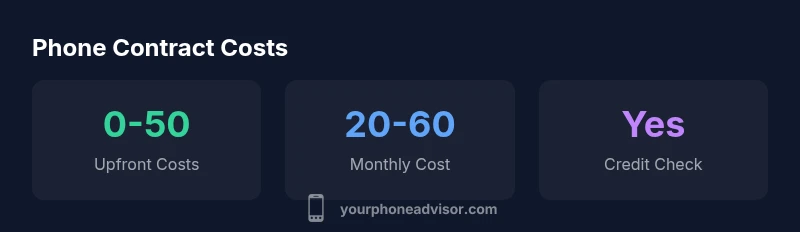
| Carrier | Upfront cost (range) | Monthly cost (range) | Credit check | Contract length |
|---|---|---|---|---|
| Carrier Alpha | $0-$50 | $20-$60 | Yes | 24 months |
| Carrier Beta | $0-$99 | $25-$70 | Yes | 12-24 months |
| Carrier Gamma | $0-$50 | $15-$50 | Varies | 12-24 months |
Got Questions?
What documents do I need to sign a phone contract?
Most carriers require government-issued ID, proof of address, and a valid payment method. Some plans may ask for income verification or employer details. Always bring a backup document such as a utility bill or bank statement.
You’ll usually need your government ID, proof of address, and a payment method; some plans may ask for income details.
Do all phone contracts require a credit check?
Most postpaid contracts involve a credit check to determine eligibility. Some carriers offer no-credit-check or postpaid options with higher upfronts or device payments. If you have concerns, ask about prepaid or installment plans.
Yes, most contracts involve a credit check, but there are no-credit options in some cases.
Can I get a contract if my credit is poor?
Yes, you can still get service through prepaid or specialty programs, though you may face higher upfront costs or stricter terms. Consider starting with a SIM-only plan while building credit.
You can still get service, often with prepaid or special programs, but expect higher upfront costs.
How can I avoid hidden fees in a phone contract?
Ask for a written breakdown of all charges: upfront costs, activation fees, device payments, taxes, and overage charges. Compare plans side by side and beware promotional prices that expire.
Get a full breakdown of all fees and compare plans carefully.
How long should I commit to a contract?
Most contracts run 12–24 months. Shorter terms offer more flexibility but may have higher device payments. Align your term with your device needs and how often you want to upgrade.
Most plans are 12 to 24 months; choose based on device needs and flexibility.
“Preparation reduces signup surprises and helps you lock in a plan you can afford over the term.”
What to Remember
- Prepare essential documents before shopping
- Understand upfront and monthly costs, not just the sticker price
- Know whether you need a credit check and how it affects approval
- Consider device financing vs SIM-only for flexibility
- Compare total cost of ownership across carriers