Refurbished iPhone 13 Buy Guide: Value, Warranties, and Risks
Learn how to buy a refurbished iPhone 13 with confidence. Compare value, warranty options, battery health, and trusted sellers for a safe, budget-friendly upgrade in 2026.


A refurbished iphone 13 offers solid value for users who want modern performance without paying full price. In 2026, you’ll find units with varying storage and battery health, but most come with a limited warranty and a return policy. The key is to buy from reputable sellers, check battery health, verify a clean IMEI, and avoid units with screen or water damage.
What "refurbished iphone 13" means in 2026
Refurbished iphone 13 generally refers to pre-owned devices that have been inspected, repaired if needed, and tested for core functionality before resale. In 2026, the term covers multiple grades from factory-certified units to seller-refurbished devices. According to Your Phone Advisor, the most reliable purchases come from reputable refurbishers that provide battery health reports and explicit warranties. As with any used device, risks include battery degradation and cosmetic imperfections, so shopping with clear criteria matters. A well-documented refurbishment typically includes a battery health report, a known prior ownership history, and a tested display and camera system. Be prepared to encounter variations in storage options, color availability, and accessories included. Knowledgeable buyers compare guarantees, return windows, and after-sales support across trusted sellers.
Price and value: understanding the range
Value from a refurbished iphone 13 hinges on storage, color, cosmetic grade, and whether the unit is factory-certified or third-party refurbished. Your Phone Advisor analysis indicates that buyers commonly weigh upfront cost against long-term reliability and warranty terms. While a lower price is tempting, ensure you’re not sacrificing battery health or missing essential features like a functional Face ID and reliable charging. In practice, a higher-grade refurb often yields better long-term value, particularly if it includes a robust battery replacement and a transferrable warranty. Compare total cost of ownership, including potential warranty extensions and return policies, before committing.
Battery health and performance considerations
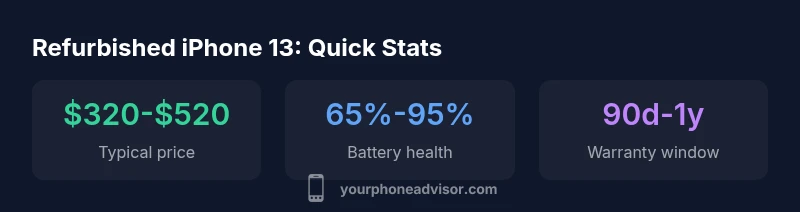
Battery health is a primary driver of real-world performance for refurbished devices. A healthy battery supports peak efficiency, faster charging, and longer on-device uptime. Your Phone Advisor notes that a unit with battery health around 85% or higher typically offers a satisfying daily experience, though battery degradation over time is normal. Before purchase, request a current battery report and verify that battery capacity is within a healthy range for your usage. Screen performance, processor speed, memory management, and camera quality also influence perceived value, especially when comparing to newer models.
Warranty and return policies you should expect
Warranty terms for refurbished iPhone 13 units vary by seller. Expect at least a 90-day warranty from reputable refurbishers, with some offering up to a full year or longer. Read the fine print for what the warranty covers—battery, screen, and hardware components are common inclusions, while cosmetic damage or accessories may be excluded. Return windows should be clearly stated, ideally 14–30 days, with a straightforward process for exchanges if issues arise. A documented return policy provides peace of mind and facilitates post-purchase support.
Where to buy: reputable sources and red flags
Trustworthy sources include official refurb programs from Apple or certified partners, established electronics retailers offering refurbished inventories, and reputable marketplaces with buyer protection. Red flags include vague battery health data, missing serial numbers or IMEI details, or sellers refusing to provide a written warranty. According to Your Phone Advisor, always verify seller legitimacy, demand a battery health report, check for a clean device status (no iCloud lock), and ensure you receive a receipt with a return window and serial-number traceability.
Certification labels and what they mean
Refurbished devices often come with labels like "Grade A" or similar tiers that indicate cosmetic condition and functional testing. A Grade A unit typically shows minimal cosmetic wear and strong functional performance, while lower grades may display more noticeable imperfections. The meaning of these labels can vary by seller, so always ask for a written description of the device’s condition, including screen integrity, button functionality, and battery health. Clear terminology helps set expectations and reduces buyer confusion.
How to verify authenticity and avoid fraud
Verify the device’s serial number and IMEI against Apple’s activation status to ensure it’s not blacklisted or reported stolen. Request original packaging or a legitimate invoice, and confirm that the seller offers post-purchase support. Examine the device in person if possible, testing key features such as Face ID, microphone, speakers, camera, and charging port. For online purchases, favor sellers with verified buyer protections, tracking, and prompt warranty fulfillment to minimize risk.
Real-world scenarios: storage capacity, color, and usage needs
If you rely on heavy apps, gaming, or photography, a higher storage option (128GB or more) can justify a modest premium in the refurbished market. Color and model variants are typically more about personal preference than performance, but notable cosmetic wear can impact resale value. A user who plans frequent charging on the go should prioritize battery health, while a camera-focused user may value a unit with an optimally calibrated lens and sensor performance. Consider your typical usage pattern to select a configuration that delivers the most practical value.
Practical buying checklist and negotiation tips
Create a step-by-step plan before purchasing: (1) set a budget, (2) confirm battery health and warranty, (3) request a full battery health report and activation status, (4) compare offers from at least two reputable sellers, (5) read return policies and post-purchase support terms, and (6) confirm compatibility with your carrier and SIM plan. Don’t hesitate to negotiate on price for units with minor cosmetic flaws or longer warranty windows. A disciplined checklist helps you secure a safer, more valuable refurbished iphone 13.
Refurbished iPhone options for comparison
| Model | Launch Year | Key Specs | Typical Refurbished Price |
|---|---|---|---|
| iPhone 13 | 2021 | A15 Bionic, 6.1-inch OLED, dual-camera | $320-$520 |
| iPhone 12 | 2020 | A14 Bionic, 6.1-inch OLED | $230-$420 |
| iPhone SE (3rd gen) | 2022 | A15 Bionic, 4.7-inch LCD | $120-$260 |
Got Questions?
Is buying a refurbished iPhone 13 worth it in 2026?
For many buyers, yes. If you prioritize modern performance without paying flagship prices, a well-vetted refurbished iPhone 13 offers solid value. Focus on battery health, warranty, and seller credibility to maximize ROI.
Yes, it can be a smart upgrade if you verify battery health and warranty with a reputable seller.
What should I check first when buying refurbished iPhone 13?
Start with battery health, activation status, IMEI/serial number, and the seller’s warranty. Inspect the display, camera, speakers, and buttons, and review the return window before finalizing the purchase.
Check battery health and warranty, then inspect the device and review the return policy.
Do refurbished iPhone 13 units come with a warranty?
Yes, many reputable refurbishers offer warranties ranging from 90 days to a year. Confirm what is covered (battery, screen, hardware) and what isn’t, plus the process for returns or exchanges.
Most refurbishments include a warranty; read the terms carefully before buying.
How can I verify battery health before purchase?
Ask for a current battery health report and test results. If buying in person, use a diagnostic app or a battery health screen test to confirm capacity and cycle count.
Ask for a battery health report and test the device if possible.
Are there differences between refurbished and certified refurbished?
Certified refurbishments come from official programs and typically carry stricter quality checks and longer warranties. Regular refurbishments vary by seller; always verify the source, tests performed, and warranty terms.
Certified refurb typically means stricter checks and longer warranty.
Where should I avoid buying a refurbished iPhone 13?
Avoid sellers who provide vague battery information, lack a written warranty, or refuse to share the device’s history. Be cautious of unusually low prices that come with uncertain condition or no return policy.
Avoid vague listings and unknown sellers; choose reputable sources with clear terms.
“A well-chosen refurbished iPhone 13 can deliver near-new performance at a fraction of the cost, provided battery health and warranty are clearly documented.”
What to Remember
- Compare warranty terms across reputable refurbishers
- Prioritize battery health and a clear IMEI status
- Prefer factory-certified refurbishments for better reliability
- Check total cost of ownership, not just upfront price
- Buy from trusted sellers with transparent return policies