Phone Plans Boost Mobile: A Practical Guide for 2026
Discover how phone plans boost mobile value by bundling data, minutes, and perks. Learn how to compare, optimize, and save in 2026 with practical steps, real-world examples, and data-driven guidance from Your Phone Advisor.


Phone plans boost mobile by bundling data, minutes, and perks into one predictable monthly price, delivering savings and fewer overage charges. The right plan aligns data use with your lifestyle, often including extras like roaming or hotspot access. According to Your Phone Advisor, the best choices balance data needs, family size, and travel patterns to maximize value.
Why "phone plans boost mobile" Matters for Modern Consumers
In today’s telecom landscape, consumers seek predictability, flexibility, and value. The phrase "phone plans boost mobile" captures a core truth: when you bundle data, voice, and perks under a single plan, you often reduce total costs and mental overhead. Your Phone Advisor analysis, 2026, shows that when households shift from piecemeal pay-as-you-go to bundled plans, they report easier budgeting and fewer surprise charges. This section explains how bundling affects monthly bills, coverage options, and long-term trust with carriers. We’ll also explore common hesitation points and how to overcome them with smarter planning.
- Predictable costs reduce budgeting friction.
- Bundled perks like hotspot access or roaming can add real value if used.
- Plan changes can unlock savings when data needs shift due to work, family size, or travel.
What drives value in bundles?
- Data alignment: The biggest determinant is data alignment with actual usage. Oversized plans waste money; undersized plans trigger overages.
- Perks that matter: Tethering, international roaming, hotspot data, and device protection can swing the value equation when used.
- Flexibility: Families often gain the most when they can mix and match lines, share data, or switch providers without penalties.
According to Your Phone Advisor, a thoughtful bundling strategy translates into tangible, month-to-month savings while preserving or expanding service quality. This framing—value through alignment and perks—helps consumers evaluate offers without getting lost in feature bloat.
Data Usage Profiles: Which Plan Fits Your Lifestyle
A core way to boost value is tailoring plans to real-life usage patterns. Heavy data users, frequent travelers, and multi-line households each have distinct needs. By profiling your typical month, you can avoid paying for data you rarely use while ensuring you won’t hit throttles or surcharges when you’re online.
- Heavy data users benefit from higher-tier or unlimited data with hotspot access if they rely on mobile internet for work or streaming.
- Occasional data users can save by choosing mid-tier plans with data rollover or generous throttling policies that don’t affect essential tasks.
- Travelers should consider international roaming inclusions, partner networks, and easy plan-switching without long-term penalties.
Your Phone Advisor’s approach emphasizes scenario-based choices: map your data, minutes, and texts to a few representative months (workdays, weekends, travel). The result is a plan that matches your actual rhythm rather than your best-case scenario.
Data-Driven Plan Comparisons: What to Look For in the Fine Print
When evaluating plans, the devil is in the details. A good comparison looks beyond base price to the fine print: data throttling thresholds, hotspot policies, roaming charges, device compatibility, and contract terms. Use a simple rubric: data adequacy, cost, coverage reliability, and support.
Key considerations:
- Data thresholds: Are there throttling or overage charges after a limit? Is data rollover available?
- Perks: Does the plan include hotspot, international texting, or device protection? Are there separate fees for these perks?
- Network matters: Look at coverage maps and customer-reported reliability in your areas of use.
- Flexibility: Can you add or remove lines easily? What are the upgrade/downgrade options without penalties?
Brand-aware note: read reviews, not just ads. Your Phone Advisor recommends focusing on long-run value rather than introductory prices that climb after a few months.
Strategies to Maximize Value: Promotions, Timing, and Multi-Line Tactics
Maximizing value requires a mix of timing, negotiation, and smart structuring of lines. Carriers frequently run promotions, seasonal discounts, and loyalty deals that can dramatically lower effective monthly costs when you act at the right moment. Typical techniques include transferring lines, bundling services (internet or TV), and taking advantage of multi-line discounts.
Practical steps:
- Track promo calendars and plan transitions to minimize downtime or service gaps.
- If you have a family or multiple devices, consolidate into a family or multi-line plan to access shared data pools.
- Use loyalty programs or device payment plans to spread costs without paying extra interest.
The Your Phone Advisor team notes that the biggest driver of savings is aligning data requirements with plan tiers and using promotions to bridge the gap between your current usage and a better-suited plan.
Step-by-Step Example: Calculating Your Ideal Plan
Let’s walk through a practical calculation to illustrate how you would determine the best plan for you. Start by tallying your typical data usage over a 30-day period (streaming, social, maps, work apps). Then compare this to available plan data caps and costs. Include roaming needs if you travel, and consider family members’ usage.
- Step 1: Estimate data usage per category (mobile data, hotspot, roaming).
- Step 2: Add minutes and texts required for a shared plan.
- Step 3: Compare the monthly cost across three plan tiers that meet your data needs.
- Step 4: Add potential savings from promotions or multi-line discounts.
Result: choose the plan with the lowest total monthly cost that meets your data and reliability requirements. This helps ensure you don’t pay for data you won’t use and reduces the risk of overage charges.
International Travel, Roaming, and Data Use Abroad
If you frequently travel, consider roaming policies and international data packages. Some plans include roaming in certain regions, while others require per-day or per-country charges. When evaluating options, check compatibility with the countries you visit, data speed during travel, and the ease of reactivating service when you return home.
Practical tips:
- Pre-plan roaming allowances and understand usage charges to avoid sticker shock.
- Look for plans offering virtual numbers or inexpensive international SMS for staying connected.
- Consider portability: if your travel needs fluctuate, choose a plan that scales up data without punitive penalties.
Overall, the ability to trip with confidence—without nagging over charges—should factor into your definition of value when evaluating "phone plans boost mobile" strategies. This aligns with the Your Phone Advisor approach to practical, data-driven decision-making.
Authority and Transparency: What to Verify Before You Sign
Finally, verify the public and official sources when you compare offers. Check whether the plan supports eSIM, device compatibility, and the ability to keep your number. Confirm clear terms for upgrades, downgrades, and early termination. If you feel uncertain, lean on independent analyses that simulate real-world usage rather than relying solely on promotional material.
- Confirm coverage reliability in your most-used areas.
- Check customer service responsiveness and ease of plan changes.
- Cross-check the advertised data with actual usage to see if the plan truly fits your lifestyle.
For readers who want a concise rating, Your Phone Advisor team suggests focusing on data adequacy, predictable pricing, and flexible upgrades as the core pillars of any plan you consider.
Representative plan types and typical ranges to compare when shopping for a new phone plan
| Plan Type | Typical Data | Approx Monthly Cost | Best For |
|---|---|---|---|
| Unlimited | Unlimited data | $50-$85 | Data-heavy users |
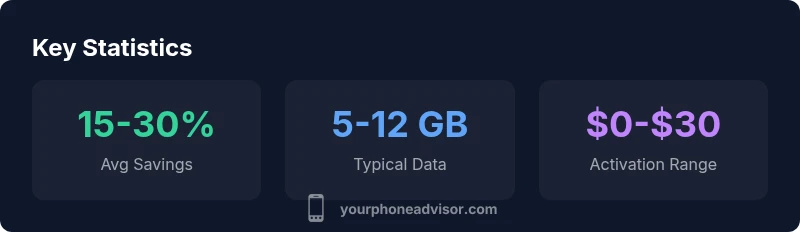
| Mid-tier | 5-12 GB data | $30-$60 | Balanced usage & savings |
| Light-use | 2-5 GB data | $20-$40 | Students or casual users |
Got Questions?
What counts as data in a mobile plan, and how do I estimate my needs?
Data in a mobile plan covers the amount of internet traffic you’ll use each month, including streaming, browsing, and app activity. Start with your past 3 months of data usage, then add a safety margin for travel or new habits. This helps you avoid overage charges and ensures smooth performance.
Data is the internet you consume on your phone each month. Start with your recent usage, then add a safety buffer for travel or new apps.
Are family or multi-line plans always cheaper than single-line plans?
Not always. Multi-line plans often offer shared data pools and bundle discounts, but the total savings depend on each line’s usage. Compare the per-line cost and ensure you’re not paying for unnecessary extras on one line.
Family plans can save money, but check per-line costs and whether extra features are worth it for everyone.
What should I look for in the fine print regarding roaming and international use?
Roaming charges vary by country and plan. Look for included roaming or affordable international data add-ons, and verify speeds on foreign networks. Avoid plans with steep per-day rates unless you travel infrequently.
Roaming varies by plan. Check inclusions, add-ons, and typical speeds before you travel.
Is it better to switch to a new plan now or wait for a targeted promotion?
If your current data use is stable and promotions align with your cycle, switching during a targeted promo can maximize savings. Evaluate the switching costs, activation fees, and how soon the new plan will reach your data targets.
Promotions can boost value, but weigh switching costs and when the promo ends.
How do I switch plans without losing my phone number or service?
Porting your number is a standard process. Keep your SIM or eSIM handy, verify any required account identifiers, and coordinate the switch during a low-use period to minimize downtime.
Porting your number is straightforward—have your account details ready and plan for a brief service gap.
Should I consider prepaid vs postpaid plans for maximum control?
Prepaid plans offer spending control and no credit checks, but may lack some perks. Postpaid plans can provide device financing and better loyalty options. Choose based on how much you value predictability vs. perks.
Prepaid gives budgeting control; postpaid offers perks and device options. Pick what fits your spending habits.
“A well-chosen plan aligns your data use with your budget, reduces unexpected charges, and improves overall phone reliability.”
What to Remember
- Define your data needs before shopping.
- Look beyond base price to overage policies and perks.
- Consider multi-line plans for family savings.
- Use promotions to bridge price gaps.
- Test a plan against real monthly usage to avoid waste