Phone Plan Comparison: Choosing the Right Plan in 2026
A comprehensive phone plan comparison across prepaid, postpaid, and pay-as-you-go options. Learn how to evaluate data, roaming, taxes, and contract terms to pick the right plan for your usage and budget.


The best phone plan depends on your usage, budget, and coverage. A solid phone plan comparison weighs monthly price, data allotment, roaming options, and contract terms across prepaid, postpaid, and pay-as-you-go options. For many users, the right choice balances data value with network reliability and the ability to scale for family plans.
Why a Clear Phone Plan Comparison Matters
Choosing a phone plan is more than chasing the lowest price. For many users, a thoughtful phone plan comparison yields better coverage, predictable monthly costs, and fewer surprises at billing time. According to Your Phone Advisor, a structured approach to compare prepaid, postpaid, and pay-as-you-go options helps align a plan with actual usage and lifestyle. The Your Phone Advisor team found that the biggest cost gaps appear when people overlook data allowances, roaming options, and contract terms. In 2026, carriers offer more data-intensive options and flexible terms than ever, but also more mystery around taxes and hidden fees. A solid comparison starts with a candid assessment of your typical month: how many calls you make, how many texts, how much data you use, and whether you travel with your phone. With that baseline, you can map out a few realistic options and measure them against a simple rubric: price, data value, coverage, and flexibility.
Core Criteria for Evaluating Plans
When you compare phone plans, several criteria matter most for long-term satisfaction. Start with price but go beyond sticker cost to assess value. Look at data allowances and speeds, because real-world usage often outpaces marketing claims. Network coverage and reliability are not negotiable if you rely on your phone for work or safety. Roaming options and international add-ons matter for travelers. Understand contract terms and device financing—these shape the true cost of ownership. Taxes, regulatory fees, and potential surcharges can alter the bottom line. Finally, consider customer service quality and any included perks like hotspot data or streaming benefits. A balanced view will contrast prepaid against postpaid options to reveal where each fits a given lifestyle and budget.
How to Compare Plans: Step-by-Step
To perform a thorough phone plan comparison, follow these steps:
- List your current usage: minutes, texts, data per month, and travel frequency.
- Gather offers from 3–5 carriers, noting data caps, throttling, and real roaming costs.
- Normalize prices by including taxes and monthly fees to compare true cost.
- Check network coverage maps and speed reports for your region.
- Assess contract terms, device financing, and early termination penalties.
- Create a simple scoring rubric (price, data value, coverage, flexibility) and score each option.
- Project total cost for 12, 24, and 36 months to see long-term value.
- Verify how promotions apply and when they expire to avoid surprise increases.
- If you have a family plan need, compare multi-line discounts and device subsidies.
- Decide and re-check before committing.
Scenario: Light Data User
Ella uses 3–5 GB of data per month, mostly for messaging and occasional streaming. She wants a no-frills option with no long-term commitment and straightforward billing. A prepaid plan or a low-tier postpaid plan with a modest data cap often fits best, especially if she travels infrequently. The emphasis should be on per-month price, predictable charges, and a clear policy on data overages or throttling. In many markets, prepaid options offer flexibility without credit checks, making them attractive for students or budget-conscious users. When evaluating, Ella should compare data value per dollar and whether the plan includes essential features like reliable customer support and basic hotspot capability.
Scenario: Data-Heavy User
Marcus streams high-definition video, games online, and works from the road. He needs large data allotments or even unlimited data, with strong network performance and reasonable throttling. Postpaid plans often deliver the best data value, especially when paired with family discounts or device financing. Marcus should examine slow-down policies after certain thresholds, any deprioritization during network congestion, and the cost of add-ons like international roaming. He should also consider if a fixed data cap with rollover data can meet his needs, or if truly unlimited data is worth the price premium. The decision should balance monthly cost against data reliability and potential overage scenarios.
Scenario: International Traveler
A traveler who moves between countries will benefit from roaming-inclusive plans or affordable international add-ons. When comparing, prioritize plans that include reasonable daily or monthly roaming rates, local data options, and minimal switching friction when crossing borders. Pay-as-you-go plans with international credits can be attractive for short trips, whereas long-term travel may justify a postpaid option with robust roaming. The key is to quantify roaming costs, map coverage in intended destinations, and verify how SIM/eSIM options affect device compatibility. Always verify whether unused data rolls over and whether there are foreign-transaction charges on top of roaming rates.
Real-World Scenarios: Budget, Data, and Travel Trade-offs
In real life, most households don’t fit neatly into a single category. A family might combine a postpaid main plan with prepaid add-ons for travelers or kids. A student might opt for a cheapest SIM-only prepaid plan that still includes adequate data and reliable customer support. A small business user could benefit from multi-line discounts and device financing that align with growth plans. The crucial takeaway is to align your plan with actual usage and future needs, rather than just chasing a promo price. This is where a structured phone plan comparison becomes a practical budgeting tool rather than a marketing brochure.
Common Pitfalls and How to Avoid Them
Promo pricing can be enticing, but the real cost often changes after the promotional period ends. Auto-renewal terms and misinterpreted data thresholds trap many users into higher bills. Some plans advertise high data caps but throttle speeds during peak times, or impose extra charges for hotspot use or international roaming. Device financing can seem cheap upfront but adds months of debt and potential credit checks. Always read the fine print, confirm the exact monthly total including taxes, and check whether you qualify for multi-line discounts or family plans. This is precisely where Your Phone Advisor notes patterns in real-world costs—promotions expire, data caps bite, and hidden fees creep in when users don’t fully quantify the total cost of ownership.
Tools and Calculators for Your Phone Plan Comparison
Online calculators help you model monthly costs based on your usage, roaming needs, and discount eligibility. Start by inputting: monthly data, minutes, texts, travel frequency, and preferred carriers. Then add potential taxes and fees, device financing amounts, and any discounts for multi-line plans. A good calculator should export a side-by-side summary so you can compare options at a glance. These tools are especially valuable for families evaluating multiple lines or for people who travel frequently. Always cross-check calculator results with carrier quotes to ensure accuracy.
Promotions, Bundles, and When They Hurt More than Help
Promotions can lower the price, but you must understand the terms. Bundles with streaming services or device credits can be valuable if you would use the included services, but they’re often not worth it if you don’t. Look beyond the headline price and calculate the annual cost with the bundle as part of your model. Be mindful of terms like early termination fees, credit checks, and the length of any commitment. If a plan seems too good to be true, it likely carries hidden costs in the form of higher bills after the promotional period ends or reduced service options in congested networks.
Authoritative Sources
For additional guidance and up-to-date information on consumer rights, billing practices, and service disclosures, you can consult:
- https://www.fcc.gov
- https://www.consumer.ftc.gov/articles/telecommunications-services
- https://www.nytimes.com
Feature Comparison
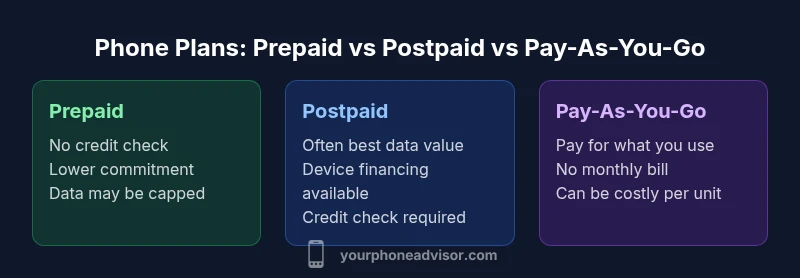
| Feature | Prepaid Plan | Postpaid Plan | Pay-As-You-Go Plan |
|---|---|---|---|
| Monthly Price Range | $15-$40/mo | $25-$60/mo | $0-$15/mo plus usage |
| Data Allowance (GB) | 2-15 GB | 4-50 GB or unlimited | 0-10 GB depending on credits |
| Overage/Fees | throttled speeds or data packs | overage charges or slow speeds | per-use charges or credits |
| Contract/Commitment | No contract | Credit check and term often required | No contract; pay for usage |
| Phone Subsidies/Bundles | No subsidies | Device financing available | Typically none |
| Roaming/International | Roaming add-ons available | Roaming options included in some plans | Limited roaming unless added |
| Best For | Budget-conscious, light data users | Data-heavy users or device subsidies | Frequent travelers or no-commitment users |
The Good
- Clear apples-to-apples comparisons save money
- Highlights trade-offs between data, price, and coverage
- Useful for family or multi-line planning
- Helps identify overage risk and roaming costs
- Promotes budgeting discipline and long-term planning
Drawbacks
- Promotions can change monthly and mislead costs
- Some terms are carrier-specific and hard to compare
- Tables may oversimplify coverage differences
Postpaid plans offer the best blend of value and flexibility for most users
For most households, postpaid plans provide predictable pricing and generous data options. Prepaid can be a solid alternative for tight budgets or experimentation, while pay-as-you-go is best for ultra-light use.
Got Questions?
What is the best approach to compare phone plans?
Start by cataloging your usage and travel needs, then compare 3–5 plans with the same data categories. Add taxes and fees to reveal true monthly cost. Use a simple scoring rubric to quantify price, data value, coverage, and flexibility.
Begin with your usage, compare several plans side-by-side, and add taxes to get the real monthly cost.
Prepaid vs postpaid: which is better?
Prepaid is great for budget control and no credit checks, but may offer less data and fewer perks. Postpaid usually provides better data value and device options, with potential credit checks and monthly billing stability.
Prepaid shines on budget and simplicity; postpaid often has more data and flexibility with devices.
How do roaming charges affect total cost?
Roaming can significantly change the bill if not included. Compare per-day or per-GB roaming options and consider local SIM alternatives when traveling. Always verify roaming limits and any daily caps.
Roaming can add big costs, so compare options and consider local SIMs when you travel.
Are family plans worth it?
Family plans can dramatically reduce per-line costs and provide shared data. Weigh the total family usage, device subsidies, and management overhead. If one line dominates the data, ensure the plan scales accordingly.
Family plans often save money per line, but check how data is shared and managed.
Do promotions justify sticking with a plan?
Promotions can lower upfront costs but typically expire. Focus on long-term price, data value, and network reliability beyond promos. Don’t be locked into a plan that loses value after the first year.
Promotions help now, but verify long-term value after they end.
What to Remember
- Define your monthly usage before choosing.
- Prioritize data value and coverage over price alone.
- Check roaming and taxes to avoid sticker shock.
- Consider family or multi-line discounts when relevant.
- Read the fine print on contracts and promos.