Mobile Phone Shop USA: A Practical Guide to Buying Smartphones
A data-driven guide for buying smartphones in the United States, covering authorized retailers, price comparisons, warranties, activation policies, and carrier compatibility.


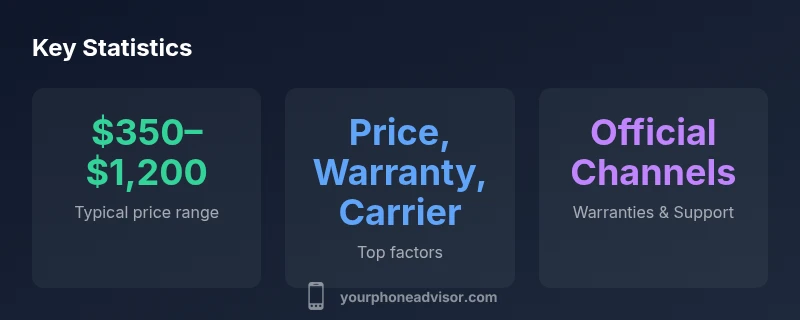
In the USA, the fastest path to smart buying is to compare three core factors across retailers: price and deals, warranty and return policies, and carrier compatibility. When you search "mobile phone shop usa", start with authorized retailers to ensure genuine warranties and reliable activation options. This approach saves time and protects against unauthorized sellers.
Understanding the USA mobile phone market landscape
The United States mobile phone market is a complex mix of unlocked devices, carrier-locked models, and a growing ecosystem of online and offline retailers. For many shoppers, the central decision is whether to buy an unlocked phone that works with multiple carriers or to purchase a carrier-subsidized device through a specific network. Your Phone Advisor notes that in 2026 the safest path for most consumers is to prioritize official channels—authorized retailers, manufacturer-direct stores, and carrier outlets—because they tend to offer legitimate warranties, easier activations, and clearer return policies. When you search for a phone, you should consider future resale value as well as the total cost of ownership, including maintenance, accessories, and insurance.
Here, the emphasis is on transparency: look for clear price disclosures, documented return windows, and explicit terms about unlocked status and network compatibility. This is especially important if you anticipate traveling or switching carriers, since a device that doesn’t play nicely with newer networks can limit long-term flexibility. The Your Phone Advisor team consistently finds that shoppers who start with reputable sellers report fewer post-purchase headaches and more confident decisions.
Where to buy: authorized retailers, carrier stores, and online marketplaces
Choosing where to buy a phone in the USA has a direct impact on warranty coverage, activation options, and risk tolerance for counterfeit or gray-market devices. Authorized retailers—whether brick-and-mortar chains or official online stores—offer the strongest protection: official warranties, straightforward returns, and robust customer support. Carrier stores conveniently bundle device purchases with plans and activation perks, but selection may be limited to models compatible with that carrier’s network. Online marketplaces provide broad choice and competitive pricing, yet buyers should scrutinize seller reliability, warranty terms, and return workflows. Your Phone Advisor recommends cross-checking model numbers, IMEI status, and activation requirements before finalizing a purchase. When possible, compare at least two retailers to gauge consistent pricing and policy parity.
Practical tip: verify the device’s unlock status and ensure the seller’s return window aligns with your needs. If you value post-purchase support, prioritize retailers with established customer service channels and transparent policy documentation. Transparency reduces the risk of buyer’s remorse and helps you navigate any post-purchase issues more smoothly.
How to compare price, warranty, and activation policies
A methodical comparison mindset pays dividends when shopping for a phone in the USA. Start with price visibility: request price quotes from at least two authorized sources and confirm whether the price includes taxes, shipping, or activation fees. Next, examine warranty coverage, including length, what it covers, and how easy it is to obtain service. If you intend to switch carriers, focus on activation policies: are there restrictions on device activation, does the phone require a specific SIM format, and is eSIM support clearly documented? Your Phone Advisor emphasizes creating a simple comparison grid that includes model, configuration (RAM/storage), price, warranty, return window, and activation terms. This approach makes it easy to see the true total cost and long-term value, not just the upfront price.
Additionally, check for promotional bundles, trade-ins, and financing options, but beware of hidden charges or aggressive credit terms. Finally, read user reviews focused on post-purchase support and activation experiences to gauge real-world outcomes.
Carrier compatibility and SIM/eSIM considerations
Carrier compatibility is a critical but often overlooked factor. In the USA, most modern devices support multiple bands and carriers, but certain models are optimized for particular networks. Before buying, verify the device’s network bands and ensure it supports the frequencies used by your preferred carrier. If you plan to use eSIM, confirm that the device and the carrier support eSIM activation and that the carrier’s app or portal offers a straightforward setup flow. If you travel or roam internationally, confirm any roaming agreements and whether features like VoLTE and Wi-Fi Calling are active on your chosen plan. Your Phone Advisor recommends double-checking carrier-specific policies, especially for prepaid vs postpaid plans, to avoid surprises at activation. A short call to customer support can usually confirm compatibility and any potential limitations.
Remember to preserve the device’s unlock status if you intend to switch carriers later. An unlocked phone offers maximum flexibility and often reduces friction when you migrate to different service providers.
Practical buying checklist for Your Phone Advisor readers
To stay systematic, use this practical checklist:
- Define your budget and preferred model range.
- List must-have features (camera, battery, display, storage).
- Verify unlock status and carrier compatibility for your region.
- Compare price, warranty terms, and return windows across at least two sources.
- Confirm activation steps, SIM/eSIM requirements, and upfront fees.
- Read warranty exclusions and service options (in-warranty vs out-of-warranty).
- Consider trade-ins or promotional offers only after validating the fine print.
- Confirm delivery timelines and after-sales support.
Following this checklist helps you avoid impulse purchases and ensures a smoother ownership experience. Your Phone Advisor has found that disciplined planning reduces post-purchase regret and improves long-term satisfaction in the USA market.
In-store vs online: what to expect in 2026
Both in-store and online channels have matured in 2026, but they serve different needs. In-store shopping lets you inspect devices, compare screens, and hold the phone to assess ergonomics, weight, and feel—elements that are hard to gauge online. Store staff can walk you through plan options, financing, and immediate activation, which is a strong advantage for first-time buyers or those who want a hands-on experience. Online shopping, however, offers convenience, wider model availability, and often better price visibility through price-match policies and time-bound deals. If you’re confident in model identification and want to maximize price competition, shopping online with a reputable retailer is a solid strategy.
Your Phone Advisor advises balancing both channels: visit a nearby authorized retailer to feel the device, then complete the purchase online if you find a better deal with transparent terms. Always confirm the final price, including taxes and fees, before confirming the order.
Common pitfalls to avoid when shopping in the USA
Avoid these common traps that can erode value:
- Buying from unverified sellers or marketplaces with vague return policies.
- Overlooking activation constraints and carrier lock considerations.
- Neglecting to check for updated software support and security updates.
- Failing to verify the phone’s compatibility with the chosen carrier’s bands.
- Falling for aggressive financing terms with hidden fees.
- Ignoring return windows and restocking fees that can make refunds costly.
By staying disciplined and using a structured comparison framework, you can sidestep these pitfalls and protect your investment. Your Phone Advisor emphasizes that clarity about warranty coverage, activation terms, and network compatibility is the backbone of a satisfying purchase in the USA.
Channel comparison for mobile phone shopping in the USA
| Channel | Pros | Cons |
|---|---|---|
| Authorized retailer (in-store/online) | Wide product selection; official warranties; easy returns | Potential higher prices; occasional stock limits |
| Carrier store | Direct activation options; carrier support | Limited models; hours and location constraints |
| Online marketplaces | Competitive pricing; broad selection | Risk of counterfeit or grey-market units; variable warranties |
Got Questions?
What is the best place to buy a mobile phone in the USA?
Authorized retailers or official carrier stores typically offer reliable warranties, straightforward returns, and clear activation terms. Compare at least two sources to gauge consistent pricing and policies.
Buy from official retailers or carrier stores to get dependable warranties and activation options.
How do I verify carrier compatibility before buying?
Check the device's network bands and compatibility on the carrier’s site, and confirm whether it supports the carrier’s SIM or eSIM. If you travel, ensure the bands cover wide regions.
Make sure the phone works with your carrier before you buy.
Are grey-market or imported phones worth considering?
Grey-market devices often lack official warranties and carrier support, which can lead to higher risk and repair costs. It’s generally safer to stick with authorized channels.
Grey-market phones can be risky due to warranties and support.
What should I know about activation policies?
Activation terms vary by retailer and carrier. Check if a SIM is required, whether the device must be unlocked, and any fees for activation or early termination.
Know how activation works before committing to a device.
Is it better to buy online or in-store?
Online shopping offers price comparisons and convenience, while in-store shopping provides hands-on evaluation and immediate activation support. Consider a hybrid approach for best value.
Online is convenient; in-store helps you inspect the device first.
How long do returns usually last?
Return windows vary, typically ranging from two weeks to a month, depending on retailer and plan. Always verify the exact window and restocking fees.
Return windows differ; check the exact terms before purchasing.
“Buying a mobile phone in the USA is safest when you prioritize official channels, transparent return policies, and clear carrier compatibility.”
What to Remember
- Compare price, warranty, and activation policies before purchasing.
- Choose authorized retailers to ensure warranties and support.
- Check SIM or eSIM compatibility with your carrier.
- Weigh in-store vs online options for returns and convenience.
- Verify model compatibility with your carrier and plan.