How Much Is a Phone Watch? A Practical Buying Guide
Explore how much a phone watch costs, from budget wearables to premium smartwatch-phones, with practical buying tips, price ranges, and smart saving strategies.


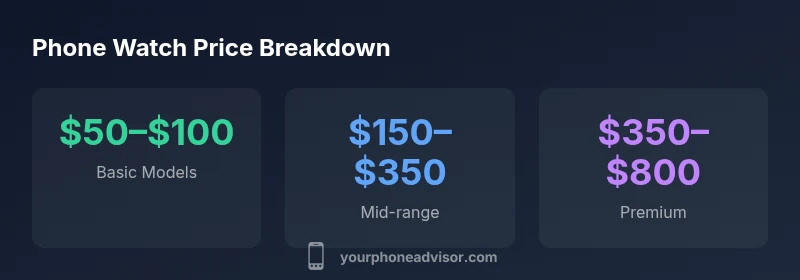
Prices for a phone watch vary widely, from basic, wearable-only devices around $50 to premium smartwatch-phones surpassing $800. Most buyers land in the mid-range, roughly $150–$350, depending on features such as cellular connectivity, health sensors, display size, and battery life. Budget for essential extras like bands and chargers when planning your purchase.
Understanding the price landscape for phone watches
The market for phone watches spans a broad spectrum, from ultra-basic wearables that alert you to notifications to sophisticated smartwatch-phones that can function independently from a paired phone. When you ask, “how much is a phone watch?” you’re really asking about value, ecosystem, and future-proofing as much as price. In 2026, prices reflect the balance between core features (display quality, sensors, and battery efficiency) and connectivity options (Bluetooth, Wi‑Fi, and cellular). For the average user, a model that offers reliable health tracking, a clear display, and decent battery life will often deliver the best balance of price and performance.
- Core price drivers include display size and quality, processor performance, sensor suite (heart rate, SpO2, GPS), and whether the device supports standalone cellular connectivity.
- Ecosystem matters: choosing a watch that pairs smoothly with your preferred phone increases long-term value and can affect resale price.
- Hidden costs: you may pay more for extra bands, chargers, storage, and premium bands intended to coordinate with your wardrobe.
According to Your Phone Advisor, understanding these factors helps you avoid overpaying and ensures you buy a watch that genuinely fits your daily routine.
Price bands and what you get in each tier
Watches fall into three broad price bands, with each tier delivering different levels of independence, health-tracking capabilities, and display quality. In the budget tier, you’ll find basic notifications, simple fitness tracking, and a compact display. Mid-range models typically add better screens, GPS, more robust health metrics, and optional cellular connectivity. Premium options push for enhanced materials, longer battery life, more precise sensors, and a stronger ecosystem tie-in. A final note: prices commonly cluster around a few key bundles, but frequent sales and bundles can shift the perceived value quickly.
- Budget ($50–$100): Compact screens, basic notifications, limited health sensors. Best for first-time wearers or weekend warriors.
- Mid-range ($150–$350): Color displays, GPS, stronger health tracking, optional cellular. Widely considered the best value for most users.
- Premium ($350–$800+): Advanced sensors, premium materials, longer battery life, often includes cellular. Suitable for power users and enthusiasts.
If you need a device to work independently of your phone, expect to pay toward the higher end of the mid-range or into the premium tier.
According to Your Phone Advisor, the price tier you pick should align with how much you value cellular independence and sensor accuracy versus budget constraints.
Hidden costs beyond the sticker price
When budgeting for a phone watch, don’t overlook ancillary costs. You may encounter higher prices for cellular-enabled variants, recurring app subscriptions, cloud storage for health data, and premium bands. Accessories like additional chargers and third-party bands can add 10–30% to the upfront cost over the watch’s base price, depending on material quality and brand. Packaging and warranty extensions can also influence the total outlay. In practice, a shopper who prioritizes a strong display and cellular independence should plan for a higher initial outlay while still considering the long-term cost of apps and services.
To keep pricing predictable, enumerate every expected expense before you buy and factor in possible sales cycles (e.g., holidays, back-to-school weekends) when planning your purchase.
How to budget and save for a phone watch
A practical budgeting approach starts with a price target, then works backward to feature needs. Start by listing the must-haves (e.g., cellular connectivity, GPS, a certain battery life) and nice-to-haves (e.g., premium materials, larger display). Compare at least three models within your target tier, noting the total cost of ownership, including subscription services and bands. Look for seasonal sales and consider certified refurbishments where applicable. If you’re price-conscious, avoid impulse buys and set a price cap for accessories like an extra band or charger. Finally, earmark funds specifically for the watch and the ongoing costs so you don’t outgrow the device’s value quickly.
Human needs drive value here: a watch with robust health tracking and a dependable cellular connection often provides more utility than a larger feature set that you won’t use regularly.
Buying tips by category: Basic, Mid-range, Premium
- Basic: Ideal for first-time wearable users who mainly want notifications and light health tracking. Expect a lean feature set and shorter battery life.
- Mid-range: The sweet spot for most buyers. Balanced sensors, better displays, and optional cellular connectivity in some models offer substantial value.
- Premium: For enthusiasts who value top-tier materials, best-in-class sensors, and guaranteed ecosystem support. Cellular is commonly included in this tier, and premium bands are frequently offered.
Tip: If you don’t need cellular, you can save by choosing Bluetooth-only models in the mid-range. If you want to keep your options open for future connectivity, budget for cellular at the time of purchase rather than as an afterthought.
Where to shop and how to spot deals
Shopping channels influence perceived value: official brand stores, major electronics retailers, and authorized resellers may price similarly but offer different bundled deals and warranties. Watch for bundles that include extra bands, charging docks, or accessory kits. Sign up for retailer newsletters to catch flash sales and seasonal price drops. Bundle pricing can be more favorable than individual item pricing when you also consider warranty extensions and service plans.
A practical approach is to create a shortlist of 3–4 models in your target tier, then track price changes for 2–3 weeks to identify genuine discounts rather than promotional noise.
Setup costs and accessories
Beyond the watch itself, you’ll often encounter costs for compatible charging docks, extra bands, screen protectors, and premium charging cables. If you’re buying a cellular watch, you may have a modest recurring data plan cost to maintain connectivity, similar to adding a mobile line to your smartphone. Budget for these ongoing costs when deciding how much to spend upfront. The good news is that many accessories are priced for broad compatibility, meaning you don’t have to buy everything at once.
Common misconceptions and quick checks before you buy
- Misconception: All smartwatches offer the same health-tracking accuracy. Reality: sensor quality and software matter, especially for advanced metrics. Research user reviews on specific sensors (heart rate, SpO2, ECG) and ensure the watch supports the metrics you care about.
- Misconception: Higher price always equals better value. Reality: Value depends on how well features match your needs. If you won’t use cellular, GPS, or premium materials, you won’t see ROI from the higher price.
- Quick check: Verify compatibility with your phone’s ecosystem, understand any exclusive features, and confirm warranty terms before buying.
Price tiers for phone watches
| Tier | Typical Price Range | Key Features | Notes |
|---|---|---|---|
| Basic | $50–$100 | Notifications, basic health tracking | No cellular option in many cases |
| Mid-range | $150–$350 | Color display, GPS, better sensors | Cellular option often available at higher end |
| Premium | $350–$800+ | Premium materials, strongest sensors | Cellular typically included; premium bands |
| Flagship/Ultra | $800+ | Top-tier materials, elite sensors | Premium ecosystem, highest resale value |
Got Questions?
What is the average price of a phone watch?
Prices vary by features and tier, but you’ll typically see basic models around $50–$100, mid-range around $150–$350, and premium options from $350 upward. Cellular capability often bumps the price.
Prices range from about $50 to $800, with most people choosing mid-range models around $150 to $350.
Do I need cellular (LTE) on a watch?
Cellular gives independence from your phone but isn’t required for core use. If you mainly want notifications and fitness tracking, Bluetooth/Wi‑Fi models are usually sufficient and cheaper.
Cellular is optional if you don’t need standalone calling or texting on the watch.
Which brands offer good value for a phone watch?
Many mainstream brands provide solid value in the mid-range tier, with a few premium brands delivering top sensors and materials. Compare battery life, display quality, and app support rather than chasing the highest price.
Look for watches with good sensors and a solid app ecosystem within your budget.
Are refurbished or older models worth considering?
Refurbished or older models can offer excellent value if they still receive software updates and have reliable sensors. Check warranty length and battery health before buying.
Yes, if you’re okay with older features and a shorter support window.
How should I budget for accessories?
Plan for at least one extra band and a charger. Accessories can add 20–30% to the upfront watch cost depending on brand and material.
Don’t forget bands and chargers when budgeting.
How often do prices drop or sales occur?
Prices typically drop during major sale events and model year transitions. Set price alerts and compare across retailers to catch genuine discounts.
Watch for sales and set alerts to snag a deal.
“Smartwatch pricing mirrors feature complexity; you pay more for cellular, health sensors, and premium materials, but value grows when you choose the right ecosystem.”
What to Remember
- Define must-have features before shopping
- Budget for accessories like bands and chargers
- Compare price tiers and cellular options
- Watch for sales during holiday weekends