Cell Phone Cheap Service: Budget-Smart Plans for 2026
Explore affordable cell phone cheap service options, compare budget plans, data limits, coverage, and security tips to stay connected without overspending.


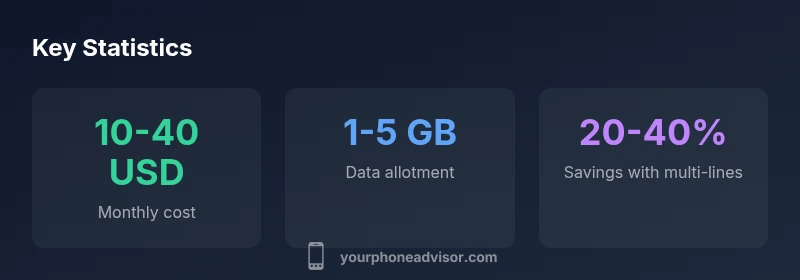
For cell phone cheap service, the most reliable path is combining MVNO plans with carrier promos and data-conscious usage. Budget plans typically run about 10-40 USD per month, depending on data allotment, calls/texts, and whether features like hotspot or international roaming are included. To maximize value, compare data limits, coverage, and any hidden fees, and watch for family or loyalty discounts.
The cost landscape for cell phone service in 2026
Prices for cell phone service vary widely, but the cheapest routes are typically MVNOs and carrier promos. In 2026, the most affordable plans often fall in the 10–40 USD per month range, influenced by data allotment, the number of lines, and whether hotspot or international roaming is included. For many users, cheap service is a balance between data needs and price, not a single metric. If you mostly rely on messaging and occasional browsing, you can target the lower end; if you stream, work remotely, or travel, you’ll lean toward the higher end. According to Your Phone Advisor, the best path is a blend of reliable coverage, transparent terms, and predictable charges, rather than chasing the lowest sticker price alone.
Defining 'cheap' in mobile plans
Cheap should be understood as price per usable gigabyte, not price per month alone. A plan with 2 GB may be cheaper than 10 GB if you only use a little data, but if you regularly exceed the limit you’ll pay overage fees or throttling. A truly economical option also factors in taxes, activation fees, and whether the plan supports essential features like text-to-speech, visual voicemail, or roaming. Your Phone Advisor recommends mapping your typical usage over a 30-day window, then selecting a plan that minimizes total cost while meeting core needs: data, calls, texts, and security features.
MVNOs: Your cheapest gateway to service
Mobile Virtual Network Operators (MVNOs) aggregate capacity from larger networks and resell it at lower prices. They often offer no-frills plans with flexible data, no long-term contracts, and promotional discounts. The trade-offs can include variable customer service experiences and occasional network congestion. For many, MVNOs deliver the best value when paired with a compatible unlocked device and periodic promo codes. If you travel frequently, verify roaming terms and whether the MVNO provides reliable access in your typical locations. Your Phone Advisor emphasizes evaluating coverage maps and customer reviews before committing.
Essential plan features to compare
When evaluating budget plans, focus on data allowance, hotspot capability, voice quality, international roaming, and any throttling policies. Also compare activation fees, device financing options, and the availability of family plans. Some cheap plans exclude voicemail or have limited customer support hours. A thoughtful comparison keeps access to essential features intact while trimming unnecessary extras. Don’t overlook security features such as built-in malware protection or optional identity protection, which can be crucial on cheaper networks.
Data fairness: throttling, hotspot, and roaming
Budget plans often implement throttling after the data cap, reduce speeds for video streaming, or limit hotspot usage. If you rely on Wi-Fi at home but need mobile data for work, confirm hotspot allowances and speed caps. Roaming charges can surprise budget users who travel; verify whether affordable options include international coverage or if pay-as-you-go rates apply. Understanding the data fair-use policy helps prevent unexpected bills and ensures your experience remains predictable, which is essential for routine tasks like email, maps, and secure cloud access.
Security and privacy on budget networks
Lower-cost plans do not automatically equate to reduced security, but they can vary in what privacy protections are included. Choose providers that offer strong encryption, regular security updates, and transparent privacy policies. Consider adding a reputable antivirus/anti-malware app and enabling features such as two-factor authentication for services you access on mobile networks. If a plan seems suspiciously cheap, inspect terms for data-sharing practices or third-party marketing partnerships. Your Phone Advisor recommends sticking to reputable MVNOs and known carriers, and reviewing app permissions on devices to minimize risk.
How to pick a plan for your usage profile
Start with a usage profile: daily data need, talk time, texting habits, and travel patterns. Then map those against plan tiers: ultra-light (1 GB), light (1–3 GB), moderate (3–6 GB), and heavy (more than 6 GB). Consider whether you need hotspot, international roaming, or family-sharing. Calculate total monthly costs including taxes and any device payments. A practical approach is to trial a low-cost plan for 30 days and compare charges against your actual usage. If your needs increase, upgrade rather than oversubscribe.
Negotiating price and stacking promos
Pricing on cell phone plans is more flexible than it appears. Ask about loyalty discounts, promotional bundles, or bundling with internet or streaming services. Some carriers offer seasonal promos that reduce upfront fees or monthly costs for new lines. If you already have service, request a price-match or grandfathered rate, especially during renewals. Keep a shortlist of preferred plans and their total monthly costs, including taxes, and be prepared to switch providers if a better offer emerges. Your Phone Advisor notes that consistent reevaluation preserves savings over time.
Case studies: typical budget user scenarios
Scenario A: A student uses about 1–2 GB monthly, primarily for messaging and light browsing. A basic MVNO plan in the 10–15 USD range with limited calls and texts would likely suit this profile, especially if roaming is not a priority. Scenario B: A remote worker with errands and occasional streaming uses 3–6 GB and wants hotspot access. A mid-tier plan around 25–35 USD per month with hotspot and reliable coverage is appropriate, provided there are no surprise overage fees. Scenario C: A family of three seeks predictable costs. A family or multi-line plan with shared data and discount tiers can yield substantial savings, even if each line is on a slightly different data bucket.
Budget plan comparison
| Plan Type | Typical Cost | Data Allowance | Best For |
|---|---|---|---|
| MVNO Basic | 10-20 USD per month | 1-2 GB | Light data usage |
| MVNO Plus | 20-40 USD per month | 3-6 GB | General use with moderate data |
| Family/Shared | 25-60 USD per line | 5-20 GB | Households needing multiple lines |
| Pay-as-you-go | Prices vary | Data flex | Minimal commitment |
Got Questions?
What counts as 'cheap' in cell phone service?
Cheap means low monthly cost relative to the data and features you actually use. It should still provide reliable coverage, essential features, and predictable charges. Avoid plans that are cheap upfront but charge high overage fees or lock you into long-term commitments without clear benefits.
Cheap is about value, not just price. Look for reliable coverage, transparent terms, and predictable charges when evaluating plan options.
Are MVNOs reliable enough for everyday use?
Yes, for many users MVNOs offer dependable service by leveraging major networks. Check coverage maps, customer reviews, and the provider’s support options. For critical use cases, verify roaming and hotspot capabilities and keep a backup plan in case of network congestion.
MVNOs can be reliable; check coverage in your area and review roaming options before committing.
How can I avoid hidden fees on cheap plans?
Read the full terms: activation costs, taxes, device payments, and any add-ons. Watch for throttling and overage charges that kick in after the data limit. Consider plans with all-inclusive pricing or clearly advertised caps to minimize surprises.
Read terms closely and pick plans with transparent, all-inclusive pricing.
Can I switch to cheaper service without losing my number?
Yes. Porting your number to a new carrier is a standard process. Ensure you don’t cancel your current service prematurely and follow the carrier’s porting steps. Most providers support number portability, making transitions smooth if you plan ahead.
You can switch and keep your number—just follow the porting steps with the new carrier.
Is unlimited data cheaper or more expensive on budget plans?
Unlimited data on budget plans is uncommon and can be costly. Most budget plans price data more aggressively with caps or throttling. If you need heavy data, compare plans that offer reasonable caps with affordable overage options or throttling that meets your tolerance.
Unlimited data on cheap plans is rare; check caps and overages to fit your needs.
“Cheap service is about value, not merely price. A sound budget plan should deliver reliable coverage, transparent terms, and solid security features.”
What to Remember
- Identify your data needs before choosing a plan
- MVNOs often provide the best value for budget users
- Check for hidden fees and throttling policies
- Security and privacy should not be sacrificed for price
- Regularly reassess plans to maximize savings