How to Phone in Sick: A Practical Guide
Learn how to phone in sick professionally with practical steps, scripts, and privacy tips. This guide covers when to call, who to contact, what to say, and how to follow up for a smooth return.


Goal: Learn how to phone in sick properly so your employer understands the absence and you protect your privacy. This quick guide outlines who to contact, when to call, what to say, and how to document a sick day. It also covers honesty, doctor notes, and how to plan your return.
Why calling in sick matters
Taking a sick day is more than just resting; it's about communicating responsibly so your team isn't left short-handed and your employer can plan coverage. When you phone in sick, you convey professionalism, preserve trust, and avoid spreading illness. This section explains why clear, timely notification matters for both you and your workplace. It also highlights how privacy and honesty intersect with company policy. Clear, respectful communication reduces confusion, protects patient privacy, and helps your team adjust workflows with minimal disruption. By outlining a standard approach, you can minimize awkward conversations while staying compliant with workplace norms. The goal is to protect your colleagues and your reputation as a reliable employee, even when you're under the weather.
When to call in sick
When illness is evident, contact your supervisor as soon as you know you will miss work. If symptoms are severe or you risk spreading infection, it's prudent to notify early. In many workplaces, a sickness notification should be done before the workday begins. If your role requires urgent coverage, prepare to speak to the on-call manager or HR. If you anticipate being out longer than a day, inform them of the approximate duration and your plan for updates. In cases of mental health concerns, rest and privacy are essential, but you should still communicate promptly to enable accommodations or support. Your goal is a straightforward, factual update rather than a long medical diary.
Who to contact and how to reach them
Identify your direct supervisor first; if they are unavailable, reach out to HR or a designated delegate per your company policy. Use your usual method of contact (phone, email, or company messaging system) and follow the preferred channel listed in the sick policy. If you are uncertain, default to a phone call for urgent coverage questions and follow with a brief written confirmation. Keep contact details handy and use a concise message that states the key facts: illness, expected duration, and how you will stay reachable. Ensure you respect escalation procedures and maintain professionalism.
Clear, concise talking points for a phone call
When you reach your supervisor, state your name and role, then clearly convey four points: you are unwell, you cannot work today, you estimate time off, and you will provide updates or documentation as required. Avoid over-sharing medical details and stay factual. If asked for more detail, offer alternatives such as status updates during the day or a plan for covering critical tasks. If your voice is weak or you feel unable to speak, consider sending a short text with the same four points and offer to call back when you feel better.
Sample scripts and voicemail templates
Phone call script: 'Hi [Name], this is [Your Name]. I'm feeling unwell today and won't be able to come to work. I expect to be out for [duration], and I will keep you posted on my status. I can provide a doctor's note if required.' Voicemail: 'Hello, this is [Your Name]. I'm sick today and will be out for [duration]. Please let me know if you need any additional information. I will follow up with a written update later today.' Text/Slack: 'Hi [Name], I’m out sick today with [symptom]. I expect to return on [date]. I’ll confirm with you if anything changes.'
Documentation and follow-up actions
After calling, send a brief written confirmation that restates your illness, dates, and your plan for updates. If a doctor’s note is required, attach or upload the document when you are able. Track the status of your return date and communicate any changes promptly. Update your calendar and let teammates know how to handle urgent tasks. This helps your employer plan around your absence and demonstrates accountability. If you anticipate a longer absence, begin discussing temporary coverage with your supervisor or HR.
Returning to work smoothly
Plan a proactive return: confirm your start date, provide any needed notes, and update the team on progress. If you’ve been away for several days, offer a concise summary of what you missed and what you will do to catch up. Ask for any critical deadlines and propose a realistic schedule for catching up. Prioritize essential tasks first and consider a brief check-in with your supervisor to align expectations. Returning with a calm, organized plan reduces stress for you and your team.
Privacy and honesty considerations
Honesty matters, but you don’t need to disclose every medical detail. Share only what is necessary to justify the absence and to enable coverage. Respect your organization’s privacy policies and avoid disclosing sensitive personal information. If you’re concerned about confidentiality, use a doctor’s note or a medical certificate to document your illness with your employer instead of providing a live medical diary. This helps you protect your privacy while staying transparent about time off.
Common employer responses and how to handle them
Expect questions like, 'When will you return?' or 'Do you have a doctor’s note?' Respond with a timing estimate, offer updates, and ask how you should communicate changes. If you feel pressured to come in, politely reiterate your current health status and safety considerations. If they request extra details, provide only what is necessary and refer to official policies if needed. Always maintain a professional tone and keep records of your communications for accountability.
Tools & Materials
- Smartphone or landline(Have dial pad ready; ensure battery/coverage.)
- Access to company sick policy(Know notification windows and required documentation.)
- Notes app or notebook(Jot symptoms, duration, and key points to say.)
- Doctor's note or medical documentation(Check if your employer requires a note after a certain day.)
- Calendar or scheduling tool(Mark your expected return date and follow-up reminders.)
Steps
Estimated time: 10-20 minutes
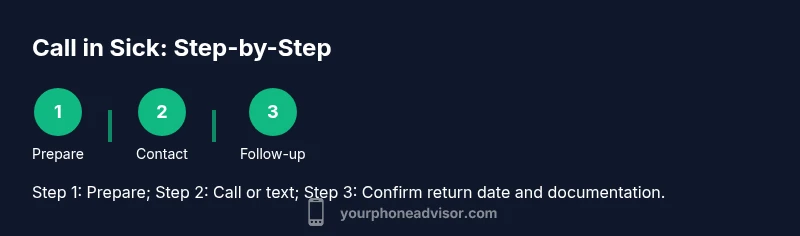
- 1
Prepare and review policy
Before you call, review your company's sick policy and gather any needed information (symptoms, duration, and contacts). This reduces back-and-forth and keeps the message concise.
Tip: Having documents ready saves time and avoids multiple calls. - 2
Choose your contact method
Determine whether to call directly or send a message based on policy and the urgency of coverage. Use the priority channel if one exists.
Tip: Phone calls work best for urgent coverage questions; texts are good for quick confirmations. - 3
Make the contact attempt
Dial the supervisor or the designated contact. If they don’t answer, leave a brief voicemail or send a confirmation message with the same four essential points.
Tip: Keep the message clear and professional; avoid medical jargon. - 4
Provide essential details
State that you’re sick, the expected duration, and your plan to stay reachable. Offer to provide a doctor’s note if required by policy.
Tip: Stick to facts. Don’t over-share personal health details. - 5
Follow up in writing
Send a short email or message restating the key points after the call, including your return date and any documentation.
Tip: Written records help prevent misunderstandings. - 6
Coordinate coverage and return
If you manage critical tasks, propose a plan for coverage and a realistic schedule for catching up when you return.
Tip: Collaborate with your supervisor to minimize disruption.
Got Questions?
Is it better to call or text when calling in sick?
Usually a phone call is best for urgent coverage; text can supplement but follow policy. Provide a concise update and avoid sharing unnecessary details.
Typically, start with a call for urgent absences and follow with a brief text if needed.
What should I do if I feel too sick to talk on the phone?
If you can’t talk, send a short message stating you’re ill and plan to call back when able, then make the call as soon as you can.
If you’re too ill to talk, send a quick note and call back when you feel better.
Should I mention a doctor’s note from the start?
Only mention a doctor’s note if required by policy; otherwise, offer to provide one if asked. Do not delay notification waiting for a note.
Provide a note if your policy requires it, otherwise offer to share later.
What if my employer questions my return date?
Give a realistic estimate based on symptoms and medical advice, and promise to update if the situation changes; avoid committing to a fixed long timeline.
Be honest about recovery estimates and say you’ll update if needed.
Can I call in sick for mental health?
Yes. Treat mental health with the same seriousness as physical illness by notifying your employer and seeking appropriate support. Follow your company policy on documentation.
Mental health counts as a valid reason for taking time off; communicate professionally.
What should I do on returning to work?
Plan a brief catch-up with your supervisor, confirm any changes to deadlines, and gradually resume tasks to avoid overwhelm.
Check in with your supervisor about priorities and deadlines when you return.
Watch Video
What to Remember
- Notify early to help planning
- Keep messages concise and factual
- Document your absence in writing
- Follow your company policy on notes
- Return-to-work plan minimizes disruption